

Specifications
Broker
Aircraft Details
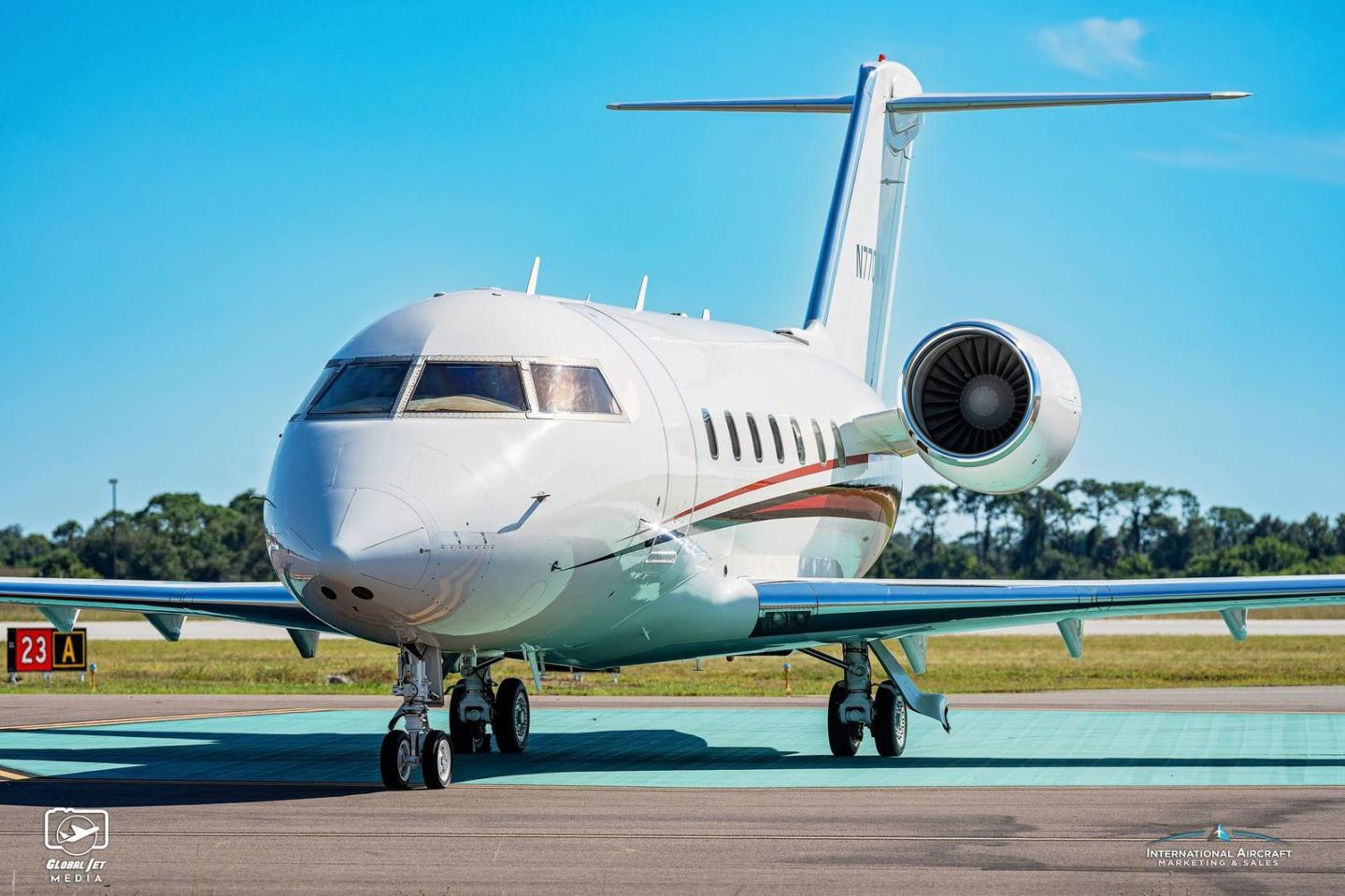
- Model: Challenger 601-3R
- Condition: Used
- Inspection Status: Fresh 10-Year Inspection (2025)
- Fresh Landing Gear Overhaul (2025)
- Engines: 2 x General Electric CF34-3A1
- Engine 1: 11,094 hours since new, 5,783 cycles
- Engine 2: 11,061 hours since new, 5,785 cycles
- Auxiliary Power Unit: Honeywell GTCP 36-150, 7,035 hours since new
- Avionics: Honeywell Primus II EDZ-815 EFIS, ADS-B equipped, dual Collins VHF-22B COMM's, Honeywell Mark V EGPWS, Honeywell TCAS II
- Interior: Executive configuration for 10 passengers, forward galley with convection oven, dual coffee pots, high-speed Wi-Fi
- Exterior: Matterhorn white with Sedona red and black accent stripes
- Additional Features: Winglets, thrust reversers, dual flight management systems, weather radar, cockpit voice recorder, flight data recorder, terrain awareness and warning system, traffic collision avoidance system.
About this Model
Overview
The Challenger 601-3R is the long-range evolution of the early Challenger line, pairing a wide, stand-up cabin class with improved fuel capacity and range capability versus earlier 600-series models. It is typically selected for missions that prioritize a spacious cabin for 8–12 passengers and the ability to fly longer legs with fewer fuel stops, while accepting older-generation avionics and higher operating footprint than newer large-cabin designs.
Mission Fit
In practice, the 601-3R fits organizations that value a true large-cabin cross-section and longer legs. Typical use cases include multi-hour corporate travel, family/owner trips with baggage, and charter-style missions where passenger comfort and range flexibility are key. Airport performance and payload/range will be driven by temperature, runway length, and interior/aux tank configurations; plan missions with realistic reserves and alternates.
Cabin
The defining attribute is cabin cross-section: a wide cabin that supports a conventional double-club or mixed club/conference layout and better shoulder room than many mid-cabin jets of its era. Cabin altitude and noise levels depend on airframe condition and insulation/refurbishment standard; many aircraft in service have undergone interior updates that materially change perceived comfort. Baggage is typically split between internal and external compartments, which can affect in-flight access depending on configuration.