

Specifications
Broker
Jet Aviation Brokers
John Carter
+1 (305) 555-0142
broker@example.com
Aircraft Details
- Based in Chicago, Illinois and maintained under FAR Part 135 requirements
- One U.S. Fortune 100 owner; exceptional pedigree
- Airframe: 6,912 hours, 3,186 landings
- Engines: GE CF34-3B (both 6,912 hours, 3,200 cycles), on engine maintenance program
- APU: Honeywell GTCP 36-150 (CL), 5,183 hours
- Avionics: Rockwell Collins Pro Line 21 Advanced suite with triple Honeywell Laseref VI IRS, dual FMC-6200 FMS, dual GPS 4000S, dual radio altimeters, and advanced safety systems (TCAS, EGPWS, CVR, FDR, ELT)
- Connectivity: Honeywell Jetwave KA-Band high-speed Wifi, SDR router, Aircell ATG-5000 4G, TrueNorth Iridium phone system
- Additional equipment: HUD & Enhanced Vision (EVS), FANS 1/A+, CPDLC, Iridium Satcom, RAAS, XM Weather, RNP AR 0.3, QAR, full-face EROS oxygen masks, galley refrigerator, lightning detection, extra O2
- Ten-passenger configuration with extended aft lavatory, forward galley, new 2024 carpet and refurbished crew seats
- Entertainment: Lufthansa Nice Cabin Management System, Blu-Ray, MP3, 24" LCD monitors, moving maps
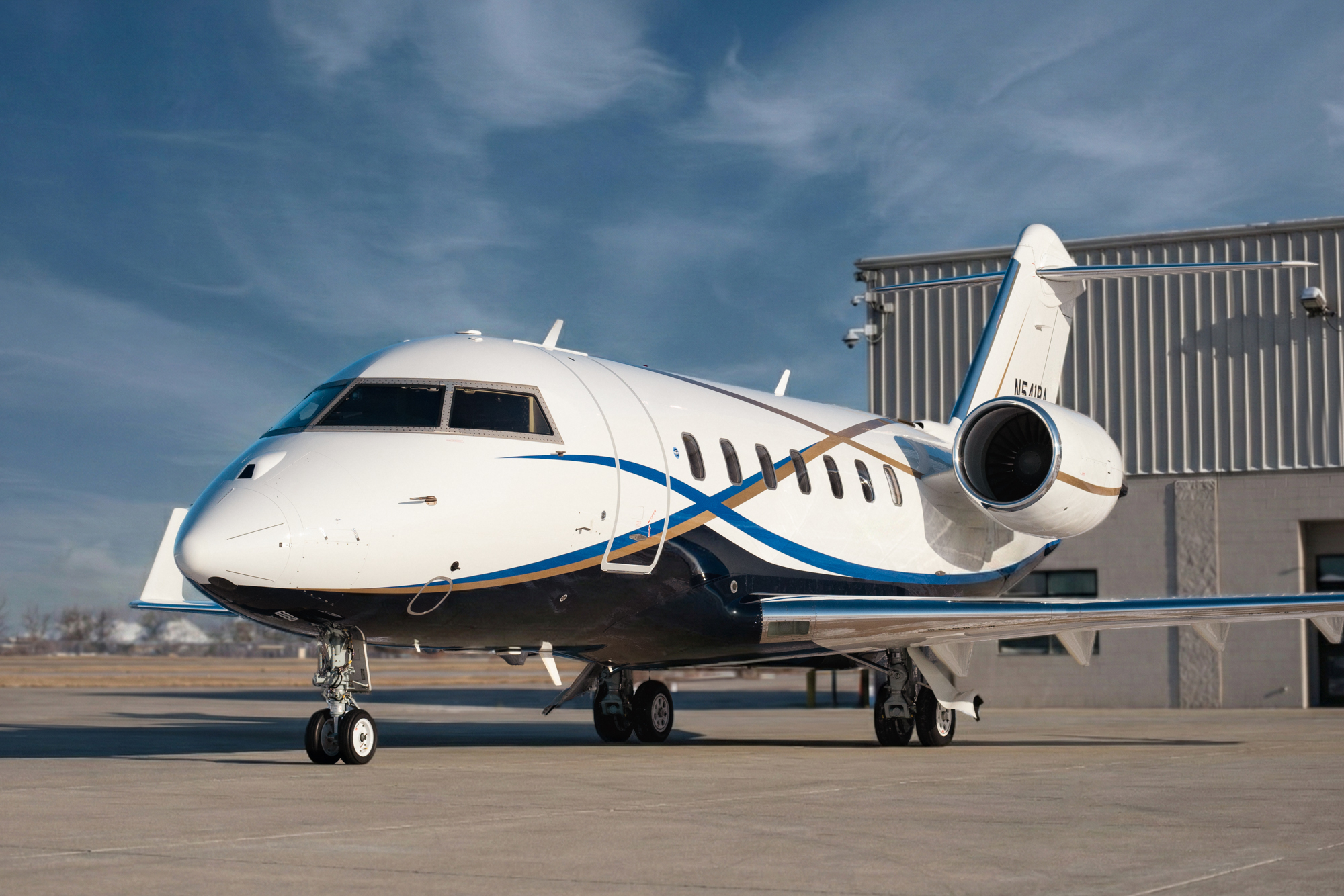
- Exterior: Vestal White with red, gold, and blue stripes
- 96-month inspection completed 1/2024
- Status: Available
About this Model
Overview
The Challenger 650 is a large-cabin business jet built around a wide cross-section cabin and a systems approach aimed at reliable, repeatable long-range operations. It is commonly selected by flight departments that value a cabin that supports meetings in flight, consistent luggage capacity, and a conservative performance envelope suited to a wide variety of airports and seasonal conditions.
Mission Fit
In practice, the aircraft aligns well with transcontinental and many transatlantic mission profiles depending on payload, winds, and alternates. Typical planning emphasizes carrying a full passenger load with a comfortable fuel reserve while keeping baggage accessible throughout the flight—useful for multi-leg days and international trips with more luggage.
Cabin
The cabin is known for its width and a layout that can accommodate both conversation and focused work. A full-service galley and an enclosed aft lavatory are common, supporting longer stage lengths and a more self-contained passenger experience. Baggage capacity is a key part of the design; many configurations allow in-flight access, which helps when travelers need coats, briefcases, or personal items mid-mission.