

Specifications
Broker
Aircraft Details
- Maintenance: Maintained under FAR Part 91; RVSM certified; recent landing gear overhaul and 240-month inspection completed in October 2022.
- Weights: Ramp weight 96,250 lbs; Maximum Takeoff Weight (MGTOW) 95,000 lbs; Fuel capacity 43,350 lbs; Landing weight 78,600 lbs; Basic Operating Weight (BOW) 50,810 lbs; Empty weight 49,730 lbs.
- Engines: Two BR710A2-20 engines; Engine 1 TTSNEW 9,049 hours, TCSN 2,802 hours; Engine 2 TTSNEW 9,200 hours, TCSN 2,886 hours.
- Avionics: Equipped with Honeywell Primus II ADF, Honeywell w/triple IC-800 autopilot, dual Honeywell RM-855 communication radios, Honeywell Primus 2000XP avionics package, and various other advanced systems including GPS, SATCOM, and Weather Radar.
- Interior: Executive configuration for 14 passengers; features include tan leather seating, black patterned carpeting, forward galley with microwave, and extensive entertainment options.
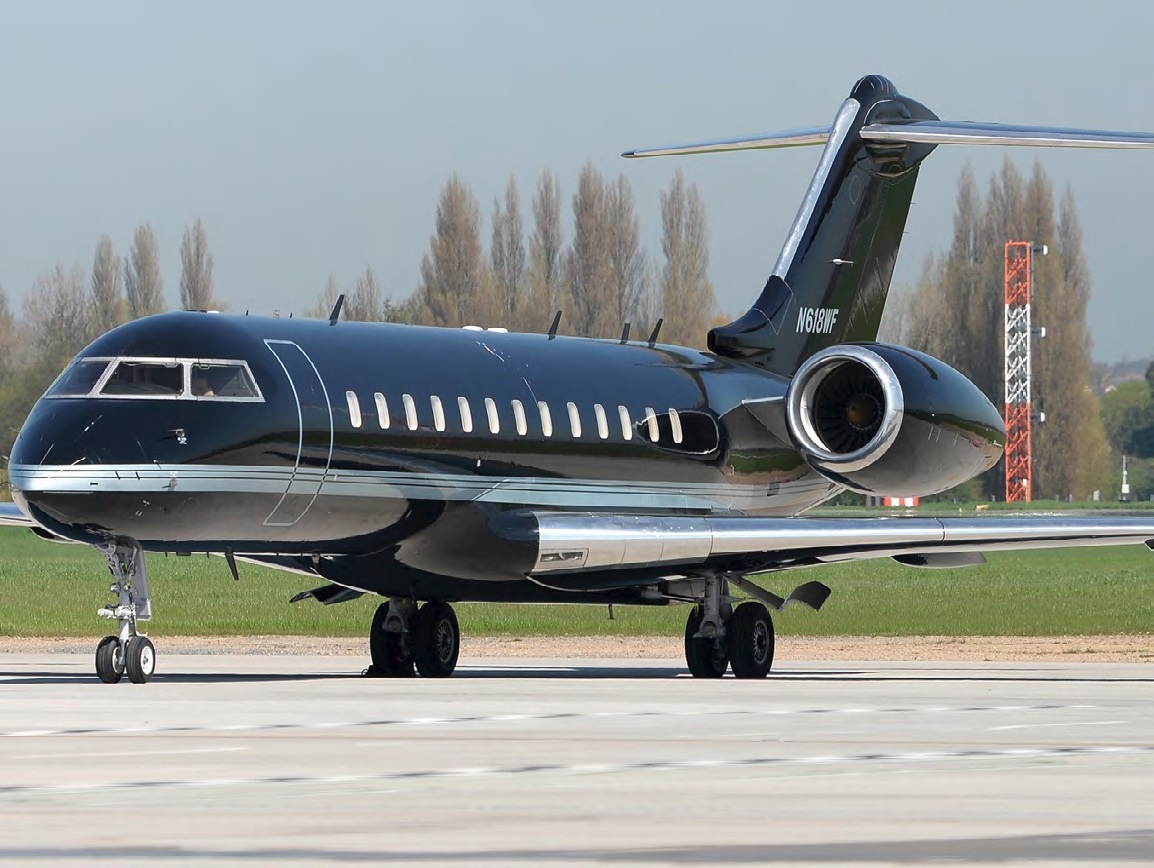
- Exterior: Refurbished in 2017; black with silver accents; equipped with winglets.
- Additional Features: Equipped with Aft and Forward lavatories, high-speed data, ADS-B capability, and standard safety systems like TCAS and TAWS.
About this Model
Overview
The Bombardier Global Express is a large-cabin, ultra-long-range business jet built to connect major city pairs with minimal stops while maintaining a multi-zone cabin environment. It sits in the intercontinental segment where range, cruise altitude capability, and cabin volume matter more than short-field flexibility. For buyers, the appeal is a combination of long legs, a wide and tall cabin cross-section, and systems sized for extended operations at high altitudes.
Mission Fit
Best aligned with long-range missions that justify a large-cabin aircraft: overnight sectors, oceanic crossings, and routes where avoiding fuel stops reduces schedule risk. It is less optimized for short-runway access or high-cycle regional shuttle use, where a smaller jet can be more practical.
Cabin
The cabin is typically arranged as a true long-range workspace and rest environment, commonly with distinct seating and lounge/dining zones and an enclosed aft lavatory; many aircraft include a crew rest area to support long duty days. The cross-section supports comfortable aisle movement and a more residential feel than smaller-cabin jets. Baggage access and galley capability vary by configuration and refit history, so specific aircraft layouts should be reviewed closely.