

Specifications
Broker
Aircraft Details
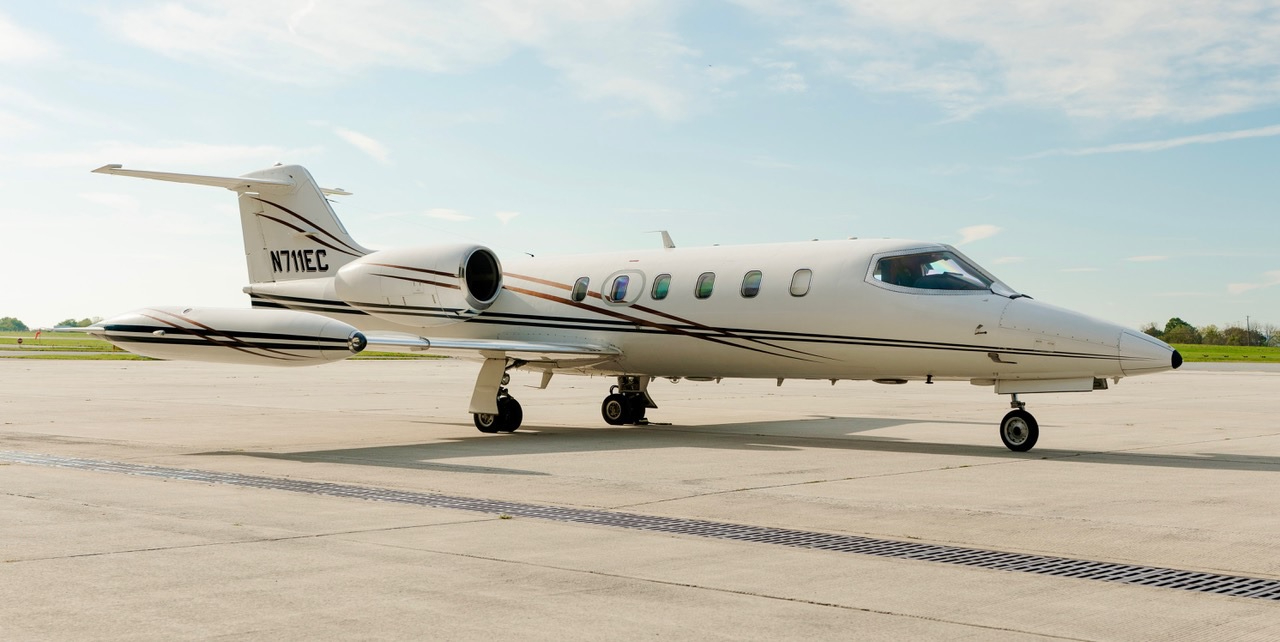
- Model: Learjet 35A
- Cargo door equipped
- High altitude modification
- Range: 2,000 NM
- Engines: Honeywell TFE731-2-2B (2 engines)
- Engine 1: 14,370 hours, TBO 4,200 hours
- Engine 2: 24,833 hours, TBO 4,200 hours
- Avionics: Collins Pro Line II, ADS-B equipped, WAAS, LPV
- Dual Collins FDS-85 Flight Directors
- Communication: Dual Collins VHF-20A
- Weather Radar: Bendix RDS-86
- Interior: 8 passenger, fire-blocked executive configuration
- Galley: Forward galley
- Lavatory: Private forward lavatory
- Exterior: Light tan with brown and copper stripes
- Maintenance tracking: CAMS
- Inspection status: Various phases due between 2025 and 2031
- RVSM certified
- Additional equipment: Drag chute, LED rotating beacons, STC'd standby pumps in tip tanks
About this Model
Overview
The Learjet 35A is a legacy light jet known for strong cruise performance and the ability to cover longer stage lengths than many aircraft in its size class. Buyers typically choose it for time-sensitive travel, access to a wide set of regional airports, and straightforward systems compared with newer-generation cockpits. Cabin volume and baggage access are more limited than midsize aircraft, so it tends to fit missions where speed and range matter more than stand-up comfort.
Mission Fit
In practice, the 35A works well for fast point-to-point trips with a modest passenger count and bags managed within light-jet limits. It is less well-suited to missions where the cabin is used as a working space for larger groups or where comfort expectations align more with midsize cabins.
Cabin
The cabin is compact and typically arranged for four to six passengers in a club-style layout, with limited ability for passengers to move around during flight. Noise levels, ride feel, and cabin amenities vary materially by individual aircraft and refurbishment history; many examples have been modernized with updated interiors, connectivity provisions, and LED lighting, but these are not standard by model year. The aft lavatory arrangement is functional but small, and baggage access is usually separated from the main cabin during flight depending on configuration.