

Specifications
Broker
Aircraft Details
- Maintenance: EASA Part 145 certified; multiple inspections due including Phase A (due 2021), Phase B (due 2022), Phase C (due 2023), and Phase D (due 2025).
- Engine: TFE731-2-2B model; MSP Gold maintenance program; equipped with thrust reversers.
- Additional Equipment: Life Port STC, forward & aft Aerosleds; Dee Howard thrust reversers; 36-inch cargo door; FIKI ice protection; gross weight increase modification; forward & aft baggage compartments.
- Avionics: Dual Collins ADF-60A, Sperry FC-200 autopilot, dual Collins VHF-22D communication radios, Universal CVR-30B CVR, dual Collins DME-40, L3 F-1000 digital FDR, Garmin GPS-165, Trimble TLN-2101 GPS, Bendix/King HF, Collins HSI-84, Collins ALT-55B radar altimeter, Sandel ST3400 TAWS, Honeywell CAS-67A TCAS-II, dual Honeywell MST-67A transponders, RCA Primus 300SL weather radar.
- Interior: Air ambulance configuration; Keith Freon air conditioning; forward & aft swivel seats, 1-place and 2-place divans.
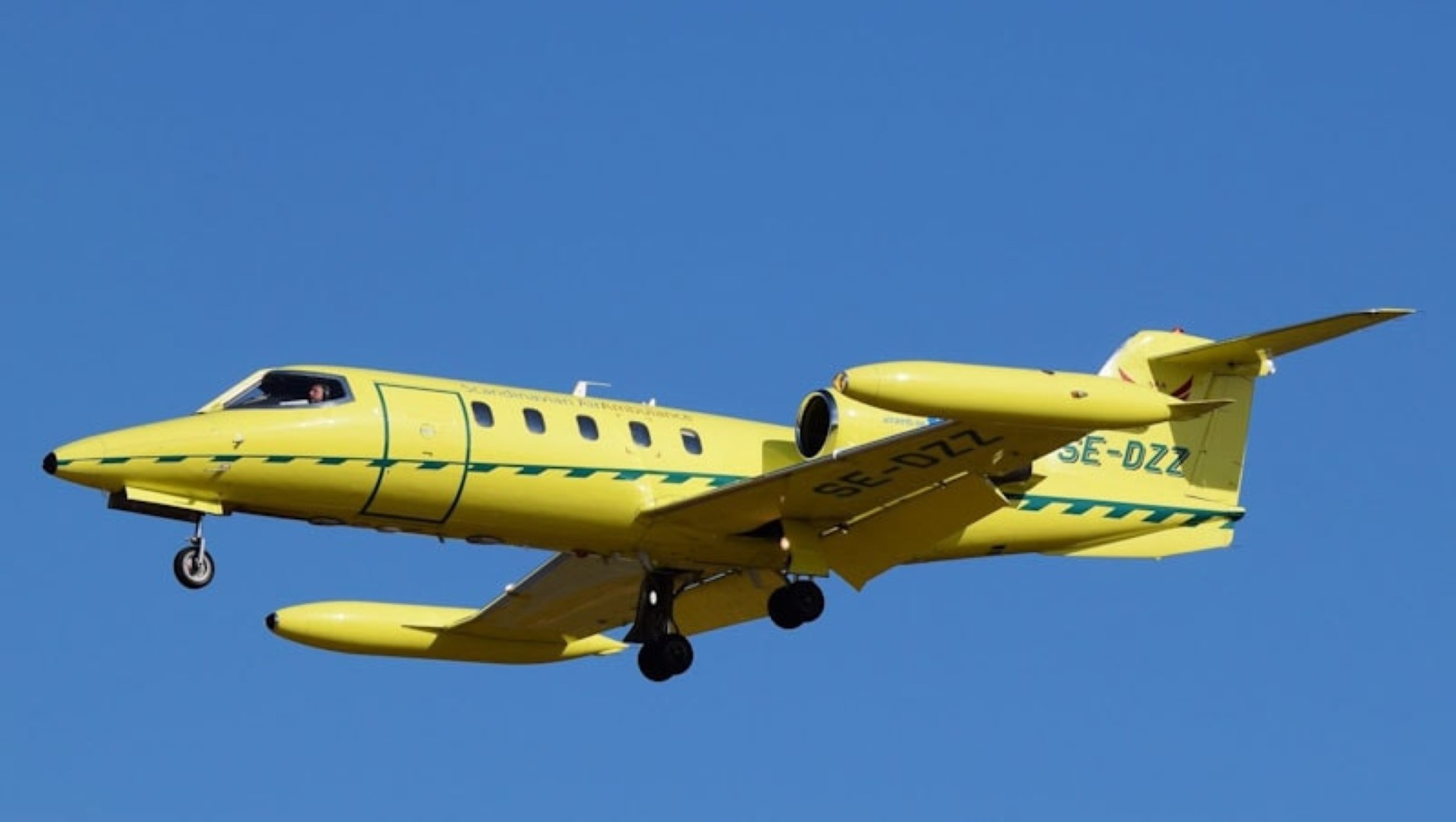
- Exterior: Painted in yellow with green stripes; standard EU ambulance exterior scheme; exterior done in 2013.
About this Model
Overview
The Learjet 35A is a legacy light jet known for strong cruise performance and the ability to cover longer stage lengths than many aircraft in its size class. Buyers typically choose it for time-sensitive travel, access to a wide set of regional airports, and straightforward systems compared with newer-generation cockpits. Cabin volume and baggage access are more limited than midsize aircraft, so it tends to fit missions where speed and range matter more than stand-up comfort.
Mission Fit
In practice, the 35A works well for fast point-to-point trips with a modest passenger count and bags managed within light-jet limits. It is less well-suited to missions where the cabin is used as a working space for larger groups or where comfort expectations align more with midsize cabins.
Cabin
The cabin is compact and typically arranged for four to six passengers in a club-style layout, with limited ability for passengers to move around during flight. Noise levels, ride feel, and cabin amenities vary materially by individual aircraft and refurbishment history; many examples have been modernized with updated interiors, connectivity provisions, and LED lighting, but these are not standard by model year. The aft lavatory arrangement is functional but small, and baggage access is usually separated from the main cabin during flight depending on configuration.