

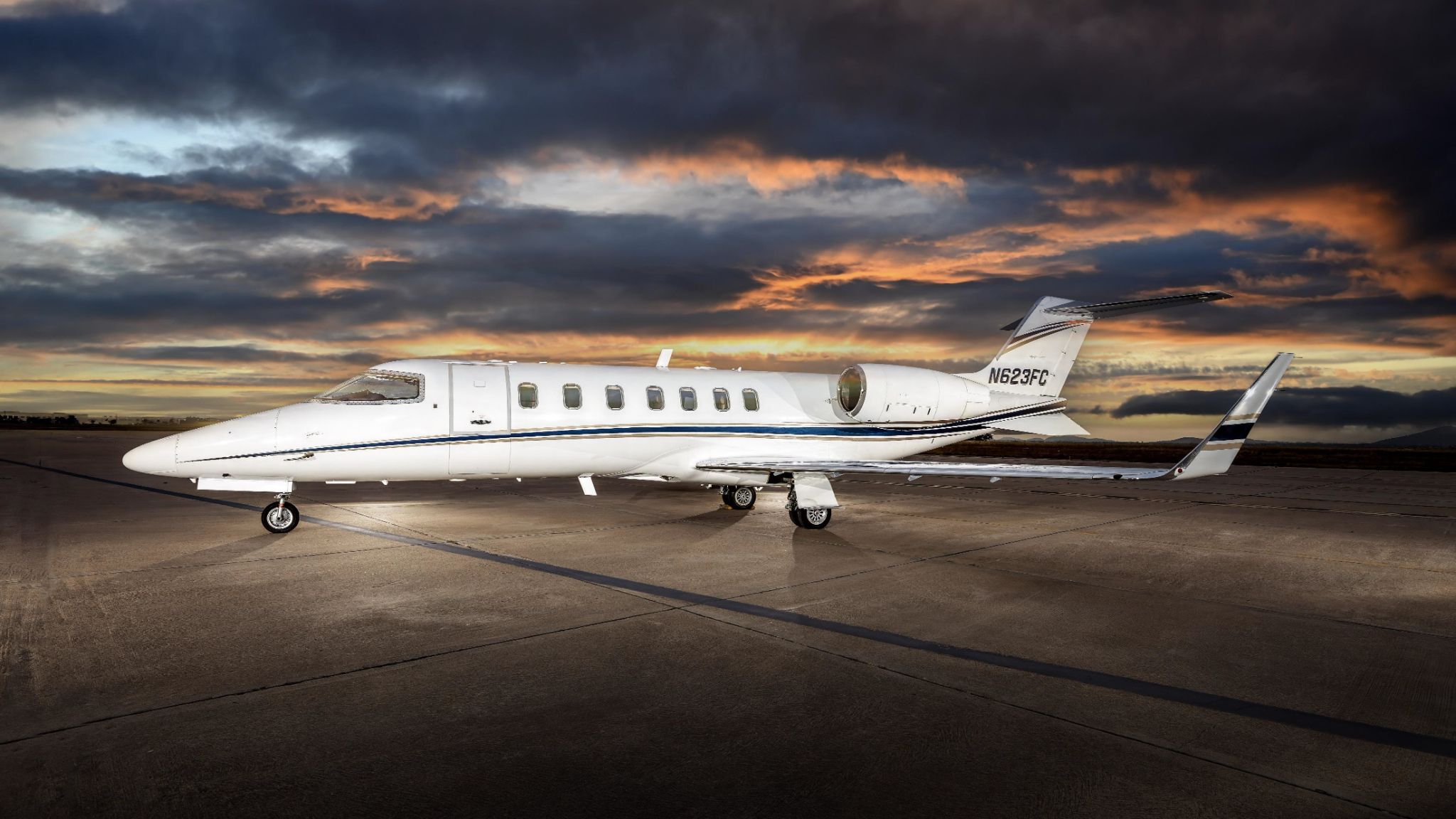
Specifications
Broker
Aircraft Details
- Engines: TFE731-20BR-1B (2 engines)
- Engine Maintenance Program: MSP Gold
- Total Hours: 4,717
- Total Cycles: 3,539
- Avionics: Primus 1000 Avionics Package
- ADF: Dual Honeywell Primus II
- Autopilot: Honeywell Primus 1000
- Communication: Dual Honeywell Primus II
- CVR: Honeywell
- DME: Dual Honeywell Primus II
- EFIS: Honeywell 4-tube 8" x 7"
- FMS: Universal UNS-1EW / LPV
- Navigation: Dual Honeywell Primus II
- TCAS: Honeywell TCAS-2000 TCAS-II
- Transponder: Dual Honeywell RCZ-833 Mode S
- Interior: 2017 by Weststar Aviation
- Configuration: Seven (7) passengers
- Layout: Forward 4-place club, Aft 2-place club, Forward galley, Belted aft lavatory
- Exterior: 2017 by Weststar Aviation
- Color: Matterhorn White with Ming Blue, Platinum Metallic, and Nordic Gray stripes
- Inspection Status: Fresh Phase A-C & 4800-hour inspections delivered, with various upcoming inspections scheduled.
About this Model
Overview
The Learjet 40XR is an evolution of the Learjet 40 with incremental performance and operating refinements aimed at reliable, efficient light-jet missions. It is typically used for 4–6 passenger trips where speed, climb, and access to smaller airports matter more than cabin volume. Compared with newer clean-sheet light jets, its value proposition is a proven airframe and systems architecture with the Learjet flying qualities, within the constraints of a narrower, shorter cabin and limited baggage flexibility.
Mission Fit
In day-to-day use, the 40XR fits corporate shuttles, owner-operator travel, and charter-type profiles that prioritize quick point-to-point trips and schedule reliability. It is generally better aligned with moderate stage lengths than full transcontinental missions with full passenger and baggage loads, where payload/range tradeoffs and cabin space become more apparent.
Cabin
The cabin is a classic light-jet environment: a forward club arrangement is common, with a compact galley/refreshment area and an enclosed lavatory typically located aft. Seating comfort is suited to short-to-medium legs, with aisle and shoulder space more constrained than newer light jets and midsize aircraft. Noise levels and ride comfort are characteristic of the type; specific cabin appointments vary widely by individual aircraft and refurbishment history.