

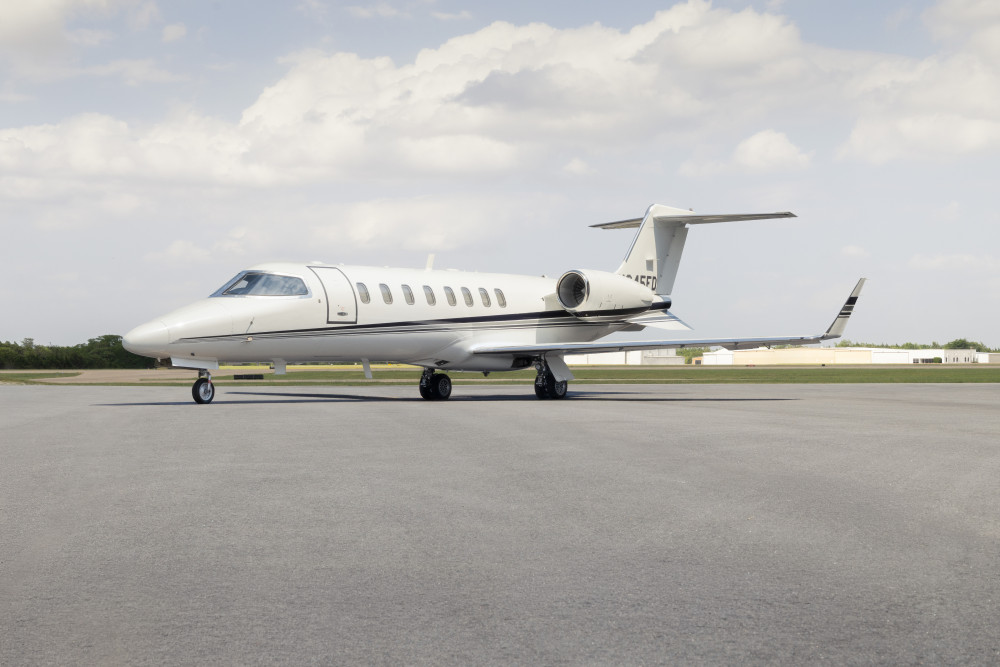
Specifications
Broker
Aircraft Details
- 1 US owner since new; maintained under FAR Part 91
- DU 875 avionics upgrade with Honeywell Primus Elite suite
- Avance L5 high-speed internet (Gogo AVANCE L5)
- Honeywell TFE731-20BR-1B engines with MSP Gold engine & APU programs
- Enrolled on SmartParts and Traxxall airframe tracking
- Total airframe time: 6,567 hours; 6,061 landings
- Recent major inspections: 2400-hour (due 2027), 1200-hour (due 2030), 12-month, and 600-hour completed
- Winglets and extended-range modification
- ADS-B Out, WAAS/LPV, SATCOM, TCAS-II 7.1, EGPWS, and weather radar
- Executive 8-passenger interior: double club seating, high-gloss Sapele wood veneer, four executive tables
- Entertainment: Airshow 400, 12.1-inch monitors, CD/DVD, cabin audio system
- MAPCO warming oven, dual hot liquid containers, 110V cabin power
- Externally-serviceable belted flushing lavatory with lighted vanity mirror
- Original 2002 paint: Matterhorn white with Amazon blue, titanium, and cumulus gray stripes
- 50 cubic foot tailcone baggage compartment, underseat drawers, 15 cubic foot internal storage
About this Model
Overview
The Bombardier Learjet 45 is a light jet designed for owner-operator and small-team business travel where time-to-destination matters more than large-cabin space. It sits above very light jets in cabin volume and baggage capability while remaining sized for regional and many metro airports. Typical use cases include two-to-six passenger trips with frequent legs in the 500–1,500 nm band, where quick climb and good cruise efficiency can reduce block time.
Mission Fit
The Learjet 45 tends to fit organizations prioritizing schedule flexibility and access to smaller airports while keeping cabin expectations realistic for the light-jet category. Payload-range and reserve requirements can make longer legs more restrictive when flying with higher passenger counts or heavier baggage.
Cabin
The cabin is arranged as a typical light-jet club seating environment with an enclosed aft lavatory and a forward galley/refreshment area depending on configuration. Seating comfort and aisle space are appropriate for short-to-mid legs; for longer flights, passenger comfort will depend heavily on seat design, cabin condition, and noise/vibration treatments of the specific aircraft. Baggage is generally split between an external compartment and smaller in-cabin storage, so packing style matters for passenger convenience.