

Specifications
Broker
Aircraft Details
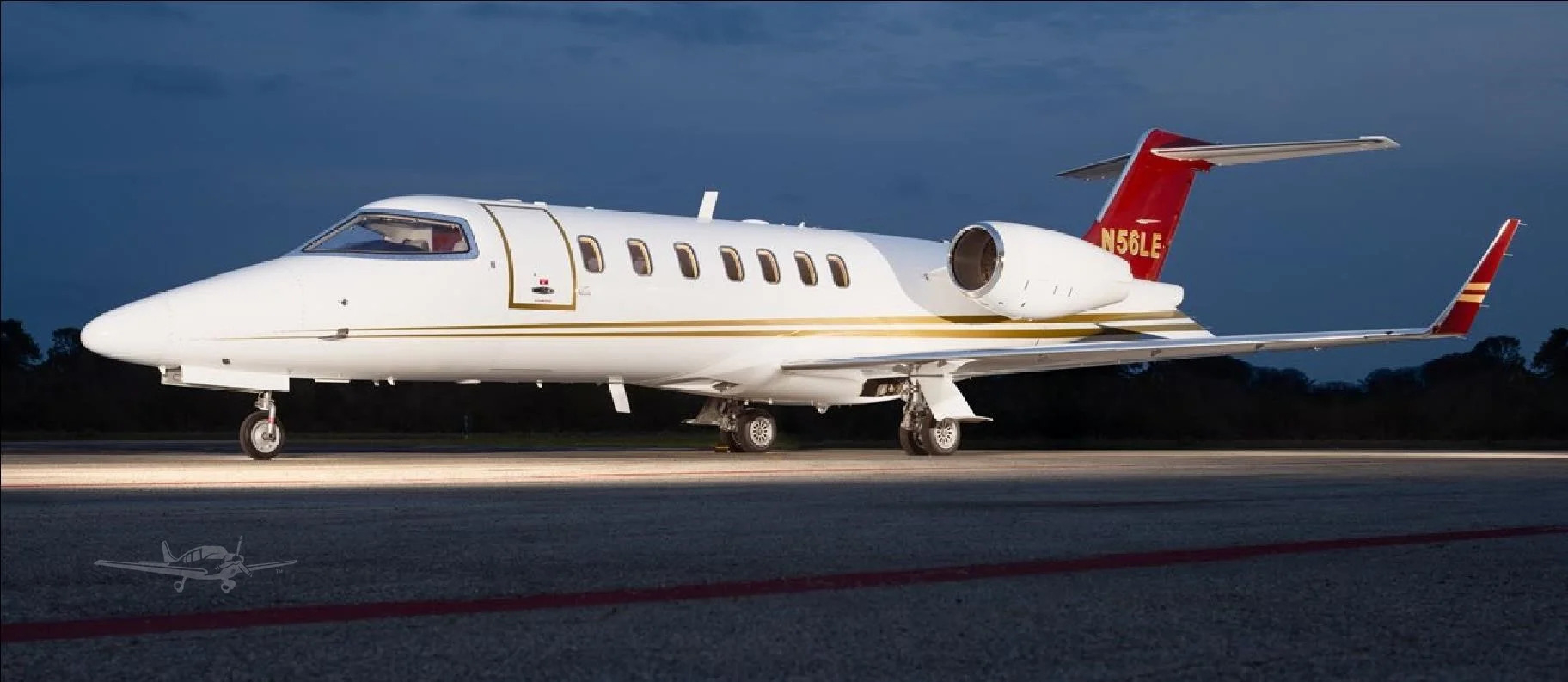
- Model: Learjet 45
- Condition: Used
- Based at: DWH, Houston, Texas
- Turnkey Part 135 operation
- HAPP avionics and MSP Gold coverage
- Seating: 6 tan leather club seats with wood accents and polished brass
- Power outlets and USB charging ports available
- Airframe total time: 4,744.7 hours
- Total cycles: 4,144
- Engine 1: Honeywell TFE731-20AR-1B, 4,744.7 hours since new (SNEW)
- Engine 2: Honeywell TFE731-20AR-1B, 4,744.7 hours since new (SNEW)
- Avionics: Enrolled on Honeywell HAAP, includes 4 display screens (DU870’s), Emergency Locator Transmitter, Cockpit Voice Recorder, Dual VHF, Dual RNZ-851, and more
- Additional equipment: Vapor Cycle Air Conditioning, Auxiliary Heat System, Lavatory Sink and Mirror
- Exterior: Chevron White with Toreador red, light brown, and gold stripes
- Interior configuration: 6 passengers (4 club seats, 2 captain seats)
About this Model
Overview
The Bombardier Learjet 45 is a light jet designed for owner-operator and small-team business travel where time-to-destination matters more than large-cabin space. It sits above very light jets in cabin volume and baggage capability while remaining sized for regional and many metro airports. Typical use cases include two-to-six passenger trips with frequent legs in the 500–1,500 nm band, where quick climb and good cruise efficiency can reduce block time.
Mission Fit
The Learjet 45 tends to fit organizations prioritizing schedule flexibility and access to smaller airports while keeping cabin expectations realistic for the light-jet category. Payload-range and reserve requirements can make longer legs more restrictive when flying with higher passenger counts or heavier baggage.
Cabin
The cabin is arranged as a typical light-jet club seating environment with an enclosed aft lavatory and a forward galley/refreshment area depending on configuration. Seating comfort and aisle space are appropriate for short-to-mid legs; for longer flights, passenger comfort will depend heavily on seat design, cabin condition, and noise/vibration treatments of the specific aircraft. Baggage is generally split between an external compartment and smaller in-cabin storage, so packing style matters for passenger convenience.