

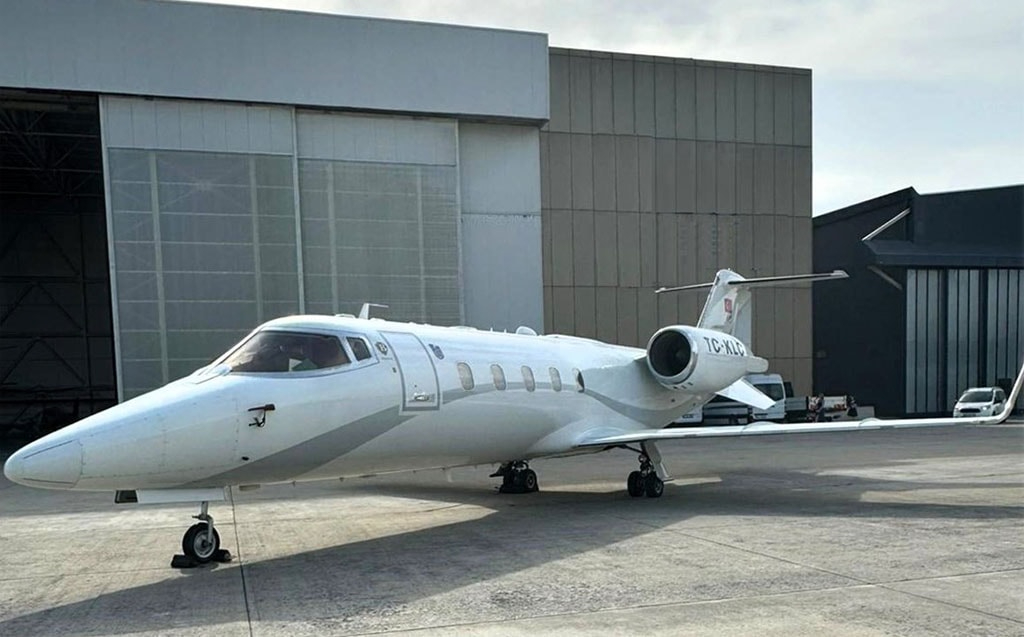
Specifications
Aircraft Details
- Engine Model: PW305A
- Engines: 2 (both TBO 7200 hours, TCSN 2268 hours)
- Certifications: MNPS, RNP-1, RNP-10, RNP-5, RVSM
- Maintenance Notes: APU turbine wheel replacement due by 06/26/2025
- Inspection Compliance:
- Landing Gear Inspection: Nose due at 8249 cycles, Main due at 3751 cycles
- 3000-Landings Inspection due at 3000 cycles
- Phase D Inspection due by 05/13/2027
- Phase B Inspection due by 03/27/2025
- Phase C Inspection due by 03/27/2027
- 12-Year Inspection due by 03/08/2036
- Phase A Inspection due by 04/02/2025
- Additional Equipment: Winglets
- Interior Configuration: Executive, 7 passengers, belted aft lavatory
- Exterior Color: White
- Avionics: Collins Pro Line 21, Dual Collins GPS, Weather Radar, SATCOM (inactive), TCAS-II
- Features: Equipped with 8.33 channel spacing, RVSM, High-Speed Data/Wifi, ADS-B, Terrain Awareness & Warning System, Traffic Collision Avoidance System, and more.
About this Model
Overview
The Learjet 60XR is an updated version of the Learjet 60, retaining the type’s emphasis on cruise speed and climb performance while adding a more modern flight deck and cabin refinements. It is typically used for regional and mid-length business trips where time-to-climb, fast cruise, and access to shorter runways matter, with a cabin sized for comfortable seated productivity rather than stand-up movement.
Mission Fit
Typical missions favor two-to-three-hour legs with the ability to depart efficiently from a wider set of airports than some larger-cabin jets. It fits teams that prioritize schedule control and speed over maximum cabin volume, and it works well for mixed business travel where a midsize footprint is a constraint at certain ramps and hangars.
Cabin
Cabin comfort is oriented around a club-style seating environment with good forward visibility and a compact, functional galley area depending on configuration. The 60XR remains a low-slung Learjet cabin: well suited to seated work and conversation, but less conducive to moving around in-flight compared with larger-cabin midsize and super-midsize designs. Baggage is typically split between internal and external areas; buyers should confirm what is accessible in flight for their use case.