

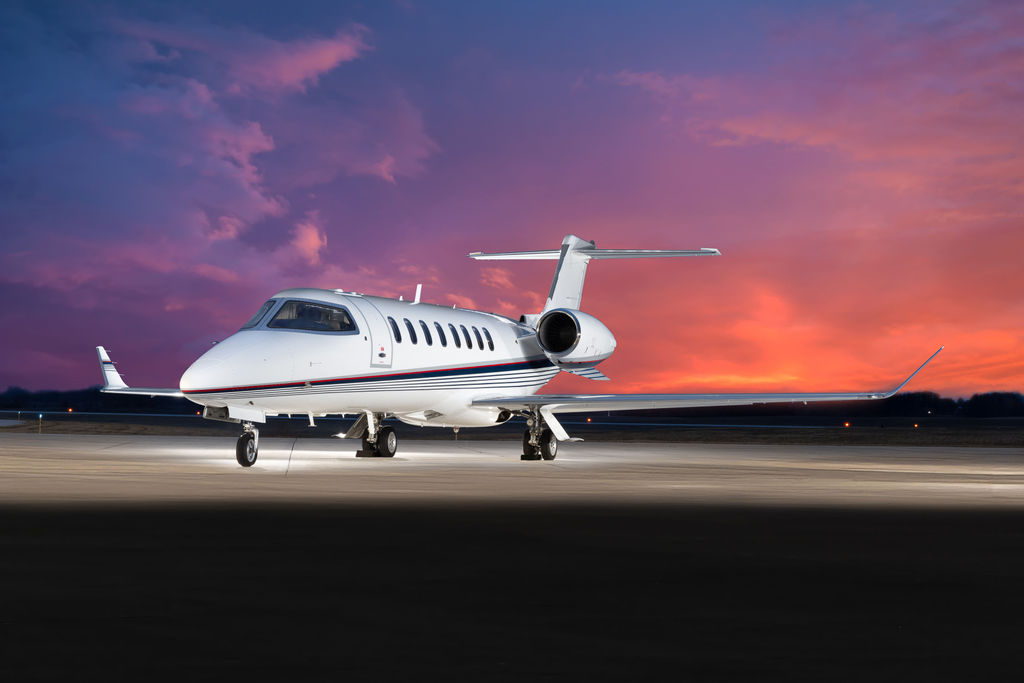
Specifications
Broker
Jet Aviation Brokers
+1 (305) 555-0142
Aircraft Details
• One owner since new, always hangared, no damage history
• 4,856 hours total time, 4,163 landings
• 2,040 nautical mile range
• Engines and APU enrolled on MSP, maintenance tracked by CAMP
• Recent 12-year/4,800-hour inspection completed
• Honeywell TFE731-40BR-1B engines (#1: 4,792 hrs, #2: 4,856 hrs)
• APU: Honeywell RE100 (1,520 hrs)
• Garmin G5000 Vision Flight Deck (Phase IIIA), triple landscape displays, GDL69 XM Weather, GSR56 Iridium SATCOM (cockpit only)
• ADS-B Out, WAAS/LPV, RVSM, MNPS, FM Immunity, 8.33 spacing
• Eight-passenger executive interior, double-club configuration, tan leather, dark wood, light brown carpet
• Forward galley, aft lavatory with privacy door, belted seat, sink, aft storage
• Cabin entertainment: Airshow moving map, 12" LCD monitor, Blu-Ray player, six 7" seat monitors
• Exterior: Snow White with gray, maroon, and navy blue accent stripes
• Winglets, LED taxi lights, tailcone cooling, TOLD performance, aileron corrosion SB complete
• Airworthy, with inspection status up to date
About this Model
Overview
The Learjet 75 is a late-generation Learjet family light jet designed around fast cruise, strong climb, and a conventional business-jet cabin for 6–8 passengers depending on layout. It is commonly selected by owner-operators and corporate flight departments that value time-to-climb and point-to-point utility within North America and similar regional networks, while keeping the footprint and operating complexity of a light jet.
Mission Fit
In typical use, the Learjet 75 fits 300–1,500 nm stage lengths with schedule-driven turns. It can cover longer legs under favorable conditions, but mission planning is more comfortable when reserves, alternate requirements, and passenger/baggage loads do not push the airplane to its limits. If your core mission is transcontinental with consistently high payload and comfort expectations, step-up categories generally fit better.
Cabin
The cabin is a classic light-jet environment: a club seating area with a compact forward galley/refreshment center and an aft lavatory. Seating and storage are adequate for business travel, but passenger movement is more constrained than in midsize cabins, and carry-on management matters when traveling with larger groups. Noise and ride quality are typical for the class, with the best experience achieved when the aircraft is operated at the high flight levels in cruise.