

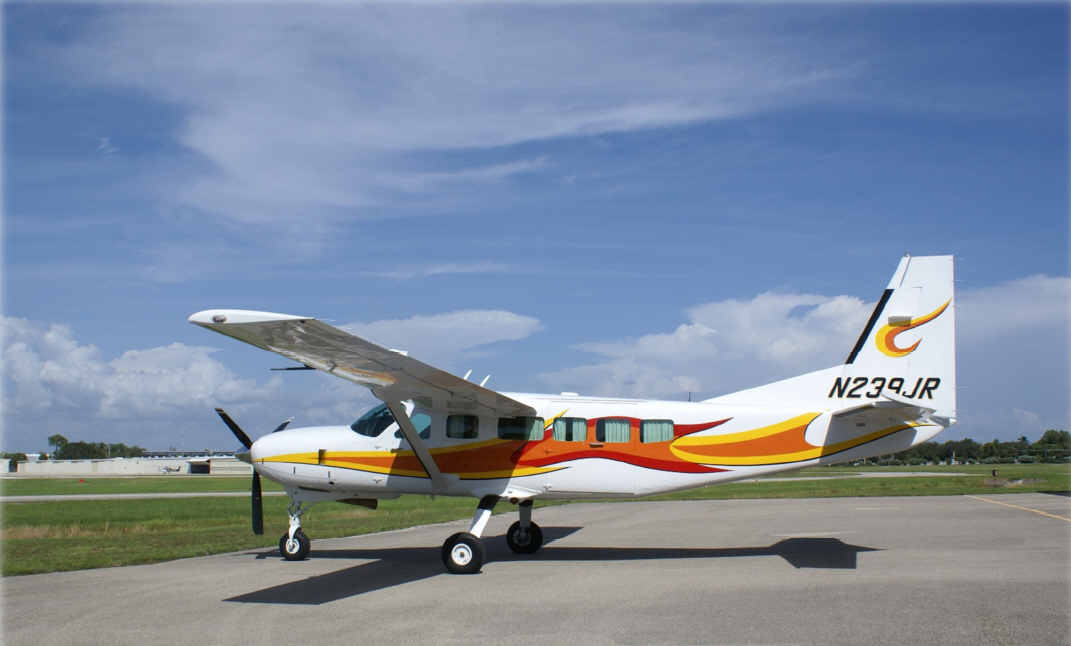
Specifications
Aircraft Details
- Maintenance: Maintained under FAR Part 91.
- Engine: PT6A-114 model; TBO of 3600 hours; equipped with one engine.
- Additional Equipment:
- FIKI ice protection
- McCauley propeller
- Wipaire single-point refueling
- Gross weight increase kit
- Oversized tires with extended nose fork
- Cargo tie-down fittings
- 10-place oxygen system
- Quick-drain oil valve
- Retractable crew steps
- Skandia soundproofing blanket
- Float plane provisions
- Whelen flashing beacon
- Avionics:
- Garmin ADAHRS
- Bendix/King KR-87 ADF
- Garmin GFC-700 autopilot with yaw damper
- Garmin GNS-430W and GNS-530W communication and navigation radios
- Bendix/King KMD-550 MFD
- Garmin GTX-330 and GTX-345 transponders
- Bendix/King RDR-2000 weather radar
- BFGoodrich WX-500 Stormscope
- Interior: Executive configuration; Caressa mango leather seating; forward refreshment cabinet with espresso maker; dual Enflite cabin tables; dual aft AC outlets.
- Exterior: Completed in July 2009; colors include Matterhorn white with yellow, red, orange, and black accents.
About this Model
Overview
The Cessna 208 Caravan is a single-engine turboprop designed around simple dispatch, large cargo volume, and the ability to operate from short and unimproved runways. It is commonly configured for commuter passenger service, freight, mixed-use “combi” layouts, and special-mission roles where low-speed handling and practical loading access matter more than cruise speed.
Mission Fit
The Caravan fits missions where operators need a dependable platform to move people or cargo into and out of small airports, gravel strips, or constrained runways. It is most efficient when sectors are relatively short and the value is in payload flexibility and runway access rather than speed.
Cabin
Cabin experience is utilitarian and mission-driven. Typical passenger interiors emphasize easy entry, durable materials, and straightforward seating rather than a quiet, pressurized environment. The large rectangular cabin cross-section and wide cargo door support fast loading and flexible layouts, including passenger seating, cargo pallets, or mixed configurations depending on the aircraft’s STC and interior kit.