

Specifications
Broker
Aircraft Details
• Total airframe time: 6,930–6,970 hours; 2,237–2,242 cycles
• Engine: Pratt & Whitney PT6A-114A, 7,832–7,872 hours since new, 2,372–2,377 cycles, 40 hours since overhaul by Pratt & Whitney
• Propeller: Hartzell HC-D4N-3R, 4-blade, 4,817–4,857 hours since new
• Avionics: Garmin GNS-530 & GNS-430, Garmin GTX-330 transponder, Bendix/King RDR-2000, Bendix/King KN63 DME, Honeywell KRA-405B radar altimeter
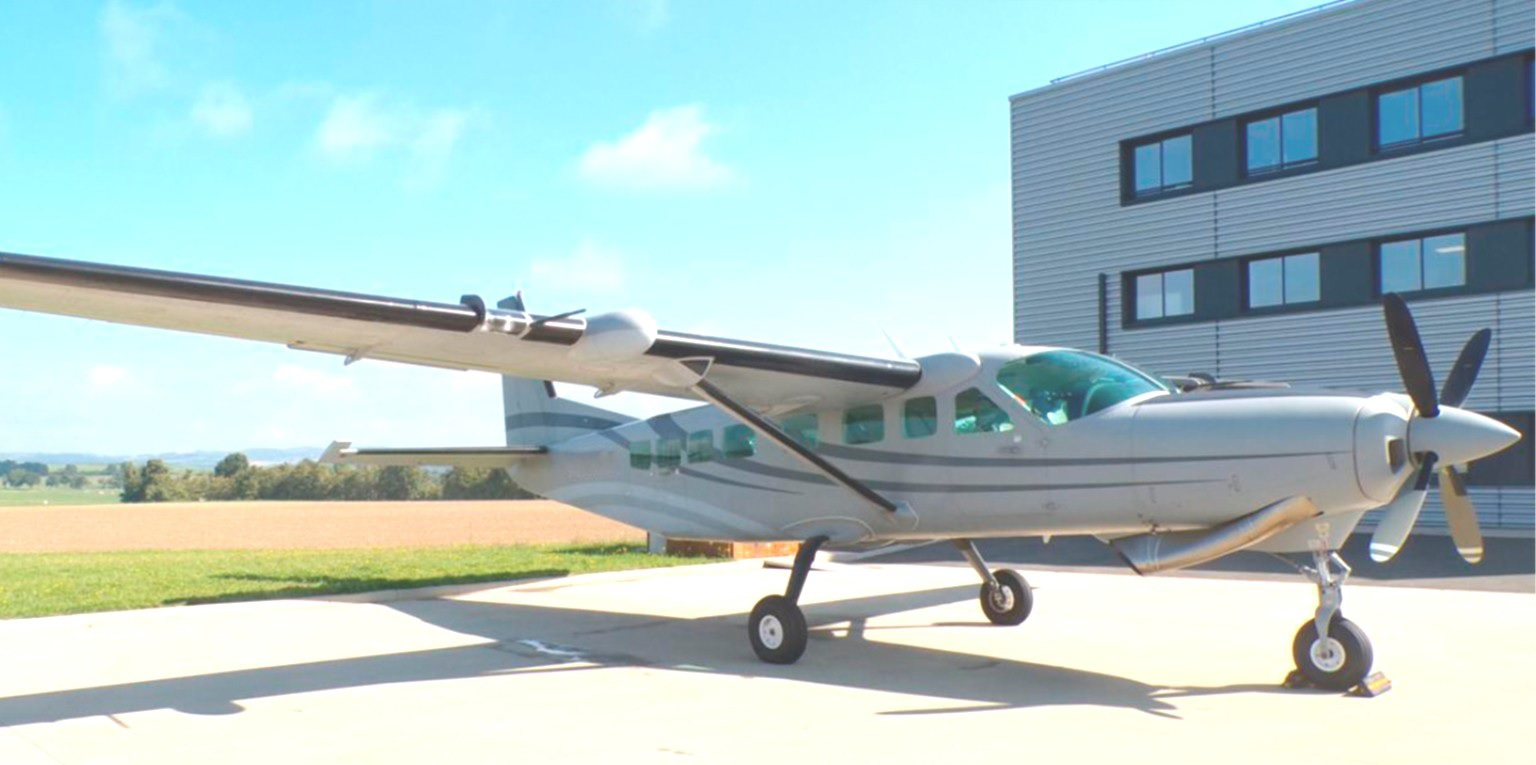
• Additional equipment: Hartzell 4-blade prop, exhaust deflector, cargo door modification, ADAS+, payload extender II, rudder gust lock
• Flight Into Known Icing (FIKI) equipped
• Professionally flown and maintained since new, with meticulous logbooks and no damage history
• Fresh annual inspection in progress
• Exterior: Overall grey with silver accent striping, last painted 2008
• Interior: Commuter configuration, seating for 8, finished in grey leather/vinyl
About this Model
Overview
The Cessna 208B Grand Caravan is a high-wing, fixed-gear turboprop designed around payload, simplicity, and off-airport practicality rather than speed or high-altitude cruise. It is commonly operated as a commuter, charter, freight, medevac, and special-mission platform, where quick turnarounds, rugged handling, and a large, reconfigurable cabin are more important than jet-like trip times.
Mission Fit
The Grand Caravan fits missions that value access and payload over speed: short-to-medium legs, frequent stops, and airfields with limited infrastructure. It is especially well suited to operators needing a single type to cover scheduled commuter runs, ad-hoc charter, and freight with minimal changeover time. For longer legs, passengers may experience more cabin noise and weather variability than in pressurized twins or jets.
Cabin
Cabin comfort is utilitarian and highly dependent on the interior and operator configuration. The wide, boxy cross-section supports a range of seat layouts and quick conversion between passengers and cargo. The high wing and tall cabin volume help with headroom and loading, while the large cargo door and low sill height (relative to many aircraft) make bulky items easier to handle. Noise and vibration levels are typical of single-engine turboprops and vary with insulation packages and propeller configuration.