

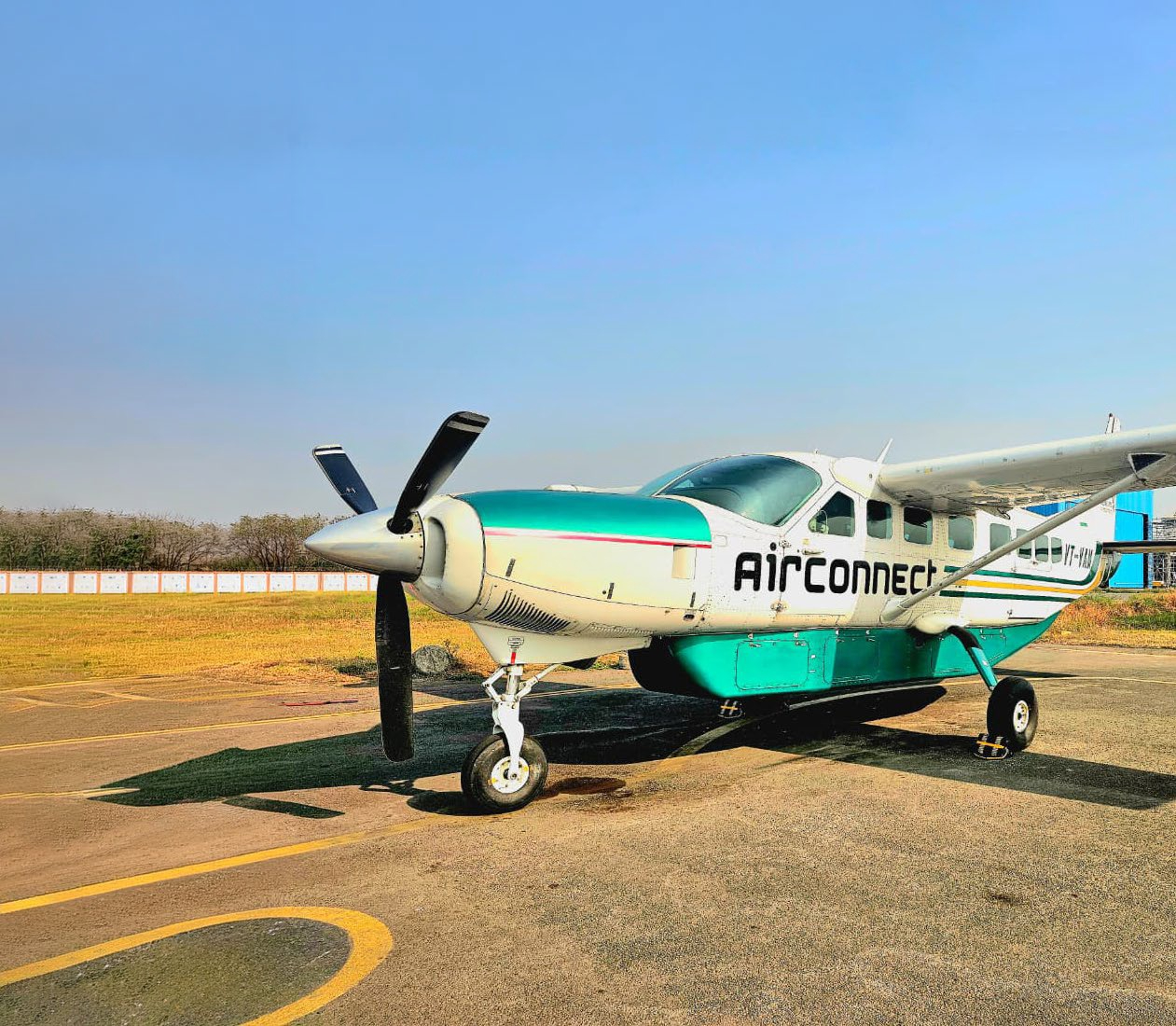
Specifications
Aircraft Details
- Model: CESSNA 208B GRAND CARAVAN
- Condition: Used
- Same operator since new
- Interior refurbished in 2023
- Will deliver with fresh 12-month inspection
- No damage history
- Commercially operated
- Engine: Pratt & Whitney Canada PT6A-114A
- Engine total time: 5,546 hours
- Time since overhaul: 2,066 hours
- Remaining hours until overhaul: 1,533 hours
- Propeller: McCauley 3-blade constant-speed, time since overhaul: 2,031 hours
- Avionics: GARMIN G1000 system, including dual Garmin GIA63W, Honeywell KR87 ADF, and Garmin GTX 33 transponder
- Exterior: Original paint, snow white with emerald green underbelly and stripes
- Interior configuration: 9 passenger seats (7 individual seats and 1 two-place bench) and 2 crew seats
- Air conditioning: Freon
- Last major inspection completed on 08.04.2025
- Next inspection due on 25.02.2027
About this Model
Overview
The Cessna 208B Grand Caravan is a high-wing, fixed-gear turboprop designed around payload, simplicity, and off-airport practicality rather than speed or high-altitude cruise. It is commonly operated as a commuter, charter, freight, medevac, and special-mission platform, where quick turnarounds, rugged handling, and a large, reconfigurable cabin are more important than jet-like trip times.
Mission Fit
The Grand Caravan fits missions that value access and payload over speed: short-to-medium legs, frequent stops, and airfields with limited infrastructure. It is especially well suited to operators needing a single type to cover scheduled commuter runs, ad-hoc charter, and freight with minimal changeover time. For longer legs, passengers may experience more cabin noise and weather variability than in pressurized twins or jets.
Cabin
Cabin comfort is utilitarian and highly dependent on the interior and operator configuration. The wide, boxy cross-section supports a range of seat layouts and quick conversion between passengers and cargo. The high wing and tall cabin volume help with headroom and loading, while the large cargo door and low sill height (relative to many aircraft) make bulky items easier to handle. Noise and vibration levels are typical of single-engine turboprops and vary with insulation packages and propeller configuration.