

Specifications
Broker
PARACLETE AVIATION
Aircraft Details
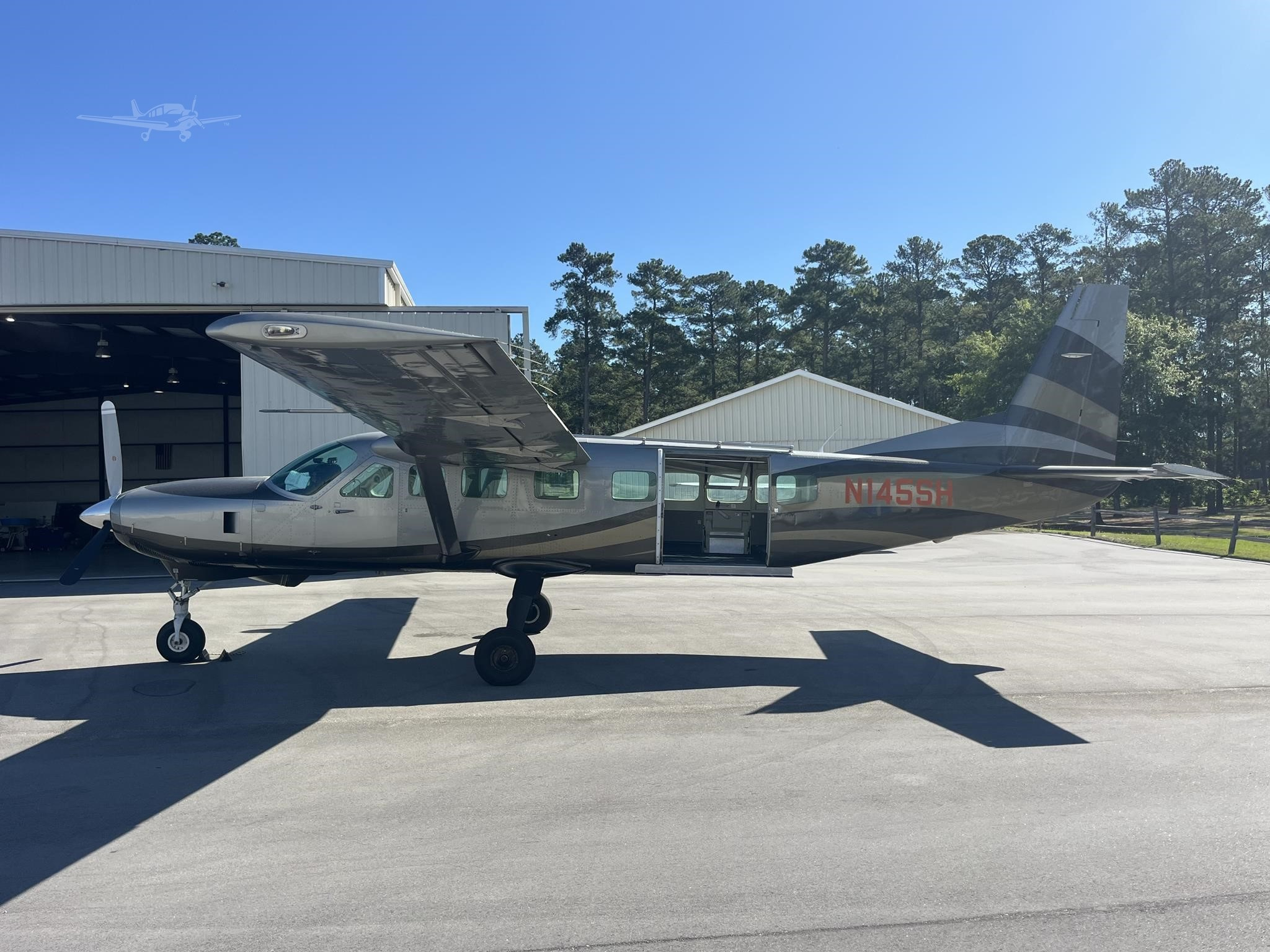
- Skydiving configuration with roll-up door, jump step, floater bar, bench seats, and passenger seats included; cargo door also included
- Airframe total time: 3,739 hours; total landings: 8,438; complete logs available
- Pratt & Whitney PT6A-140 engine: 3,739 hours since new, 6,700 cycles, 4,000-hour TBO
- Hartzell HC-B3TN-3AF propeller: 0 time since overhaul
- Avionics: Garmin G1000 suite with dual Garmin GDU 1040A PFD/MFD, dual GIA-63 NAV/COMM/GPS, dual GDC-74A ADC, dual GRS-77 AHRS, Garmin GFC-700 autopilot, Garmin GTX-33 Mode S transponder, GTS-800 TCAS, TAWS, Garmin Synthetic Vision, Garmin GDL-69A w/XM Radar, Artex C406-N ELT
- Additional equipment: extended nose fork, exhaust deflector, 24V battery, 300-amp starter/generator, ADS-B Out, WAAS, copilot instruments/controls, digital clock, flight hour recorder
- Freon air conditioning, LED interior lighting
- Exterior: DuPont antique silver pearl with charcoal gray pearl and Spanish gold pearl stripes (by Capital Aviation)
- Last annual inspection by Textron in September 2019 (FAR Part 91)
- Based at Raeford, North Carolina (5W4)
About this Model
Overview
The Cessna 208B Grand Caravan EX is a single-engine turboprop optimized for utility work where runway access, payload, and dispatch reliability matter more than cruise speed. The EX variant pairs the stretched Caravan airframe with a higher-power Pratt & Whitney PT6A-140, supporting strong takeoff and climb performance in hot/high and heavy-load operations. It is commonly configured for commuter, charter, cargo, and mixed-use flying, and it is widely adapted for roles such as skydiving, air ambulance, surveillance, and remote logistics.
Mission Fit
This model fits operators who prioritize access and payload over speed. It is well-suited to multiple legs per day with quick loading, and to networks where runway length or surface limits other aircraft. It is less aligned with missions that consistently demand higher cruise speeds, pressurization, or twin-engine capability due to company policy or operating environment.
Cabin
Cabin experience depends heavily on interior choice: the aircraft can be set up for high-density commuter seating, executive-style seating, cargo, or quick-change combinations. The large cargo door and relatively boxy cross-section support practical loading and cabin flexibility. Expect a utilitarian cabin environment with more propeller and airflow noise than pressurized turbine aircraft, and comfort that varies with soundproofing, seat selection, and environmental-control options.