

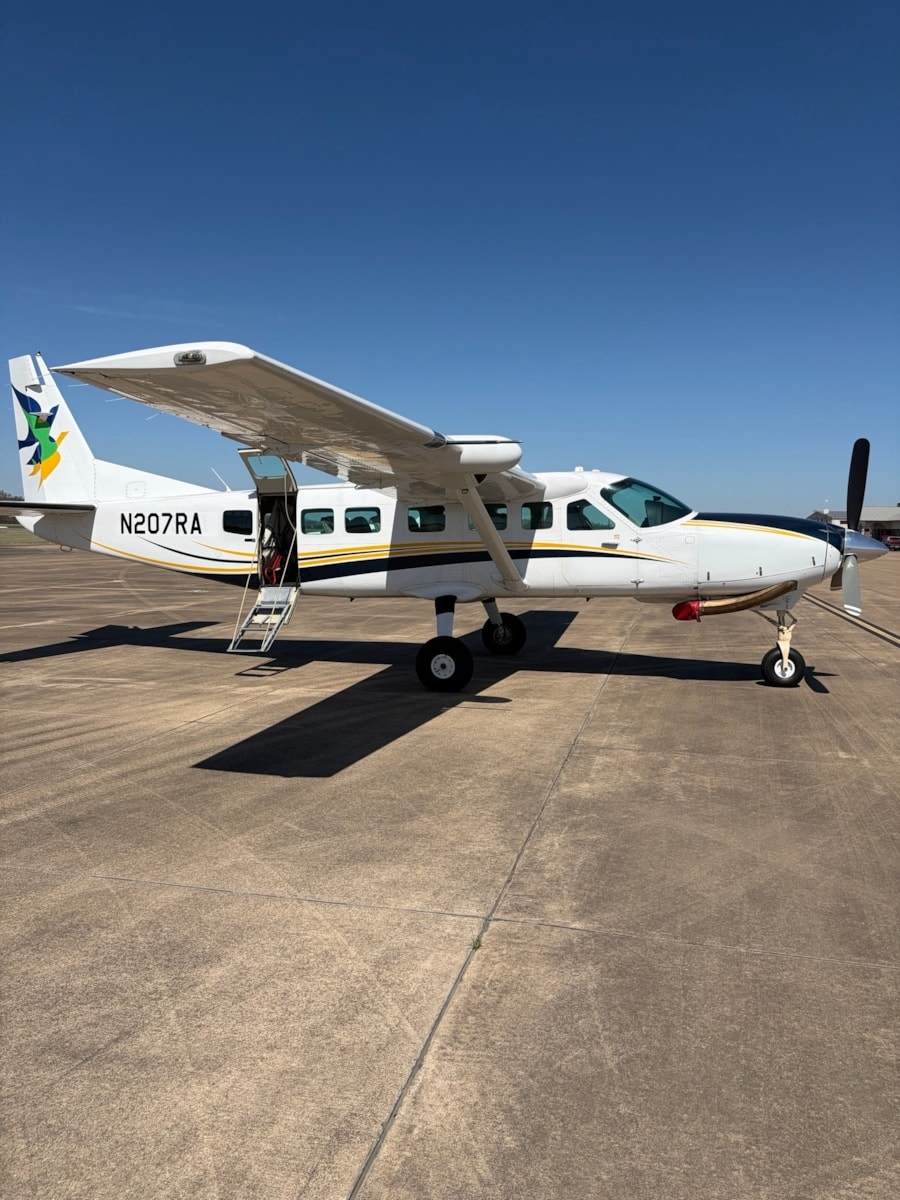
Specifications
Broker
Aircraft Details
- Model: CESSNA 208B GRAND CARAVAN EX
- Condition: Used
- Flight Rules: IFR
- Location: Jacksonville, Texas
- Range: 900 NM
- Useful Load: 3,865.4 lb
- Fresh inspection due in November 2025
- Engine: Pratt & Whitney PT6A-140, 100 hours since new
- Propeller: Hartzell HC-B3TN-3AF, 3 blades, 100 hours since new
- Avionics: Garmin G1000, Garmin G600, Garmin GTX 33, ADS-B equipped, WAAS, LPV, SVT
- Additional Equipment: Amphibious float kit, factory air conditioning, soundproofing, extended baggage system, gust lock kit, gross weight increase, landing light controller, exhaust deflector
- Exterior: Painted in 2014, primary color white, secondary colors blue and yellow stripes, rating 7.0
- Interior: Completed in 2014, 14 seats (12 passengers + 2 crew), rating 7.5, generous storage throughout
- Annual Inspection: Due 10/2025, IFR Certification: Due 1/2026
- Airworthy status: Yes
About this Model
Overview
The Cessna 208B Grand Caravan EX is a single-engine turboprop optimized for utility work where runway access, payload, and dispatch reliability matter more than cruise speed. The EX variant pairs the stretched Caravan airframe with a higher-power Pratt & Whitney PT6A-140, supporting strong takeoff and climb performance in hot/high and heavy-load operations. It is commonly configured for commuter, charter, cargo, and mixed-use flying, and it is widely adapted for roles such as skydiving, air ambulance, surveillance, and remote logistics.
Mission Fit
This model fits operators who prioritize access and payload over speed. It is well-suited to multiple legs per day with quick loading, and to networks where runway length or surface limits other aircraft. It is less aligned with missions that consistently demand higher cruise speeds, pressurization, or twin-engine capability due to company policy or operating environment.
Cabin
Cabin experience depends heavily on interior choice: the aircraft can be set up for high-density commuter seating, executive-style seating, cargo, or quick-change combinations. The large cargo door and relatively boxy cross-section support practical loading and cabin flexibility. Expect a utilitarian cabin environment with more propeller and airflow noise than pressurized turbine aircraft, and comfort that varies with soundproofing, seat selection, and environmental-control options.