

Specifications
Broker
Aircraft Details
- Low time, only 4950 hours total time since new
- Two owners since new, always hangared
- Blackhawk XP135A engine upgrade (PT6A-135A engines, 1404 hours since new, 124 hours since overhaul)
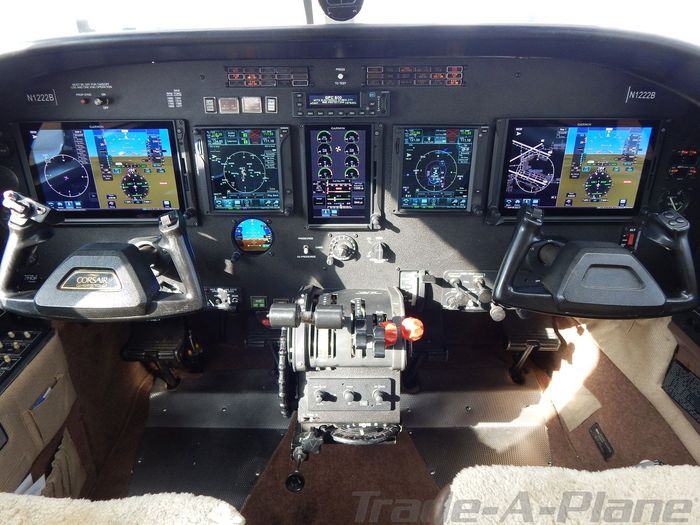
- Full Garmin glass panel: G600 TXi, dual GTN 750, GFC 600 autopilot, GTS-800 TCAS, GWX-68 weather radar, ADS-B In/Out
- Eight seats (including belted lavatory seat) in brown leather with fawn sidepanels, praline carpet, oyster headliner, Kustomcraft cabinetry
- Known ice protection, increased gross weight to 8600 lbs, aft strakes, American Aviation exhaust stacks
- 4-blade McCauley "Black Mac" props (overhauled June 2023)
- New one-piece instrument panel (June 2023), new pilot windshield and side windows
- Fresh Yingling Phase 2, 3 & D inspections (November 2025), aileron trim actuator overhauled 11/2025
- Executive table, XM satellite audio, nose baggage, Eagle wingtip recognition lights, prop synchronizer, lead acid battery conversion, Medco locks
- Minor damage history: runway overrun in 1985 (minor)
- Based/hangared in Paso Robles, CA (KPRB), currently located Wichita, KS for maintenance
About this Model
Overview
The Cessna 425 Conquest I is a legacy, pressurized, twin-engine turboprop designed for owners and operators who want turbine reliability and higher-altitude capability without moving into larger, heavier cabin-class aircraft. It is typically used for regional business travel, medical/priority transport, and utility missions that benefit from turboprop performance at mid-to-high flight levels and the ability to use a wide variety of airports.
Mission Fit
Mission fit is strongest on short-to-mid stage lengths where climbing into the teens/low flight levels improves ride and weather options versus unpressurized aircraft, and where turboprop efficiency and airport access are more important than jet cruise speeds. It is less compelling when the mission consistently demands larger baggage capacity, more seats, or faster block times over longer distances.
Cabin
The Conquest I offers a compact, pressurized cabin sized for small groups, typically arranged as a club seating layout with an aft bench or side-facing option depending on interior. Expect a functional cabin rather than a large-cabin experience: adequate space for work or conversation for a few passengers, with typical turboprop sound levels and a cabin cross-section that feels narrower than larger commuter-derived turboprops. Baggage capability varies by configuration and equipment, so operators often plan around a mix of cabin and baggage compartment loading.