

Specifications
Broker
Jet Aviation Brokers
+1 (305) 555-0142
Aircraft Details
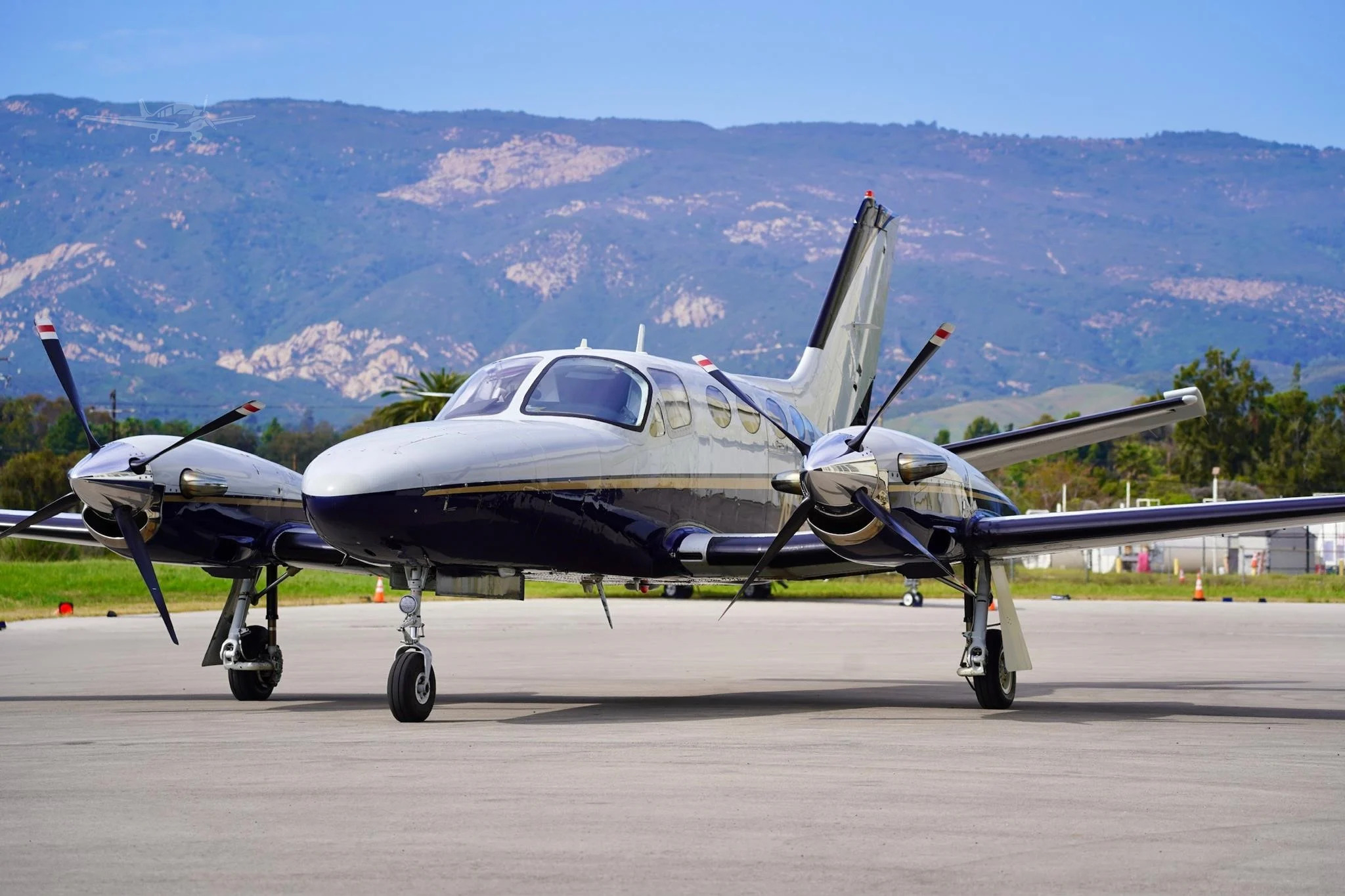
- Model: CESSNA 425 CONQUEST I
- Engine: 2 x Pratt & Whitney PT6A-112
- Engine Time: 6,606.7 hours SNEW (both engines)
- TBO: 3600 hours
- Propellers: 2 x McCauley 4-blade, 513.3 hours SNEW
- Avionics:
- Dual Garmin G600 TXI PFDs
- Garmin GFC600 Autopilot
- ADS-B equipped
- WAAS and LPV capabilities
- PMA 8000E Audio Panel
- Collins ALT 50A Radar Altimeter
- Garmin GDL 69 XM Weather Receiver
- Additional Equipment:
- Pressurized
- Flight Into Known Icing (FIKI)
- Inadvertent Ice Protection
- Artex ME 406 ELT
- Exterior:
- White upper fuselage and wings, navy blue lower fuselage with metallic gold accents
- Good condition (reported 07/12/2022)
- Interior:
- 5 passenger seats, forward galley, aft lavatory
- New interior completed May 2025
- Navy blue carpets, gray seats, white refreshment center
- Newly installed Bose headset jack ports and USB power outlets
- Inspection: Recent Phase 2 & 3 inspections completed March 2026.
About this Model
Overview
The Cessna 425 Conquest I is a legacy, pressurized, twin-engine turboprop designed for owners and operators who want turbine reliability and higher-altitude capability without moving into larger, heavier cabin-class aircraft. It is typically used for regional business travel, medical/priority transport, and utility missions that benefit from turboprop performance at mid-to-high flight levels and the ability to use a wide variety of airports.
Mission Fit
Mission fit is strongest on short-to-mid stage lengths where climbing into the teens/low flight levels improves ride and weather options versus unpressurized aircraft, and where turboprop efficiency and airport access are more important than jet cruise speeds. It is less compelling when the mission consistently demands larger baggage capacity, more seats, or faster block times over longer distances.
Cabin
The Conquest I offers a compact, pressurized cabin sized for small groups, typically arranged as a club seating layout with an aft bench or side-facing option depending on interior. Expect a functional cabin rather than a large-cabin experience: adequate space for work or conversation for a few passengers, with typical turboprop sound levels and a cabin cross-section that feels narrower than larger commuter-derived turboprops. Baggage capability varies by configuration and equipment, so operators often plan around a mix of cabin and baggage compartment loading.