

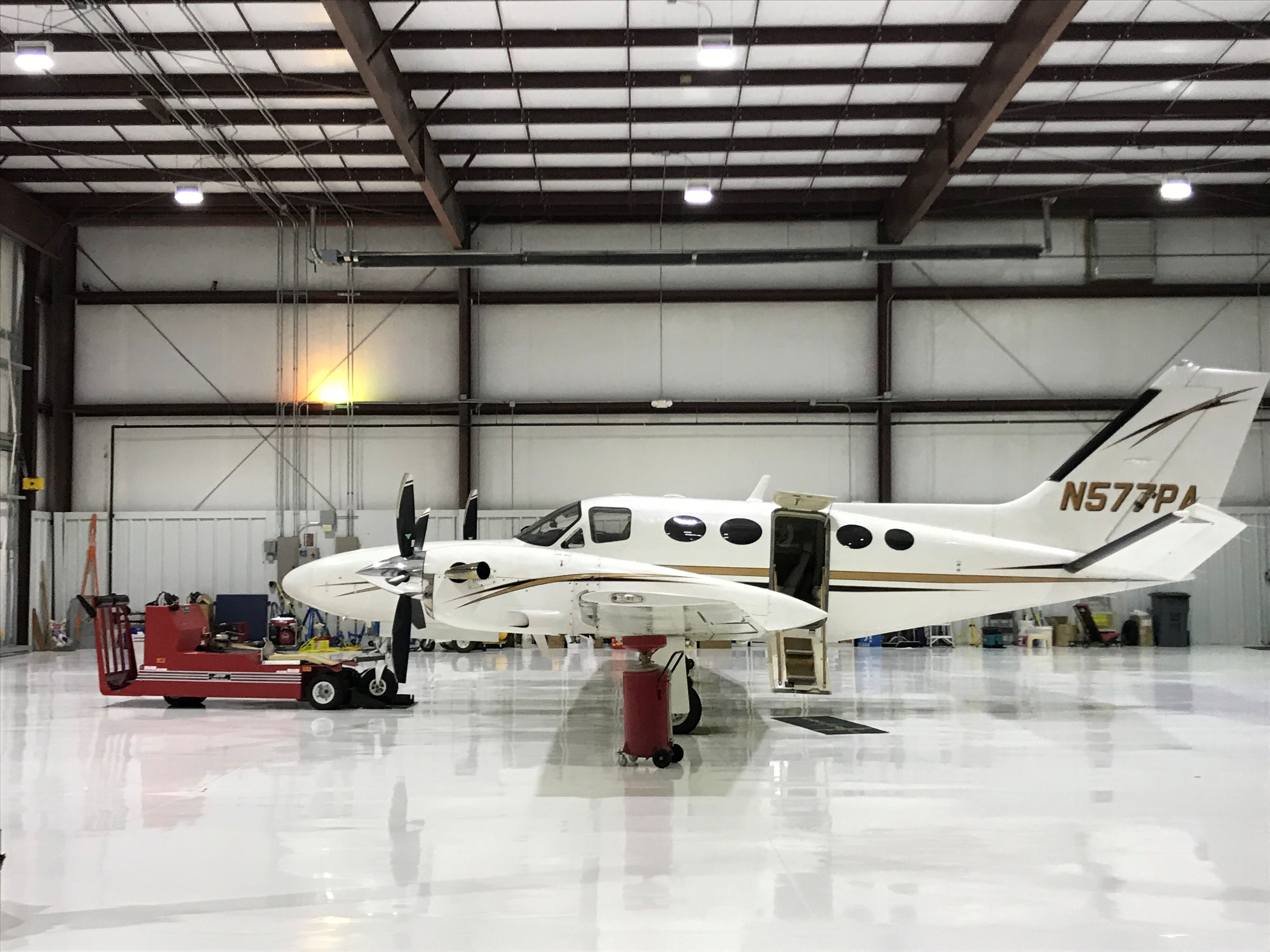
Specifications
Broker
Aircraft Details
• Maintained under FAR Part 91
• Engines: PT6A-112, both with 1,798 hours since overhaul, 3,600-hour TBO
• Avionics include: Garmin GNS-480 & GNS-530A, GMX-200 MFD, Collins ADF-60A, DME-42, ALT-50A radar altimeter, RMI-30, Cessna 1000A autopilot, Freeflight 1201 GPSS, L3 LandMark TAWS-8100, L3 Skywatch SKY-899 TCAS, BFGoodrich WX-500 Stormscope, Bendix/King RDR-2000VP weather radar, Collins TDR-90 Mode C & Garmin GTX-328 Mode S transponders
• Additional equipment: ADS-B Out, WAAS, MT 5-blade props, de-ice boots, American Aviation speed stacks, 114.9 cu ft oxygen system, XM satellite weather, altitude preselector, 6-place intercom
• Crew accessories: Rosen sunvisors, custom leather-wrapped glareshield, ChartView
• Interior: Executive configuration, Glacier leather seating, sheepskin crew seats, Freon air conditioning, ultraleather headliner, beige leather sidepanels, new sand beige carpeting (2011), dual executive tables, belted flushing lavatory, satin almond gold-plated accessories, forward and aft cabin dividers
• Interior refurbished 2007
• Exterior: Chevron white with Las Vegas gold & black velvet accents, completed by Eagle Aviation (2001)
About this Model
Overview
The Cessna 425 Conquest I is a legacy, pressurized, twin-engine turboprop designed for owners and operators who want turbine reliability and higher-altitude capability without moving into larger, heavier cabin-class aircraft. It is typically used for regional business travel, medical/priority transport, and utility missions that benefit from turboprop performance at mid-to-high flight levels and the ability to use a wide variety of airports.
Mission Fit
Mission fit is strongest on short-to-mid stage lengths where climbing into the teens/low flight levels improves ride and weather options versus unpressurized aircraft, and where turboprop efficiency and airport access are more important than jet cruise speeds. It is less compelling when the mission consistently demands larger baggage capacity, more seats, or faster block times over longer distances.
Cabin
The Conquest I offers a compact, pressurized cabin sized for small groups, typically arranged as a club seating layout with an aft bench or side-facing option depending on interior. Expect a functional cabin rather than a large-cabin experience: adequate space for work or conversation for a few passengers, with typical turboprop sound levels and a cabin cross-section that feels narrower than larger commuter-derived turboprops. Baggage capability varies by configuration and equipment, so operators often plan around a mix of cabin and baggage compartment loading.