

Specifications
Broker
Aircraft Details
- Maintenance: EASA Part 145, ProParts airframe maintenance program, CESCOM tracking, compliant with all Airworthiness Directives and Service Bulletins as of December 11, 2025.
- Engine: Model FJ44-3A-24, TAP - Blue maintenance program, two engines with TBO of 5000 hours.
- Avionics: Collins Pro Line 21 package, dual Collins VHF-4000 communication radios, Collins GPS-4000A, Garmin GPS-500, and various other Collins systems including ADF, DME, and weather radar.
- Features: Equipped with Aft Lavatory, Flushing Lav, Forward Galley, SATCOM, and ADS-B capability.
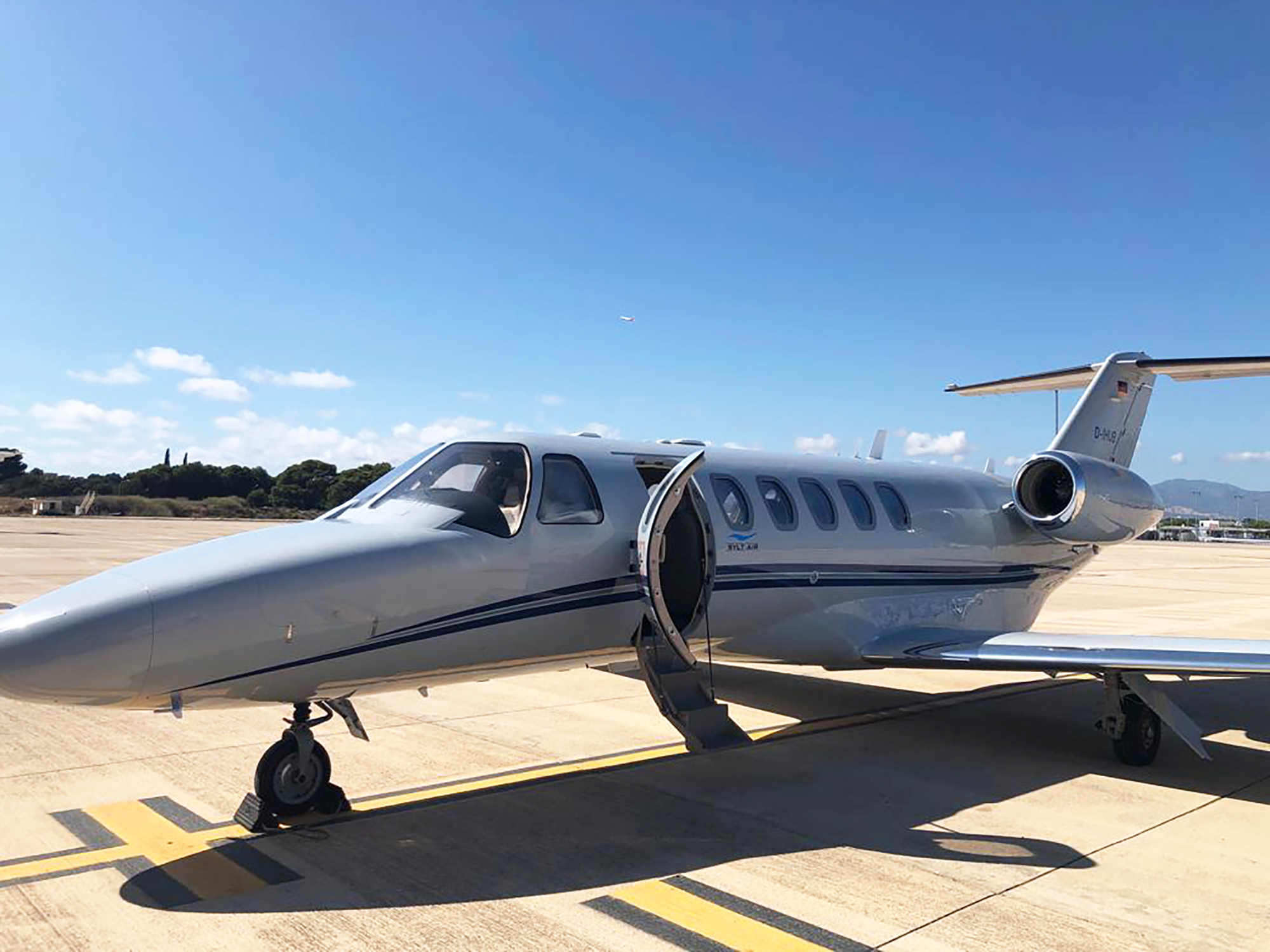
- Interior: Executive configuration seating for 7, beige leather seating, high-gloss walnut cabinetry, and a forward galley with deluxe refreshment center.
- Exterior: Rating of 7, colors in Kingston gray & blue-gray-blue with framed windows.
- Additional Equipment: Engine synch, 50 cubic foot oxygen bottle, large 44-amp battery, tail flood light.
About this Model
Overview
The Cessna Citation CJ2 sits in the light-jet segment as a straightforward, owner-operator-friendly platform that balances cruise efficiency with practical runway performance. It is commonly used for regional business travel where predictable operating routines, broad airport access, and a right-sized cabin matter more than long-range endurance or large-cabin amenities.
Mission Fit
Mission planning tends to favor efficient stage lengths where the CJ2 can cruise at typical light-jet altitudes and make use of a wide selection of airports. It works well for mixed profiles—quick out-and-back day travel, multi-stop itineraries, and weather-driven altitude flexibility—while longer missions may require a stop depending on winds, reserves, and payload.
Cabin
The CJ2 cabin is a compact, club-style environment sized for small groups. Seating is typically arranged for four in a club with additional side-facing or belted seating depending on configuration, making it comfortable for short-to-midrange legs and workable for longer flights when passenger count stays modest. Baggage is generally split between an exterior compartment and smaller in-cabin storage, so packing strategy matters for full-seat missions.