

Specifications
Broker
Aircraft Details
• Location: Duesseldorf, Germany (broker based in North Carolina, USA)
• Total time: 6,868 hours; Total landings: 5,673
• Engines: Williams FJ44-2C (TAP Blue program), both engines 6,759 hours/5,570 cycles
• Avionics: Collins Pro Line 21 package, Collins IFCS autopilot & flight director, Dual GTN 750 COM/NAV/GPS, Dual Garmin GTX 335/345 (ADSB in/out), King KN-63 DME, King KR-87 ADF, Collins ALT-55B radar altimeter, Aircell ST-3100 Iridium SATCOM, Honeywell Mark V EGPWS, Bendix/King CAS-66A TCAS-I, Collins RTA-800 weather radar, Collins 3-tube EFIS, Universal UNS-1L FMS
• Additional equipment: Artex C406-2 ELT, functional moving map, dual air data computers, cockpit speaker mute switch, voice annunciator, Pulselight system, tail logo lights
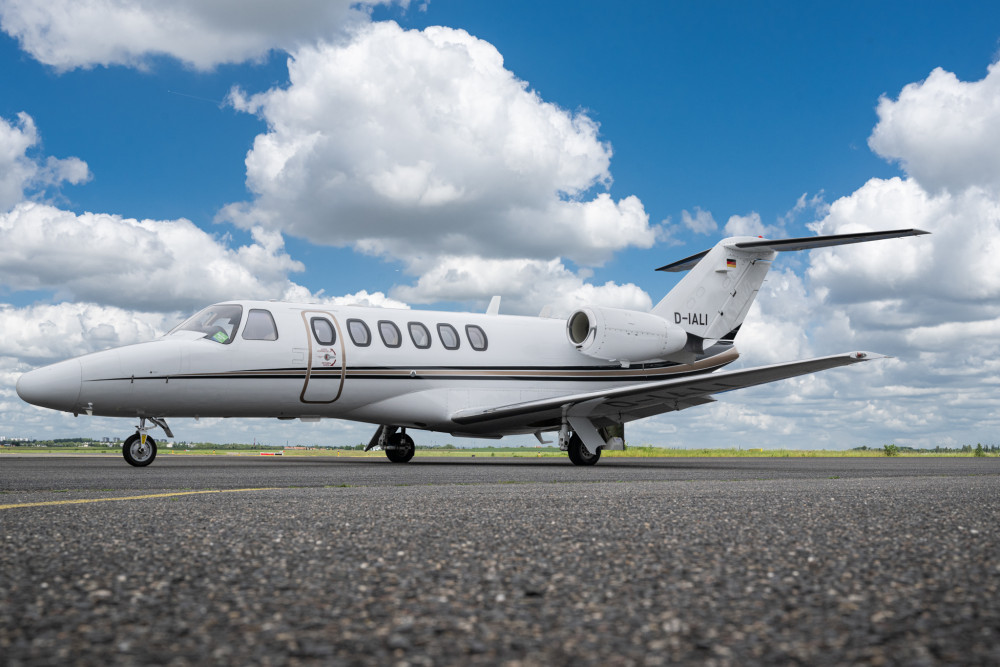
• Paint: 2023, snow white with black and gold accent stripes
• Interior: 2023 refurbishment, seven-passenger executive layout (4-place club, 2 aft forward-facing seats, aft belted flushing lavatory), Escada gloss laminate cabinetry, bright satin gold hardware, light beige tone, forward refreshment center, storage cabinet, dual portable DVD, B&D cabin display, solid pocket door to lavatory
• Next Doc 10 inspection due May 2026
About this Model
Overview
The Cessna Citation CJ2 sits in the light-jet segment as a straightforward, owner-operator-friendly platform that balances cruise efficiency with practical runway performance. It is commonly used for regional business travel where predictable operating routines, broad airport access, and a right-sized cabin matter more than long-range endurance or large-cabin amenities.
Mission Fit
Mission planning tends to favor efficient stage lengths where the CJ2 can cruise at typical light-jet altitudes and make use of a wide selection of airports. It works well for mixed profiles—quick out-and-back day travel, multi-stop itineraries, and weather-driven altitude flexibility—while longer missions may require a stop depending on winds, reserves, and payload.
Cabin
The CJ2 cabin is a compact, club-style environment sized for small groups. Seating is typically arranged for four in a club with additional side-facing or belted seating depending on configuration, making it comfortable for short-to-midrange legs and workable for longer flights when passenger count stays modest. Baggage is generally split between an exterior compartment and smaller in-cabin storage, so packing strategy matters for full-seat missions.