

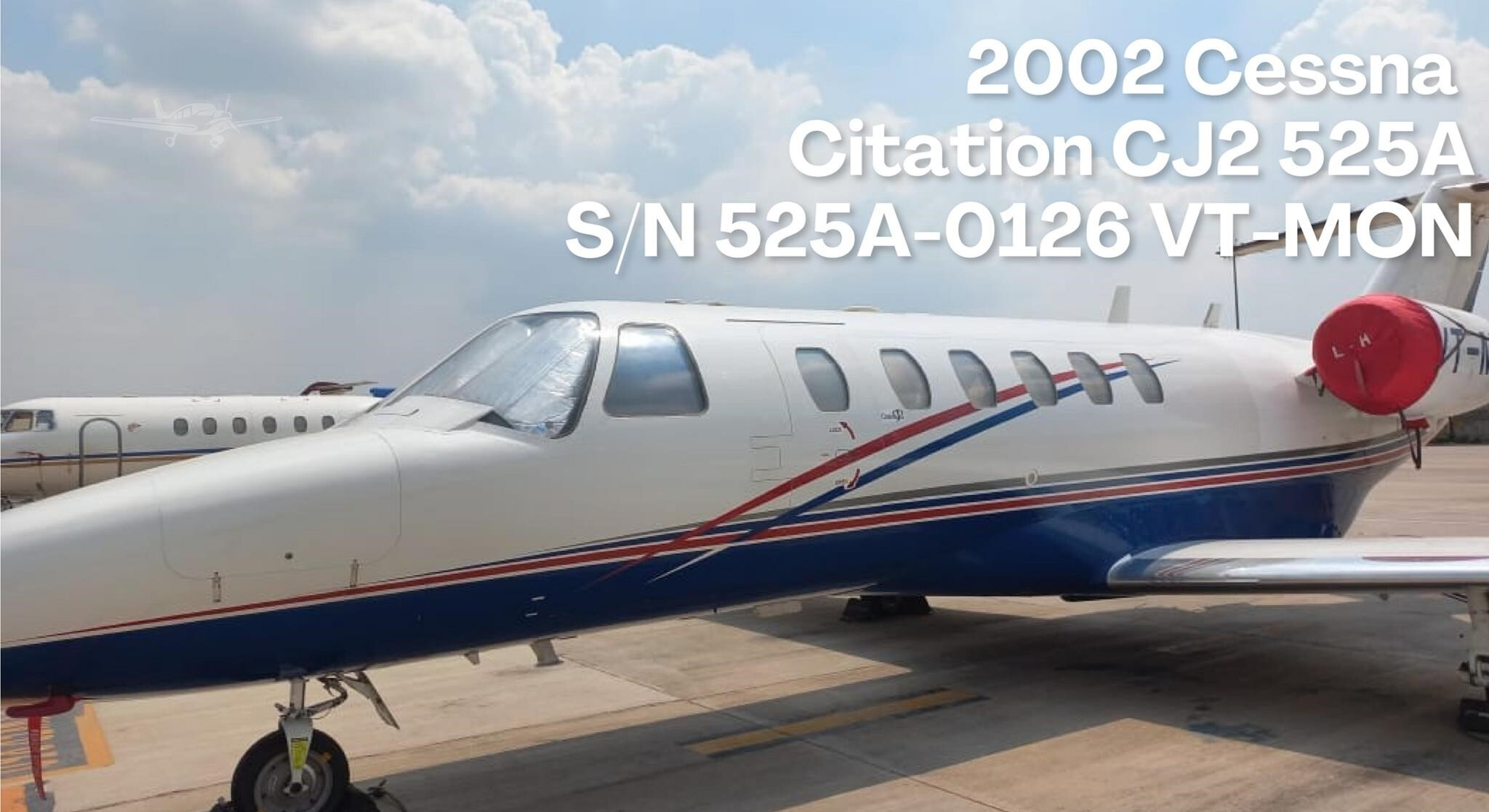
Specifications
Broker
Aircraft Details
- Airframe Maintenance Tracking: CESCOM (Cessna Computerized)
- Certifications: B-RNAV, RVSM
- C of A Issued: 11/26/2002
- Inspection History:
- Weight inspection: 05/18/2013 at 1536TT
- Document inspections: Various dates from 2014 to 2016
- Engine Model: FJ44-2C
- Engine TBO: 3500 hours
- Avionics:
- Honeywell KR-87 ADF
- Dual Collins AHC-3000 AHRS
- Dual Collins FGC-3000 Autopilot
- Dual Garmin GNS-530A Communication and Navigation Radios
- Collins 3-tube EFIS
- Honeywell Mark VIII EGPWS TAWS
- Honeywell TCAS-II
- Collins RTA-800 Weather Radar
- Interior Features:
- Executive configuration for 7 passengers
- Forward 4-place club seating
- Flushing belted aft lavatory
- High-gloss mahogany wood trim
- Additional Equipment: Large oxygen system, pulselight recognition system, SATCOM equipped
- Standard Features: RVSM, Terrain Awareness & Warning System, Traffic Collision Avoidance System, Weather Radar
About this Model
Overview
The Cessna Citation CJ2 sits in the light-jet segment as a straightforward, owner-operator-friendly platform that balances cruise efficiency with practical runway performance. It is commonly used for regional business travel where predictable operating routines, broad airport access, and a right-sized cabin matter more than long-range endurance or large-cabin amenities.
Mission Fit
Mission planning tends to favor efficient stage lengths where the CJ2 can cruise at typical light-jet altitudes and make use of a wide selection of airports. It works well for mixed profiles—quick out-and-back day travel, multi-stop itineraries, and weather-driven altitude flexibility—while longer missions may require a stop depending on winds, reserves, and payload.
Cabin
The CJ2 cabin is a compact, club-style environment sized for small groups. Seating is typically arranged for four in a club with additional side-facing or belted seating depending on configuration, making it comfortable for short-to-midrange legs and workable for longer flights when passenger count stays modest. Baggage is generally split between an exterior compartment and smaller in-cabin storage, so packing strategy matters for full-seat missions.