

Specifications
Aircraft Details
• Aircraft located in Málaga, Spain, always hangared, and ready to fly in EASA environment
• All maintenance completed, including 9000-hour heavy corrosion inspection and Doc 22; over $350,000 spent on recent maintenance
• Total airframe time: 9,192 hours; total landings: 6,136
• Engine program: TAP Blue & Pro Parts; both engines (Williams FJ44-3A) at 8,837 hours since new
• Avionics: Rockwell Collins Pro Line 21 suite, Collins FMS-3000, Garmin 500W (ADS-B/WAAS/LPV), EGPWS, TCAS II, Stormscope WX500, cockpit voice recorder, graphical weather, and charts
• Cabin features: 7 seats (4-place club, 2 aft club, 1 side-facing), refurbished interior (2022), aft belted lavatory, cabin monitor, and temperature control
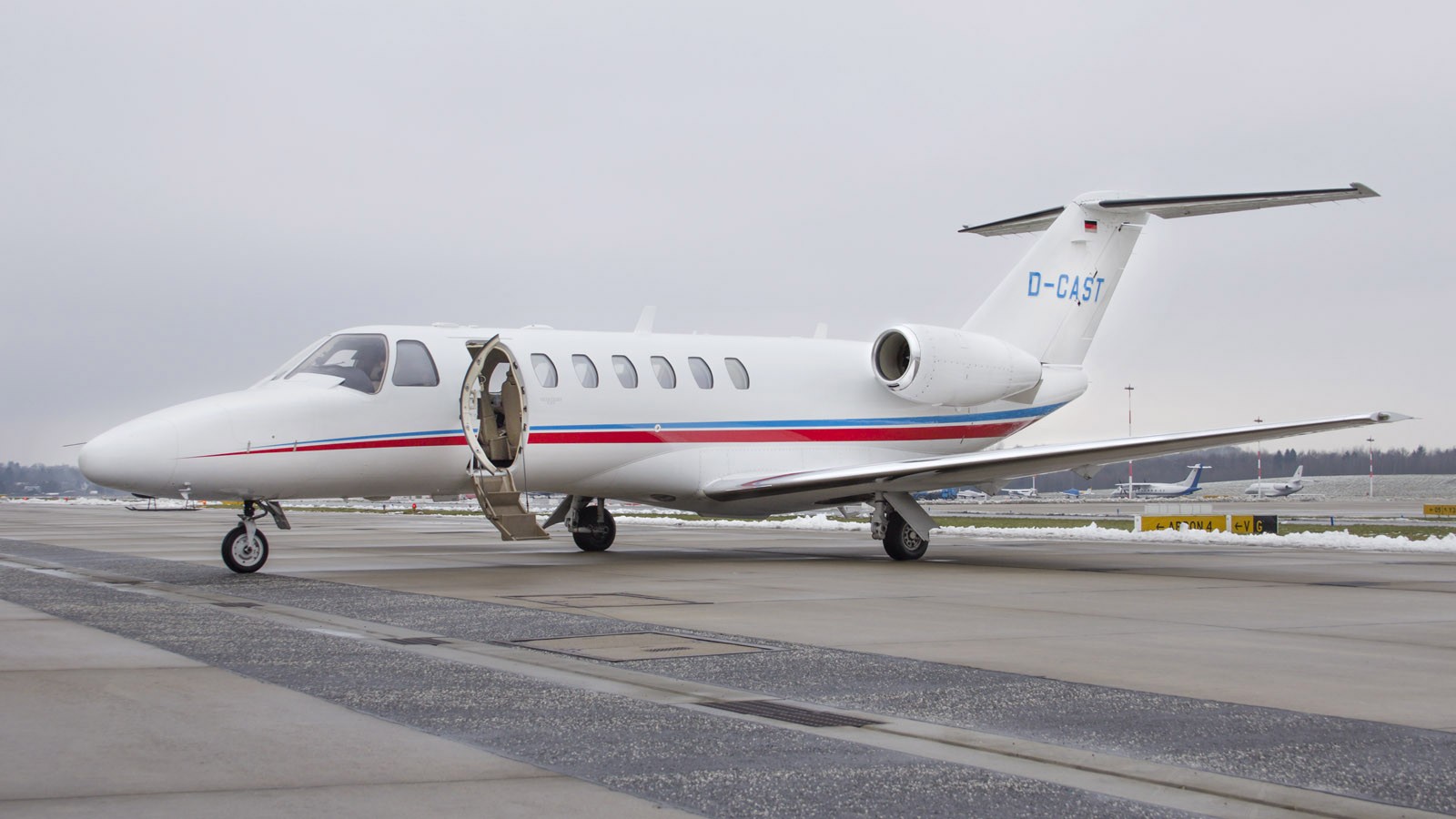
• Exterior: Elegant white paint with dual blue accent stripes and matching tail markings
• Additional: Steep approach and RNAV approved, MNPS and RVSM certified, LED navigation and tail logo lights, Bravo entry steps
• Maintained under EASA Part 145, CESCOM tracking, and one owner/operator since new
About this Model
Overview
The Citation CJ3 sits in the light-jet segment as a step-up from entry-level light jets, focusing on predictable day-to-day dispatch, access to a broad set of runways, and a cabin sized for typical 4–6 passenger business trips. It is commonly used for regional and multi-stop schedules where turn time, straightforward avionics, and manageable operating complexity matter as much as cruise capability.
Mission Fit
A CJ3 is most at home on short-to-midrange stage lengths, including out-and-back days and multi-stop itineraries. It can support longer legs depending on payload, winds, and reserves, but the most consistent use case is efficient regional coverage rather than routine transcontinental flying at higher passenger counts.
Cabin
The CJ3 cabin is arranged around a center aisle with opposing club seating in the main cabin and an enclosed aft lavatory. The cabin height and width are typical for the light-jet class, with a step-down or slight floor contouring depending on interior generation and refurbishment. Noise levels, ride comfort, and environmental control are generally aligned with modern light jets; perceived comfort depends heavily on interior condition, seat design, and maintenance of seals and environmental systems.