

Specifications
Broker
Jet Aviation Brokers
John Carter
+1 (305) 555-0142
broker@example.com
Aircraft Details
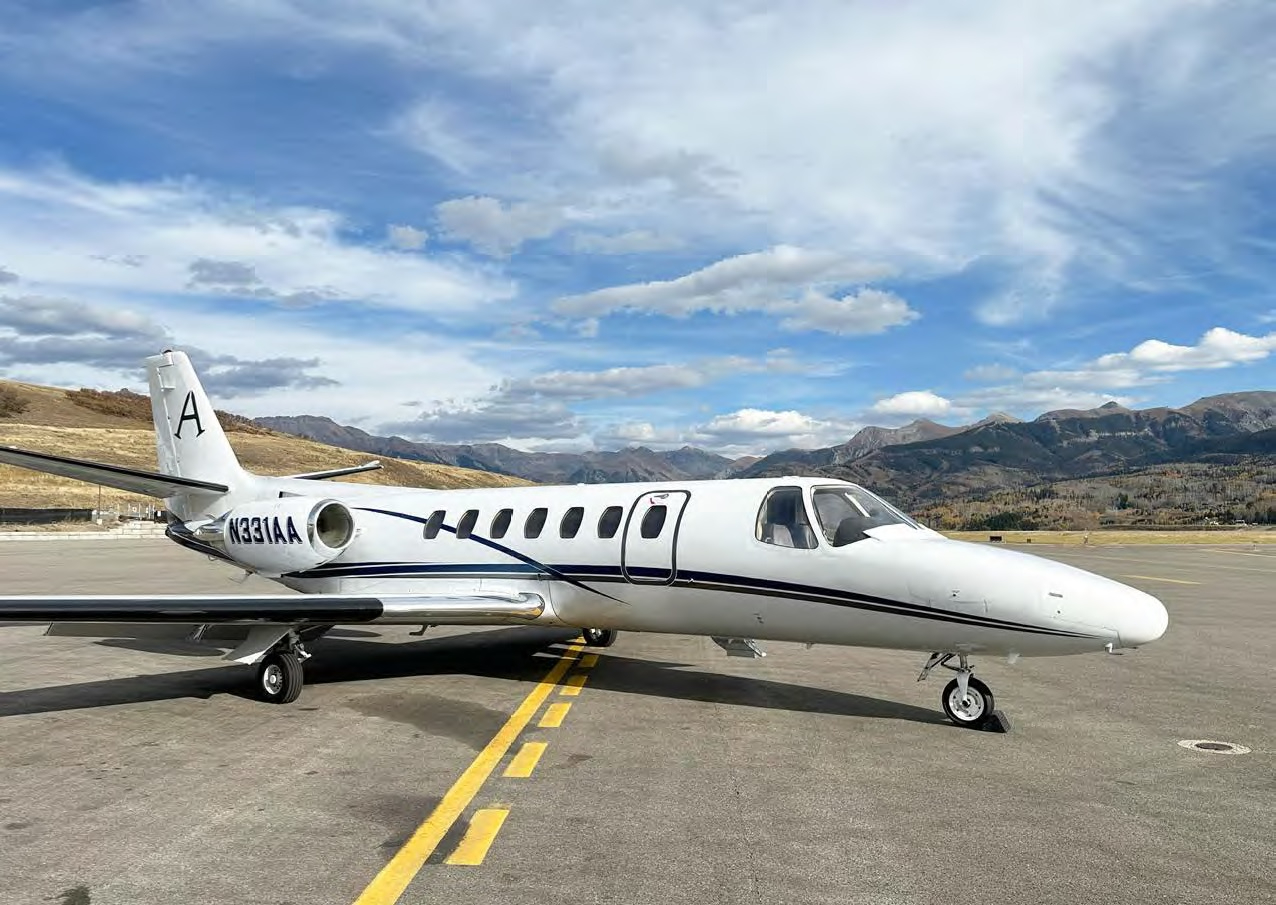
- Model: Cessna Citation V
- Capacity: 8 passengers
- Maximum cruise speed: 400 knots
- Range: 2,500 nautical miles
- Engines: Two Pratt & Whitney Canada JT15D-5 engines
- Avionics: Equipped with advanced avionics suite
- Cabin features: Spacious cabin with executive seating
- Lavatory: Private lavatory with sink
- Baggage capacity: Ample baggage space for long trips
- Maintenance: Well-maintained with complete logs
- Interior: Custom interior with high-quality materials
- Exterior: Attractive paint scheme
- Additional features: Air conditioning, galley, and entertainment system
- Ownership: Implies co-ownership or shared usage arrangements.
About this Model
Overview
The Cessna Citation V (Model 560) is a light jet positioned between early Citation II variants and later “Encore” evolutions, offering higher cruise performance and improved climb compared with earlier straight-wing Citations while retaining practical runway capability. It is commonly used for regional business missions, multi-stop days, and access to smaller airports where larger cabin jets may be less flexible. Buyers typically evaluate it as a proven, widely supported platform with straightforward systems and a cabin sized for small teams.
Mission Fit
In typical operation the Citation V is well matched to owner-operators and corporate flight departments needing efficient point-to-point travel for 4–6 passengers plus baggage, often with one fuel stop for longer trips. It performs best when planned around light-jet payload/range tradeoffs—more passengers, bags, or adverse winds will reduce range or require a stop.
Cabin
The cabin is configured as a light-jet executive interior, usually with a center aisle and club seating. For its class, the Citation V offers a usable work-and-conversation environment, though it remains a compact cabin with limited stand-up space and modest aft baggage compared with larger jets. Noise levels and ride quality are typical of legacy light jets; passenger comfort is strongest on regional stages rather than very long sectors.