

Specifications
Broker
Aircraft Details
• 39 hours total time, 30 total landings since new
• Williams FJ33-5A engine, 39 hours since new, 30 cycles
• JetStream maintenance program (3 years/450 hours)
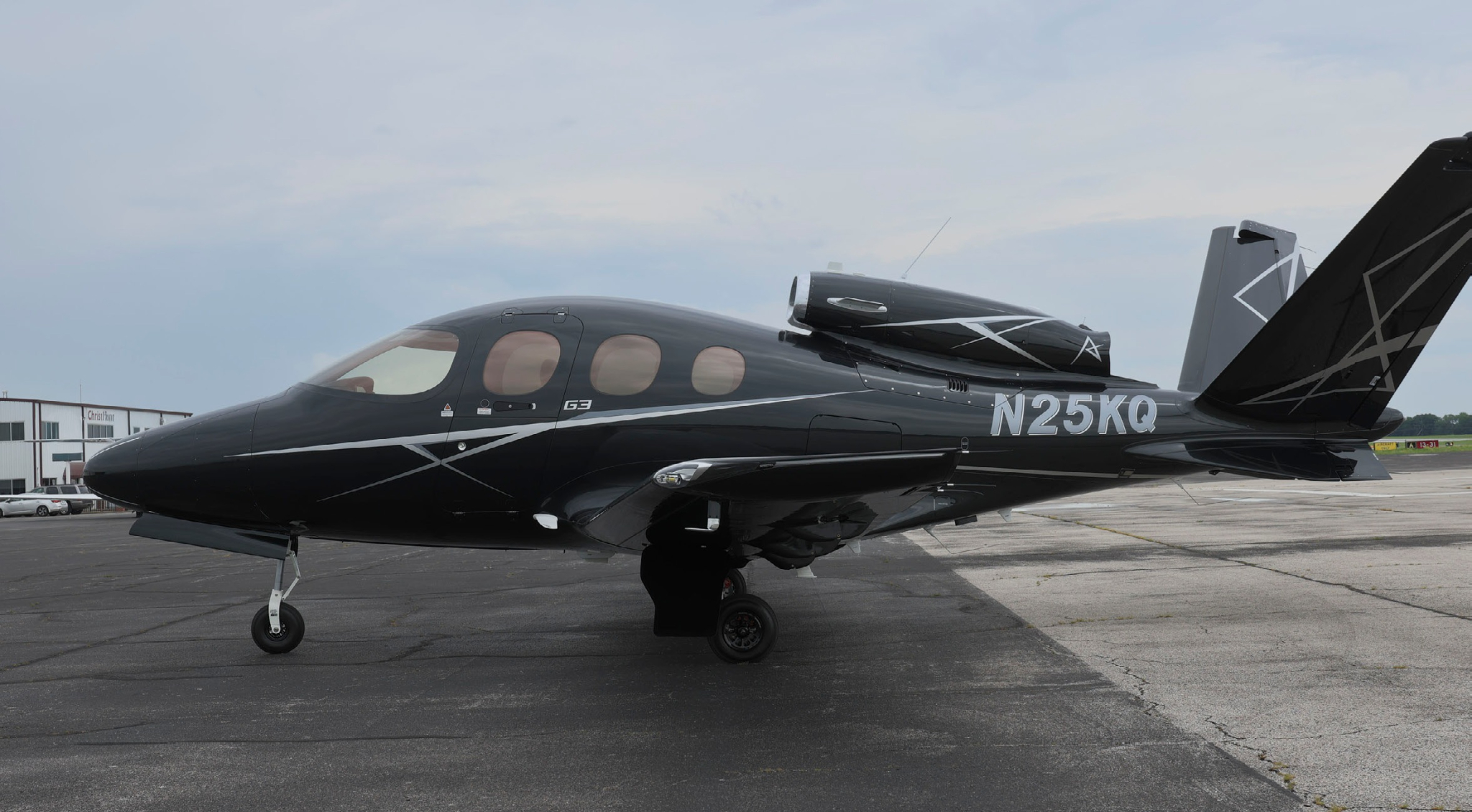
• Arrivée Special Edition Package with exclusive paint design (black with white stripes)
• Garmin Perspective Touch+ avionics suite: 14” high-res displays, 3-axis all-digital autopilot with Blue Level button, autothrottle, digital real-time radar, triple landscape touchscreen controllers, dual WAAS GPS/COMM/NAV radios, triple NextGen digital transponders, TAWS-B, TCAS-I, ATC datalink, SiriusXM weather and audio, automatic database updates, and more
• Cirrus Airframe Parachute System (CAPS), Safe Return Emergency Autoland, Electronic Stability and Protection (ESP), Emergency Descent Mode, stall recognition stick shaker & pusher
• Enhanced Vision System (EVS), inflight Wi-Fi, multi-zone climate controls, USB-C power ports
• Executive interior: 7 seats (6 adults & 1 child), premium two-tone leather modular seating, Alcantara headliner and gallery wall, color-matched panels and carpet, carbon fiber accents, integrated tray tables, enhanced dimmable accent lighting
• 8,000 ft pressurized cabin, trailing-link landing gear, interior noise reduction, Spectra wing-tips, gold reflective windshield & windows, all-weather cargo liner, battery minder
• Cargo X-Tend, 115 VAC inverter, modular seating, premium leather map pockets, personal electronic device mounts
• Offered by JBA Jets, Houston, TX; aircraft located in Tulsa, OK
About this Model
Overview
The Cirrus Vision SF50 (Vision Jet) is a single-engine, single-pilot-certified very light jet designed around owner-operation and short-trip practicality rather than traditional multi-engine business-jet capability. It combines a pressurized cabin, integrated avionics, and Cirrus’ safety systems—including an airframe parachute—into a package aimed at regional point-to-point travel from smaller airports with relatively modest runway requirements.
Mission Fit
The SF50 fits missions where the aircraft is used like a fast, pressurized touring platform: short-to-medium legs, flexible airport choice, and straightforward single-pilot operation. It is less well suited to missions that consistently demand maximum passenger count, heavy baggage, or long-range reserves, where payload-range and cruise speed constraints become more noticeable.
Cabin
The cabin is arranged for a small group, with a comfortable forward seating area and additional seating options aft. Windows are generous for the category, and the environment is pressurized for higher-altitude comfort compared with high-performance pistons and turboprops. Storage is adequate for weekend-style baggage, but packing discipline matters as passenger count increases.