

Specifications
Broker
Aircraft Details
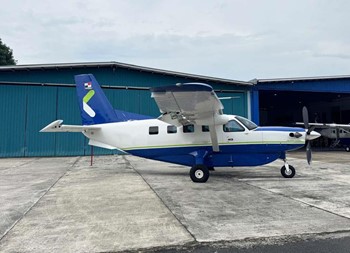
- Aircraft located in Panama City, Panama
- Total airframe time: 6,800 hours, 10,748 total landings
- Engine: 2,838.7 hours since new, 4,008 cycles; TBO: 4,000 hours
- Propeller: 3,569.4 hours since overhaul, 4,280 cycles
- Garmin G1000 integrated avionics suite with dual GIA (WAAS/VHF/GPS), S-TEC 55X autopilot, GIA-63 WAAS unit, GTX-33ES Mode-S transponder with ADS-B Out, dual GMA 1360 audio panels, TAWS B, dual AHRS, Garmin Synthetic Vision, WX-500 Stormscope, GWX-68 weather radar, GTS-800 TCAS, Stormscope Lightning Strike Detection, Artex C406-N ELT
- Additional equipment: external baggage compartment, engine chip detector, cabin A/C, Rosen sun visors, oversized 29” tires
- Aircraft will be repainted prior to delivery
- Interior: Beige color scheme, nine passenger seats plus one pilot
About this Model
Overview
The DAHER Kodiak 100 is a high-wing, fixed-gear single-engine turboprop designed to connect remote or infrastructure-limited locations with a straightforward operating concept. It prioritizes short takeoff and landing capability, robust landing gear, and a large, configurable cabin that can shift between passenger, cargo, and mixed missions. Buyers typically evaluate it as an alternative to legacy utility turboprops when they want modern systems, strong climb performance, and reliable support while accepting lower cruise speed than pressurized turboprops.
Mission Fit
The Kodiak 100 is at its best when the destination is the constraint: short strips, unimproved surfaces, and frequent loading/unloading cycles. It fits missions that value low-speed handling, strong climb at lower altitudes, and the ability to carry people and gear in a single trip. It is less aligned with missions that routinely require high cruise altitudes, smoother ride above weather, or the fastest point-to-point travel time.
Cabin
The cabin is designed as a working space first: wide access through a large cargo door, flat and durable interior surfaces, and seating that can be arranged for passengers, cargo, or a mix. Noise levels and ride feel reflect a single-engine turboprop with a utility airframe; comfort depends heavily on interior options, seat type, and soundproofing packages. Visibility is a strong point due to the high-wing layout and large windows, which many operators value for sightseeing, surveillance support, or remote landing operations.