

Specifications
Broker
Aircraft Details
- Maintenance:
- Maintained under FAR Part 91
- Hot-start incident addressed by recent hot section inspection
- Damage status: Yes (loss of engine power during flight)
- Annual Inspection due by 2025-10-01
- Engine Hot Section Inspection complied by 2025-04-29
- Engine:
- Model: PT6A-34
- Engine maintenance program: Unknown
- Additional Equipment:
- FIKI; TKS ice protection with cargo pod-mounted tank
- 29-inch low pressure tires
- Dual 24-volt sealed lead acid batteries
- Hartzell constant-speed feathering reversible 4-blade propeller
- Avionics:
- Garmin G1000 avionics package
- Dual communication radios
- Garmin GFC-700 autopilot with yaw damper
- L3 WX-500 Stormscope
- Class B TAWS and Garmin GTS-800 TCAS
- Interior:
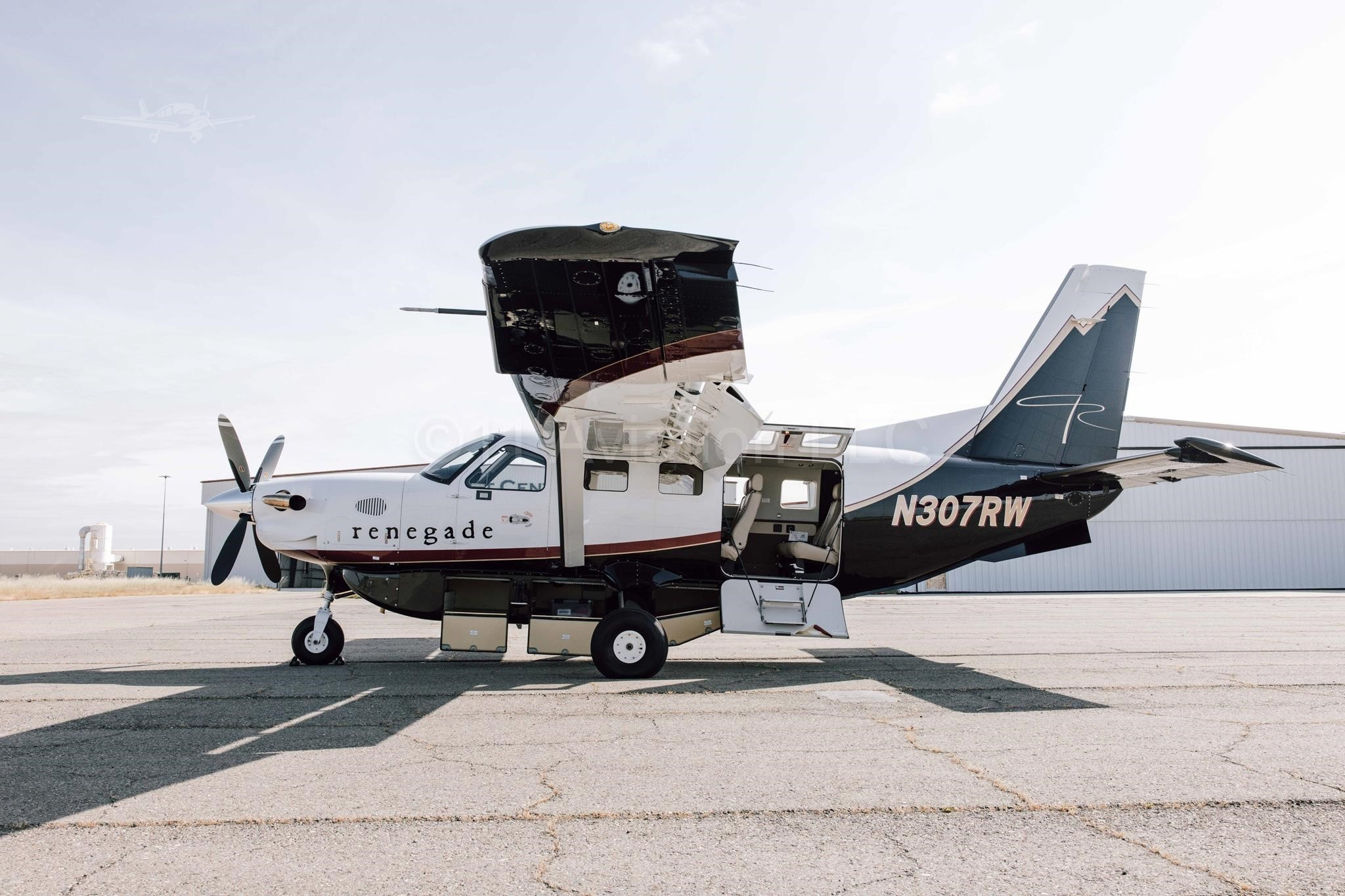
- Executive configuration for 8 passengers
- Warm brown Summit interior with beige leather seating
- Air conditioning and mid-cabin storage cabinets
- Exterior:
- Custom Mountain exterior scheme
- White upper and black lower with burgundy and gold stripes
About this Model
Overview
The Kodiak 100 Series I is a fixed-gear, single-engine turboprop designed around practical utility: short and unimproved runway capability, straightforward loading, and predictable handling at low speeds. It is commonly configured for commuter-style seating, mixed passenger/cargo layouts, or high-cycle special-mission work where dispatch reliability and field performance matter more than cruise speed or a pressurized cabin.
Mission Fit
This model fits operators who need consistent access to constrained airports and backcountry strips while carrying meaningful payload. It is most effective on regional stage lengths where takeoff/landing performance and turn-time drive schedule. If typical routes routinely demand higher cruise speeds, higher-altitude comfort, or long legs with larger reserves, a faster pressurized turboprop or light jet may align better.
Cabin
Cabin experience is utilitarian and mission-driven. Interiors vary widely, from higher-density seating to executive-style layouts, and many aircraft are equipped with durable materials to tolerate frequent loading and field conditions. Large doors and a practical cabin volume support quick passenger flow and cargo handling, but noise levels and ride comfort are closer to working turboprop norms than to pressurized business aircraft.