

Specifications
Aircraft Details
- Turn-key, pro-flown, and clean aircraft just out of A+ annual at Daher North America HQ
- 1,600 hours total time on airframe and engine (Pratt & Whitney PT6A-66D, 850 SHP)
- Hartzell 5-blade composite propeller, 540 hours since overhaul
- Garmin G1000 NXi integrated flight deck with dual GDU 1050A displays, GFC 700 digital autopilot, Synthetic Vision, dual transponders (ADS-B Out), satellite phone, traffic advisory, weather radar, and more
- Equipped with winglets, pilot access door, dual aft body strakes, flight into known icing (FIKI), RVSM data package
- Elite interior: high-comfort leather seating for 6, configurable/reversible middle row, carbon fiber trim, soundproofing, air conditioning, retractable table, storage cabinet
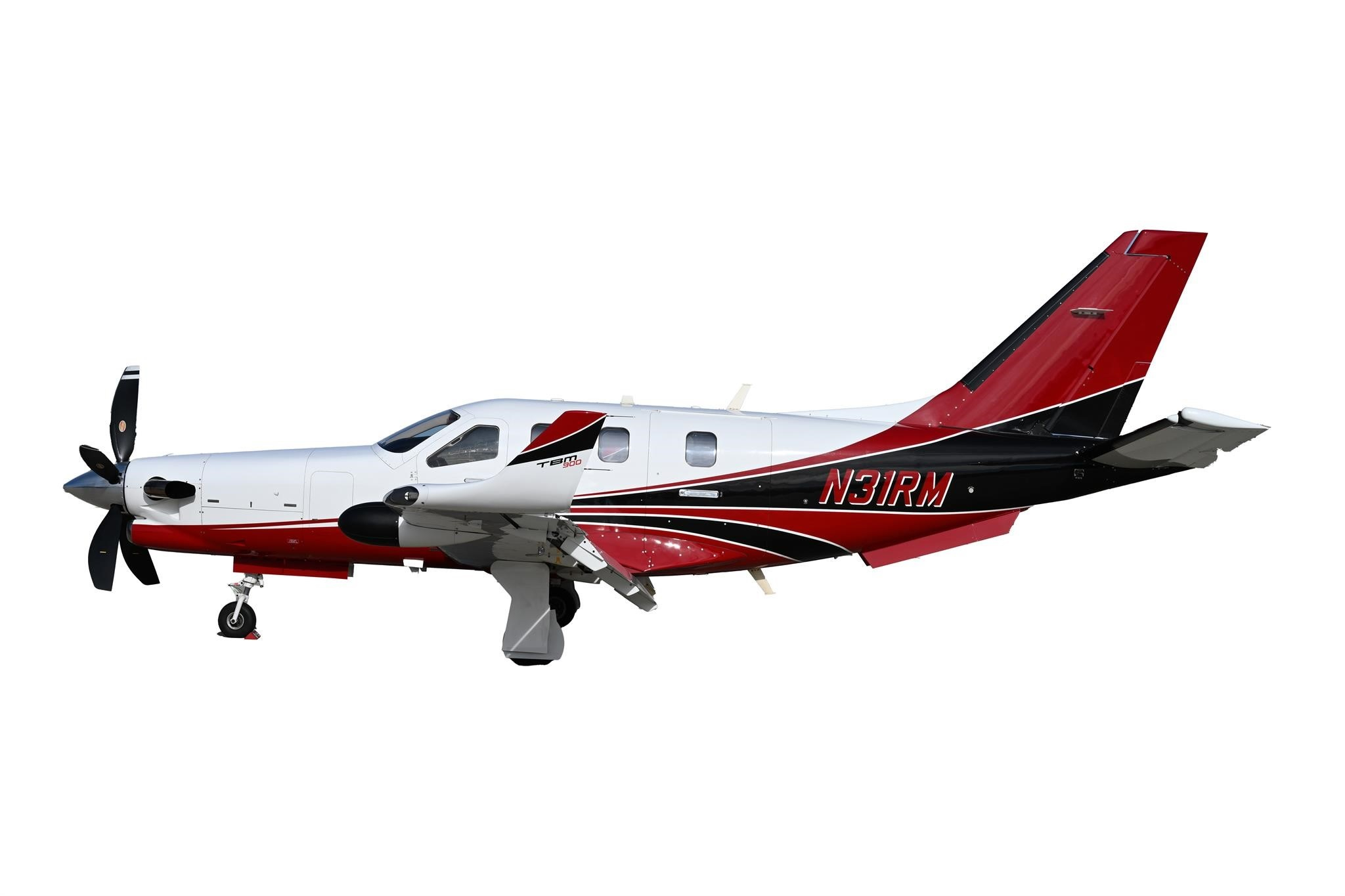
- Exterior in Socata white, Monescur black, and ruby red
- Always hangared, complete logbooks, certified for known ice
- Pressurized cabin, oxygen system, and advanced safety/lighting features
- Fresh A+ inspection included in sale
About this Model
Overview
The DAHER TBM 900 is part of the TBM 900-series evolution that focused on aerodynamic drag reduction, refined engine management, and cockpit integration to deliver fast point-to-point travel with the simplicity of single-engine turbine operations. It is commonly selected for regional and mid-range missions where access to shorter runways and smaller airports matters as much as cruise speed. Compared with light jets, it typically offers lower trip fuel and simpler systems, while accepting a smaller, more intimate cabin and single-engine operating considerations.
Mission Fit
The TBM 900 fits missions that value time efficiency without the infrastructure needs of a jet. It excels at two-to-four passenger travel with flexibility to depart from smaller airports closer to the final destination. When missions consistently push maximum passenger load, require a larger cabin for work-in-flight, or demand twin-engine capability for operational policy, alternatives may align better.
Cabin
The cabin is a compact, pressurized environment typically arranged with club seating for four and optional additional seating depending on configuration. Comfort is best described as premium for a turboprop class but still constrained by a narrow cross-section and limited ability for passengers to move around in flight. Noise levels are generally managed well for the category, but expectations should be set closer to high-end turboprops than midsize jets. Baggage space is practical for light travel but becomes limiting when all seats are occupied.