

Specifications
Aircraft Details
- Compliance: EASA/EU-OPS1 (Subparts K & L) compliant
- Inspection: Fresh 24-month inspection; next 3C inspection due November 7, 2029
- Engines: PW308C, covered by Pratt & Whitney Canada FMP contract
- Engine 1: 6,372 hours, 4,101 cycles
- Engine 2: 6,910 hours, 4,806 cycles
- APU: GTCP36-150, 3,466 hours, enrolled in MSP Silver
- Avionics:
- Triple Honeywell FMS, dual Honeywell GPS, ADS-B Out, FANS 1/A, CPDLC
- Honeywell Primus 880 weather radar, dual Honeywell NV-875B navigation radios
- Dual Honeywell DF-855 ADF, dual Honeywell DM-855 DME
- Interior:
- Seating for 10, beige leather seats, brown carpet, forward galley with espresso machine
- Entertainment: Rockwell Collins FCMS, dual Blu-Ray players, multiple monitors
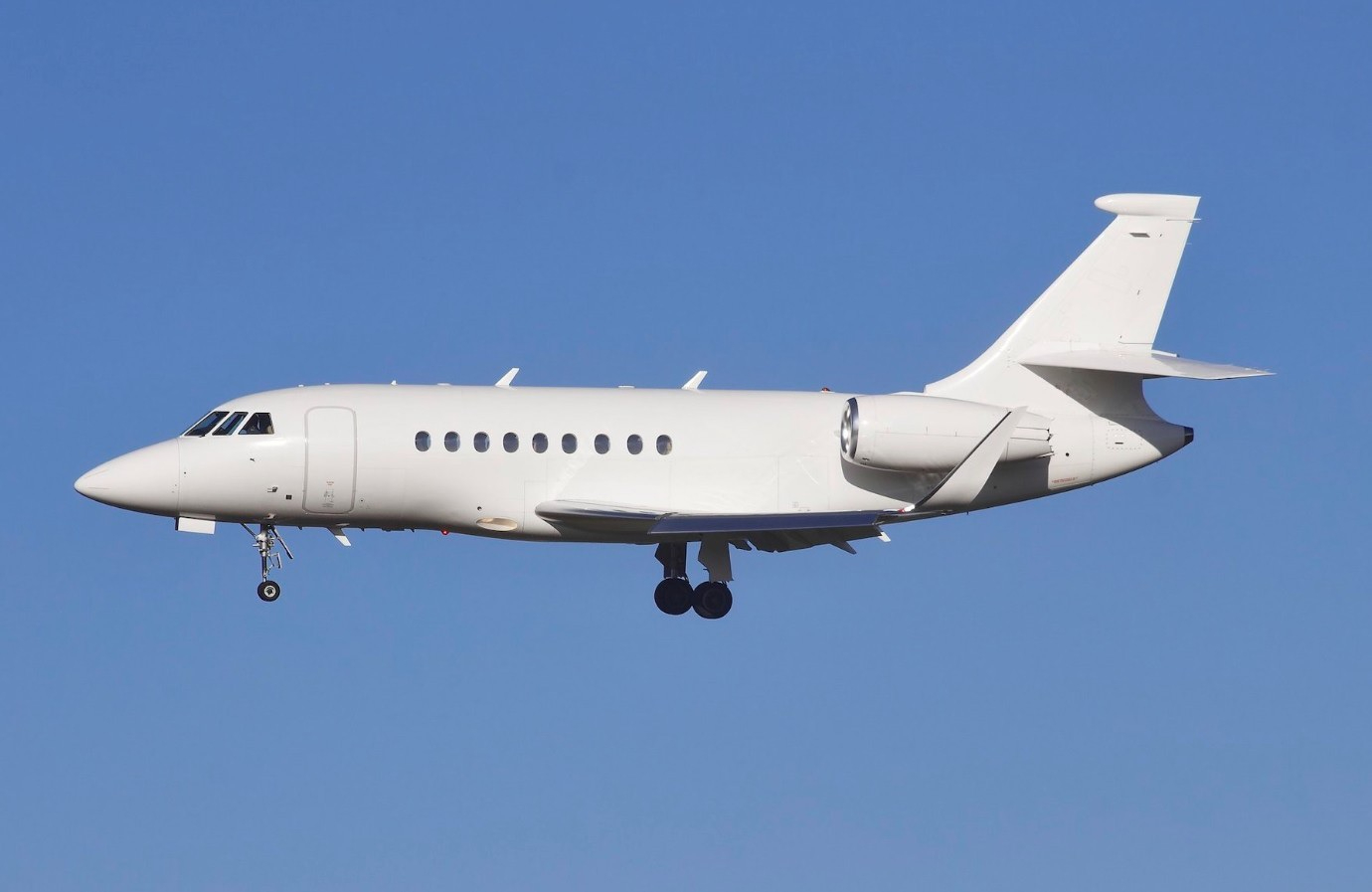
- Exterior: Matterhorn white
- Additional Equipment: Dual 9-man life rafts, enlarged oxygen bottle, Goodrich ice detector, telescopic tow bar
- Features: Equipped with dual IRS, HUD, TCAS II, SATCOM, and enhanced avionics system
About this Model
Overview
The Falcon 2000LX sits in the large-cabin segment with an emphasis on combining a wide, comfortable cabin with the operational flexibility associated with Dassault’s wing design and systems philosophy. It is commonly selected by operators who want a true large-cabin environment for 8–10 passengers while retaining access to a broader set of airports than many long-range heavy jets, including shorter runways and airports with performance constraints. The “LX” variant is defined by added range capability over earlier Falcon 2000 versions while keeping the same general cabin cross-section and mission intent.
Mission Fit
In day-to-day use, the 2000LX is a strong fit for coast-to-coast U.S.-style missions and high-frequency regional-to-transcontinental flying where cabin comfort and airport flexibility are both important. It is less aligned with nonstop intercontinental profiles that demand significantly more range or with buyers who want a “latest-gen” flight deck experience out of the box.
Cabin
The cabin is known for its width and a layout that supports productive work and quieter conversation, with enough volume for multiple living zones depending on configuration. Typical arrangements seat 8–10 in a club and conference grouping, with an enclosed aft lavatory and a forward galley area. Baggage capacity is suitable for longer trips, and the cabin cross-section generally feels less restrictive than narrower super-midsize cabins, especially for shoulder room and aisle movement.