

Specifications
Broker
Aircraft Details
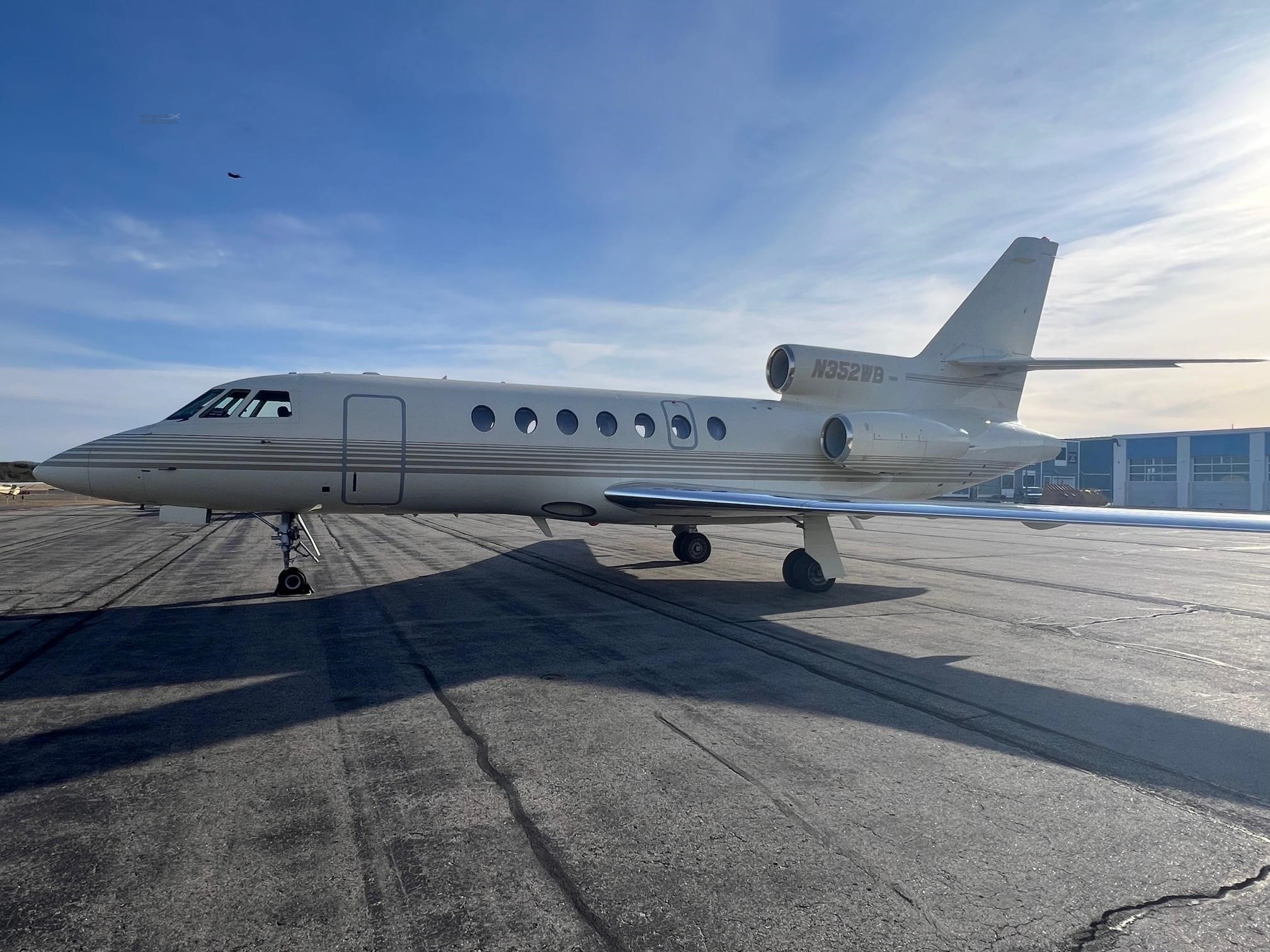
- Model: DASSAULT FALCON 50
- Condition: Used
- Flight Rules: IFR
- Interior: New in 2025, overall creme with tan accents, executive configuration, seats 9 (4-place club, 3-place divan, dual club chairs, jumpseat), forward galley, aft lavatory.
- Exterior: Creme with tan accents, last painted in June 2012.
- Avionics: Dual Collins VHF 42 Coms, Dual Collins DME 42, Dual Collins ADF 60A, Dual UNS 1D+ and 1F FMS, Dual TCAS II with 7.1, Honeywell EGPWS Mark VII, Collins APS80 Autopilot, CAT II certified.
- Engines: Three Honeywell TFE731 engines (1: 6,879 SNEW, 2: 6,810 SNEW, 3: 6,805 SNEW), TBO of 4200 hours.
- Auxiliary Power Unit: Garrett GTPCP 36-100A, 3,065 hours.
- Recent C-check completed, RVSM certified, equipped with 8.33 channel spacing and FM immunity radios.
- Additional Equipment: Wing heat mod, SATCOM, dual flight management systems, traffic collision avoidance system, weather radar.
About this Model
Overview
The Falcon 50 is a classic Dassault tri‑jet designed to combine intercontinental-style legs with access to a wider set of airports than many contemporaries. Its defining attributes are a third engine for added redundancy on remote and overwater routings, a wing optimized for higher-altitude cruise, and a systems philosophy aimed at dependable dispatch in varied weather and runway conditions. Today it typically appeals to operators who value range and routing flexibility in a proven airframe, and who are comfortable with legacy avionics and cabin standards relative to newer designs.
Mission Fit
In practical use, the Falcon 50 fits missions that mix longer stage lengths with airport access needs, including island, northern, or developing-region operations where alternates and weather can drive conservative planning. It can be an effective tool for transoceanic or transcontinental routing with appropriate equipment and approvals. It is less compelling when the mission is dominated by short hops, high-frequency charter-style cycles, or when passengers expect modern cabin amenities and low acoustic levels without upgrades.
Cabin
Cabin layout typically supports a club seating arrangement with an additional seating group aft, plus an enclosed lavatory. The cabin is generally regarded as comfortable for midsize-to-large-cabin class travel of its generation, with good baggage capacity and the ability to carry coats and catering equipment. Noise levels, cabin electronics, and connectivity depend heavily on refurbishment and avionics/cabin retrofit history; many aircraft have been updated with modern interiors and in-cabin power, while others remain largely original.