

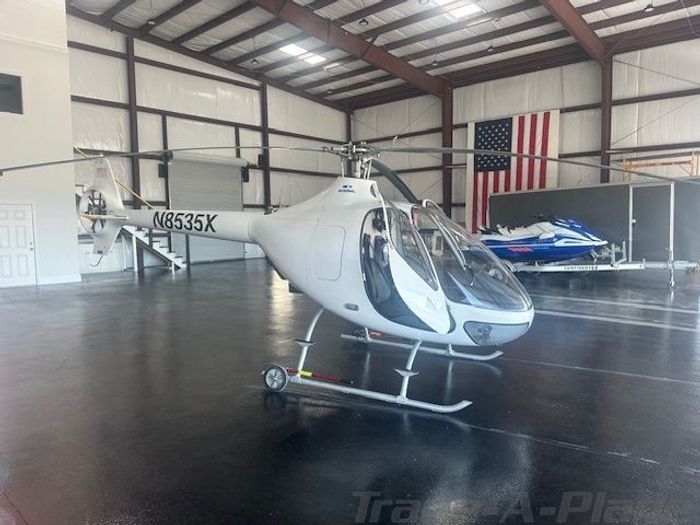
Specifications
Broker
JOE FENDIG
AI Description
- Two-seat light helicopter
- Fully articulated three-bladed main rotor
- Fenestron-type tail rotor
- Designed for a wide envelope of weather conditions
- Composite rotor blades are damage-tolerant with no set lifespan
- Quiet operation, suitable for residential landings
- Equipped with Aspen 1000 digital flight display
- Garmin 430 GPS/Nav/Com
- Garmin transponder with ADSB
- Electronic CDI ignition
- Digital engine governor
- Two-axis electric trim with pilot and copilot control
- High-energy crash-certificated stroking seats
- Vibration absorbing system
- Disc rotor brake with overhead control
- Four-point harnesses with inertia reel
- Cabin heater and dual cabin vents
- Keyless entry and starting
- Fast removal copilot controls
- Easy-to-adjust pilot pedals
- Fresh annual inspection as of 6/30/25
- Overhauled rotor head and tail rotor gearbox installed
- Paint and interior in good condition (original white exterior, gray seats)
About this Model
Overview
The Guimbal Cabri G2 is a two-seat, single-engine piston helicopter commonly selected for ab‑initio and recurrent training, club operations, and owner-flying where low operating complexity and modern safety-oriented design are priorities. Its design emphasizes stable handling, strong rotor inertia characteristics for training exercises, and a contemporary cockpit layout that supports standardized instruction and workload management.
Mission Fit
The Cabri G2 aligns best with short, repetitive missions—training circuits, hover practice, and local trips—where predictable response and easy dispatch matter. It is less suited to missions needing more seats, higher cruise performance, or extended endurance without stops.
Cabin
The cockpit is arranged for two occupants with dual controls in typical training configurations, giving both seats a clear instrument view and straightforward access to primary controls. Comfort and storage are adequate for training and local flights rather than travel; expect limited baggage capacity and a focus on functional ergonomics over cabin volume.