

Specifications
Broker
Aircraft Details
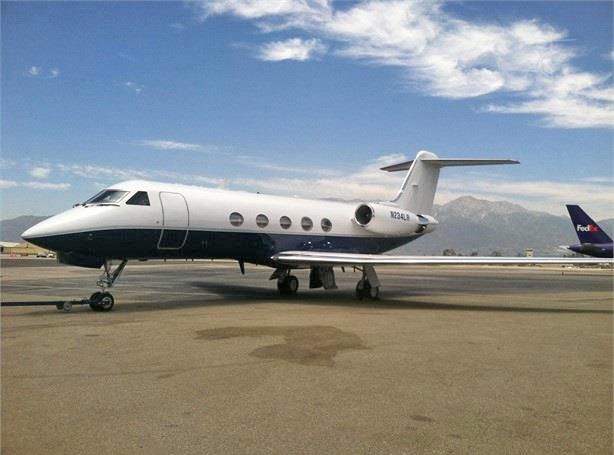
- Model: GULFSTREAM G-III
- Condition: Used
- Flight Rules: IFR
- Cabin Capacity: 12 passengers
- Exterior Dimensions: Length 83' 1", Height 24' 4", Wingspan 77' 10"
- Maximum Ramp Weight: 70,200 lbs
- Maximum Takeoff Weight: 69,700 lbs
- Maximum Landing Weight: 58,500 lbs
- Zero Fuel Weight: 44,000 lbs
- Empty Weight: 38,100 lbs
- Basic Operating Weight: 39,175 lbs
- Fuel Capacity: 28,300 lbs
- Engines: 2 x Rolls-Royce Spey MK 511-8
- Engine 1: 6,231 hours since overhaul, TBO 8,000 hours
- Engine 2: 6,004 hours since overhaul, TBO 8,000 hours
- APU: Allied Signal GTCP 36-100G, 6,665 hours since new
- Avionics: Dual Honeywell SPZ-800, Dual Universal UNS-1C+ w/GPS, Honeywell TPU-67A TCAS-II
- Additional Features: Aft lavatory, Stage 3 modified, RVSM, Terrain Awareness & Warning System, Traffic Collision Avoidance System, SATCOM, Cockpit Voice Recorder
- Interior: Refurbished in 2008 with executive seating and aft galley
- Exterior: Refinished in 2008, white upper with blue lower and silver trim accents
About this Model
Overview
The Gulfstream G-III is a legacy large-cabin business jet known for intercontinental mission capability, a stand-up cabin, and robust runway performance for its size class. It is typically selected by operators who value cabin volume and range in a proven airframe, and who are prepared for the operational and maintenance expectations that come with an older, mechanically and electrically conventional design.
Mission Fit
The G-III fits missions that benefit from a true large-cabin environment and long-range legs, particularly when passengers expect room to move and carry-on capacity. It is less aligned with missions that demand current-generation avionics integration, highly optimized fuel efficiency on short segments, or uniform fleet commonality with newer Gulfstream types.
Cabin
The cabin is sized for executive travel with a wide aisle, a typically enclosed aft lavatory, and meaningful baggage capacity that supports longer trips. Layouts vary widely by vintage and refurbishment history, so cabin comfort and noise levels depend heavily on interior modernization, insulation work, and systems upgrades performed over time.