

Specifications
Broker
Aircraft Details
- Configuration: 5-passenger layout with club seating and a belted side-facing seat.
- Interior: Moonlight leather with cool gray base and deep gray accents; glacier carpeting; brushed ice silver and eucalyptus trim.
- Lavatory: Private, fully enclosed, externally serviceable with sink and running water.
- Avionics: Garmin G3000 integrated system, Garmin GFC 700 autopilot, dual Garmin GIA 63W GPS and navigation receivers, ADS-B Out, weather radar.
- Engine: GE Honda HF120 engines, both with 1,165 hours since new; EMC2 engine maintenance program.
- Maintenance: CAMP tracking, Flight Ready P3 program; 1200-hour inspection due at 1,153 hours.
- Additional Equipment: Winglets, speed brakes, ice protection, TCAS I, TAWS Class B, synthetic vision, XM weather data-link.
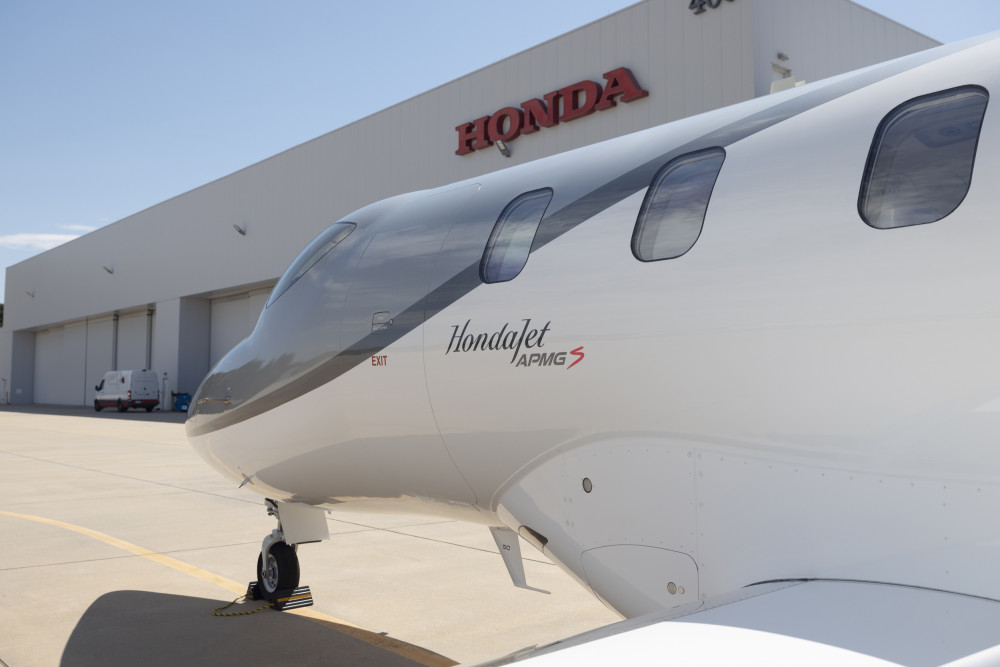
- Exterior: Signature paint scheme with silver pearl upper, snow white lower, and gray gradient stripe.
About this Model
Overview
The HondaJet APMG S is a variant within the HondaJet family aimed at single-pilot and small-team missions where a jet’s speed and altitude are useful but cabin size requirements are modest. It is commonly selected for regional point-to-point flying, time-sensitive day trips, and trips into airports that may be less practical for larger business jets due to runway or operating constraints. Exact performance and equipment can vary by serial number and options, so mission planning should be based on the specific aircraft’s documentation.
Mission Fit
In typical use, the APMG S aligns with short-to-mid stage lengths where cruise speed and direct routing reduce total travel time versus turboprops or airline connections. It fits itineraries that prioritize frequency and flexibility (multiple legs per day) more than maximum cabin volume. For buyers needing consistent full seats plus baggage, or longer legs with stronger hot/high margins, stepping up to a larger light or midsize jet is usually a better match.
Cabin
Cabin experience is characteristic of the very light jet segment: a compact, club-style environment designed for a small number of travelers, with a focus on forward visibility, quiet cruise relative to piston/turboprop alternatives, and practical storage rather than stand-up cabin movement. Comfort is strongly influenced by seating trim, cabin management features, and how often the aircraft is flown near maximum passenger/baggage loading.