

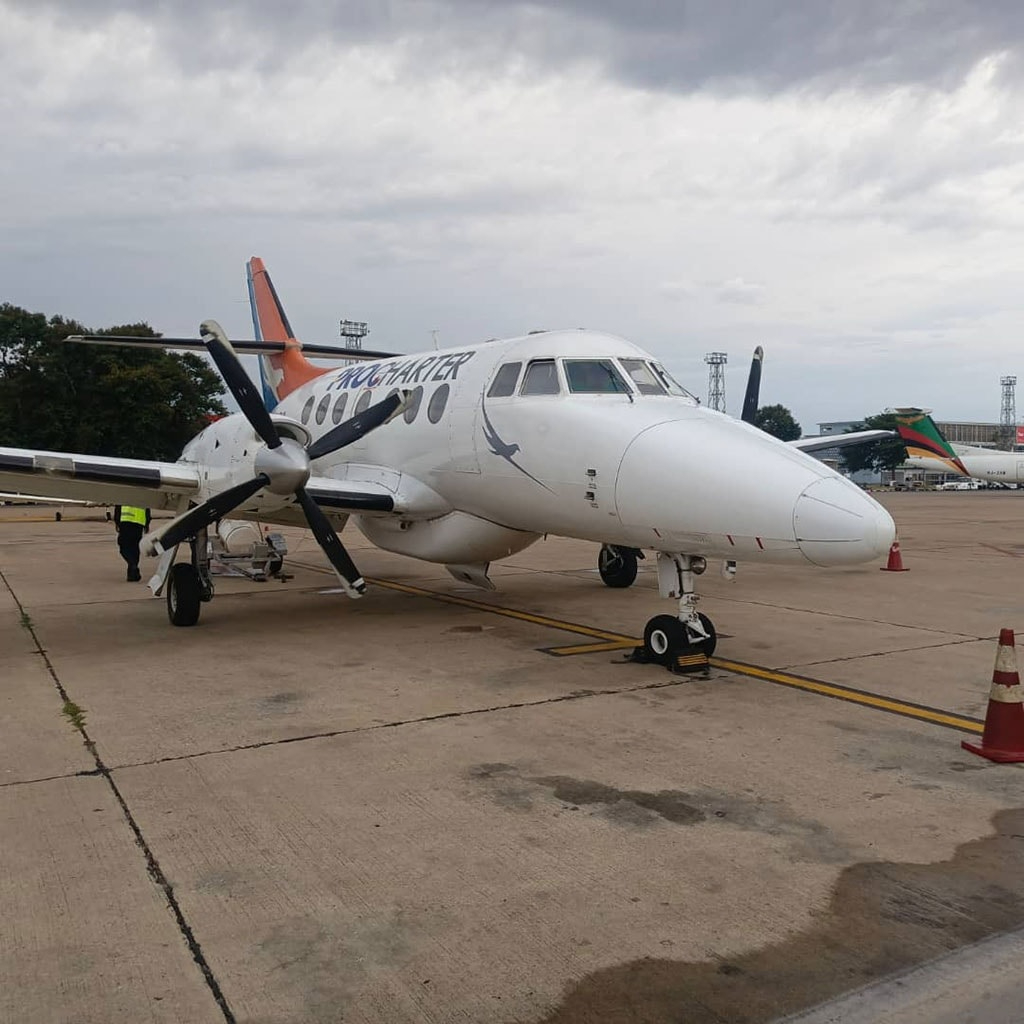
Specifications
Broker
Aircraft Details
- Maintenance: Maintained under FAR Part 121; Right and Left Engine Overhaul due dates are unspecified; Landing Gear Overhaul due dates: LS Main (2025-10-03), Nose (2025-09-28), RS Main (2025-09-27); Prop Overhaul completed on 2020-06-26, next due on 2027-08-03.
- Engines: Model TPE331-12UAR; Engine 1: TBO 7000 hours, SOH hours 5588, SOH cycles 5815; Engine 2: TBO 7000 hours, SOH hours 6262, SOH cycles 6061.
- Avionics: Equipped with Collins ADF-60A, Kollsman Altimeter, Dual Collins VHF-22A radios, Sperry Compass, Fairchild A100A CVR, Dual Collins DME-42, Sperry FZ-500 Flight Director, Dual Collins VIR-32 navigation radios, King KRA-405 Radar Altimeter, Collins RMI-36, Sandel ST3400 RMI and TAWS, Bendix/King TPU-66A TCAS, Collins TDR-90 Transponder, Collins WXR-270 Weather Radar.
- Interior: Passenger capacity of 19; Commuter configuration; Freon air conditioning; Features cabinetry with seat tray tables; Equipped with a lavatory.
- Additional Equipment: McCauley 4-blade props, water methanol/power augmentation, dual auxiliary cabin heaters, BFGoodrich wheels & brakes, dual Concorde RG-380 lead acid batteries, cargo pod, enhanced performance kit, flux valve.
About this Model
Overview
The BAe Jetstream 32 is a twin‑engine, pressurized commuter turboprop designed around high-frequency regional flying. It is typically configured for 18–19 passengers, prioritizing schedule reliability, reasonable cruise speeds for short legs, and the ability to serve smaller airfields. Buyer interest is often tied to utility-style missions—regional passenger service, staff shuttles, and special-mission conversions—where simplicity and dispatchability matter more than cabin volume or long-range capability.
Mission Fit
The Jetstream 32 fits missions that resemble airline-style stage lengths—often a few hundred nautical miles—with frequent cycles and quick turnarounds. It is most effective when operated with established SOPs, trained crews, and predictable dispatch planning. Missions that prioritize passenger comfort, large baggage, or minimal crew workload may be better served by larger, newer turboprops or light jets, depending on route structure.
Cabin
Most Jetstream 32 cabins are arranged as a dense regional layout with a narrow aisle and limited headroom, reflecting its commuter origins. Boarding is typically via an airstair, and baggage capacity is adequate for regional luggage but not comparable to larger turboprops. Cabin noise and vibration levels are typical of older-generation turboprops; perceived comfort depends heavily on interior condition, refurbishment quality, and how well the aircraft has been maintained for pressurization and environmental performance.