

Specifications
Broker
Aircraft Details
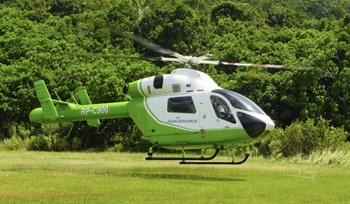
- Model: MD HELICOPTERS 902 EXPLORER
- Condition: Used
- Total Time Since New: 2,754 hours
- Refurbished by Factory Service Center in 2015
- Engine: Pratt & Whitney Canada PW206A x2
- Cabin Layout: 2 Pilot + 6 Passenger VIP Configuration
- Interior: Tan Leather
- Exterior: White on Fantasia Green Base with Fantasia Green Pinstripe
- Equipment:
- Five Main Rotor Blades
- NOTAR (No Tail Rotor) Technology
- Air-conditioning
- Emergency Life Vests
- Rear Cargo Door
- Engine Fire Extinguishers
- Fargo 52-gallon Auxiliary Fuel Tank
- Avionics:
- Garmin GNS-530A
- King KX-165
- King KI-206
- King KLX-135
- King KI-525A
- King KI-227
- King KR-87
- King KRA-416
- BF Goodrich 510-22J
- Northern Airborne Technology AA-85
- King KT-70
- Airpath Instruments C2300-L4-24B
- Martec Kanad 406 AF-H
About this Model
Overview
The MD 902 Explorer is a light, twin-engine helicopter that pairs conventional main-rotor handling with MD’s NOTAR (NO TAil Rotor) anti-torque system. The design prioritizes reduced tail-rotor hazards, lower perceived noise footprint, and stable low-speed control—traits that make it a frequent fit for EMS, law-enforcement, and corporate/utility missions where operations near people, structures, or confined areas are common. Most aircraft in service are configured around quick-role changes (passenger, patrol, hoist, or medical interior), with capability driven heavily by installed mission equipment and certification basis.
Mission Fit
The MD 902’s core value is short- to mid-range utility flying where aircraft access, community noise sensitivity, and ramp safety matter. Buyers typically evaluate it as a missionized platform: the same airframe can be practical for passenger shuttles, IFR-capable transport (if equipped), and specialized public-safety work, but real-world performance depends on installed avionics, autopilot, and mission kit weight.
Cabin
Cabin experience is driven by the interior mission configuration. Typical layouts range from corporate-style seating to EMS interiors with litter provisions. The absence of a conventional tail rotor can reduce some perceived external noise and changes ground handling considerations around the tail boom area. Practicality is generally centered on quick access, good visibility for crewed missions, and the ability to support specialized equipment (e.g., medical, surveillance, or public-address systems) when specified.