

Specifications
Broker
Jet Aviation Brokers
+1 (305) 555-0142
Aircraft Details
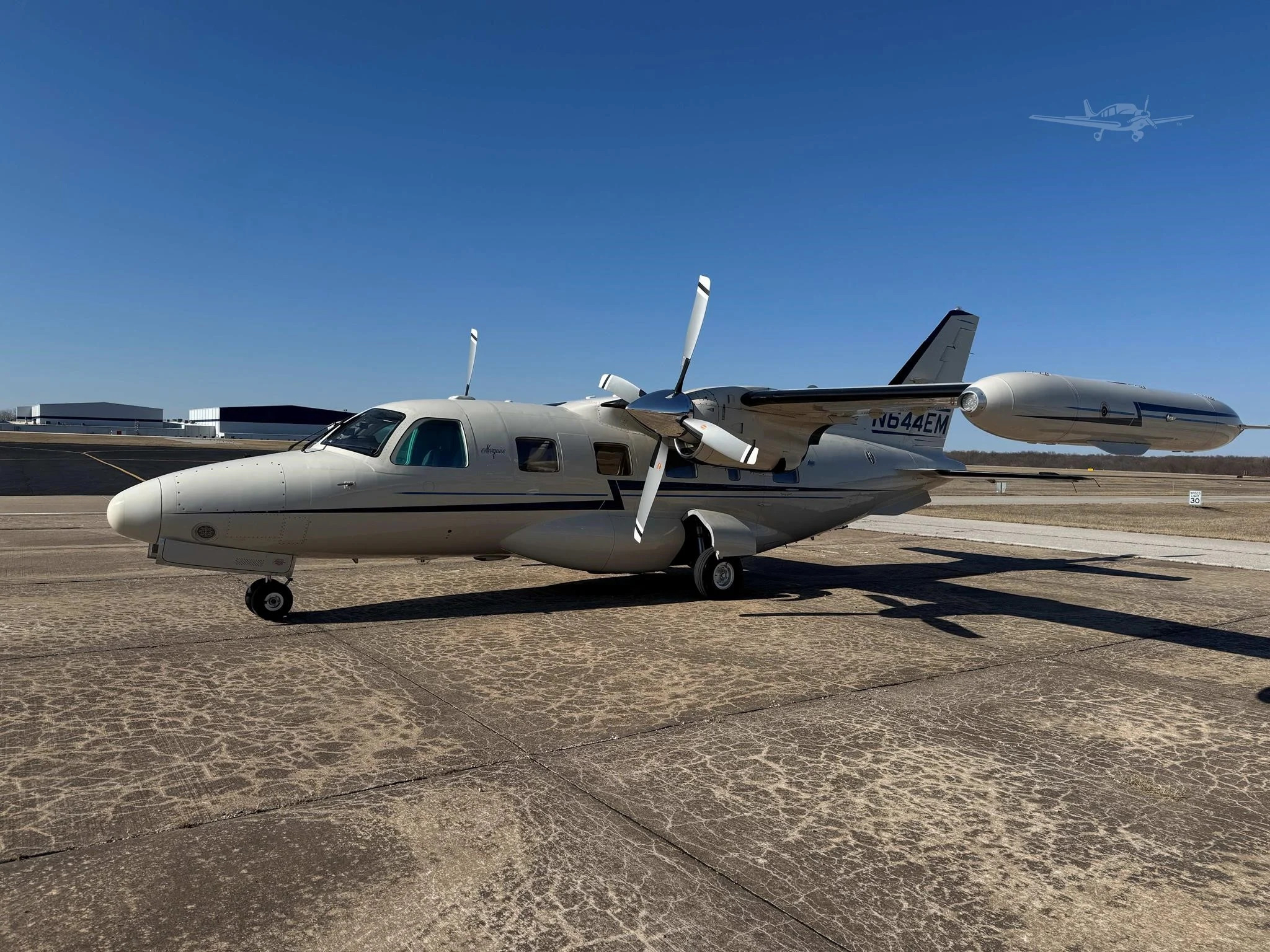
• Turboprop aircraft located in Addison, Texas, maintained under FAR Part 91.
• Airframe total time: 9,373 hours. Both engines (TPE331-10-511M) with 4,213 and 4,063 hours SOH, 5400 TBO; hot section times 637/644. New Hartzell 4-blade propellers installed 11/2023, 130 hours since new.
• All ADs and mandatory SBs complied with as of March 2025; frame and spacer plate inspections completed with no discrepancies.
• Dual heated glass windshields, all windows AD compliant; Rosemount ice detector; dual Garmin G600 PFD/MFD; dual Garmin GTN-650 Nav/Com/GPS; Garmin GTX 345R ADS-B in/out; Garmin GTX 335R ADS-B out; Garmin GWX 75 weather radar; GRS-56 SatCom.
• Executive interior: midnight blue leather, 2-place bench couch plus extra seats, dual tables, full galley, full flushing lavatory, new carpet in 2023, forward and aft cabin dividers.
• Exterior: eggshell white with blue and silver stripes; rated 9/10, completed in 2010.
• Additional features: angle of attack system, automatic autopilot disconnect, audio alert, flushing potty, Rosen visor system, plush sidepanels.
• Damage history: struck two seagulls with left prop in 1997; no current discrepancies reported.
About this Model
Overview
The Mitsubishi Marquis is a pressurized piston twin aimed at owners who want the step up from non-pressurized light twins: the ability to cruise above more weather, a more stable ride at altitude, and a quieter cabin experience typical of pressurized designs. It occupies the cabin‑class piston niche where mission success is driven by all-weather dispatch, moderate stage lengths, and the ability to carry multiple passengers with baggage without moving into turbine ownership.
Mission Fit
As a pressurized twin, the Marquis is typically chosen for dependable, mid-range point-to-point travel with improved passenger comfort versus unpressurized pistons. It fits well for business or family travel where altitude capability and cabin environment matter, while still accepting the higher systems complexity that comes with pressurization and a cabin-class airframe.
Cabin
Cabin expectations are aligned with cabin-class piston twins: a more enclosed, refined environment than light twins, with pressurization supporting higher cruise altitudes and generally improved comfort on longer legs. Actual seating, interior appointments, and baggage usability vary significantly by serial number and refurbishment history, so evaluating the specific aircraft’s interior layout and load flexibility is important.