

Specifications
Broker
Aircraft Details
- Model: Mitsubishi Marquise
- Condition: Used
- Location: Aiken, South Carolina
- Equipped with recent Garmin upgrades
- Total airframe hours: 12,530
- Engines: Honeywell TPE331-10-511M (2 engines)
- Engine time since overhaul: 3,160 hours
- TBO: 5,000 hours
- Hot section time: 590 hours
- Propellers: Hartzell (2 props)
- Time since overhaul: 800 hours
- Avionics:
- Garmin G-600 PFD
- Garmin GTN-750XI/650XI
- Garmin GTX-345R/330 transponders
- Sperry SPZ-500 autopilot
- L3 Skywatch traffic system
- Features:
- Aft lavatory, belted lav, forward galley
- Heated windshields, ADS-B capable
- Full de-ice/anti-ice system
- Interior:
- Executive configuration for 7 passengers
- Beige leather seating, sidewalls, and carpeting
- Refreshment center with low-boy cabinet
- Exterior:
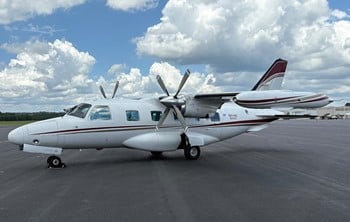
- Painted in 2011, white with bronze and red stripes
About this Model
Overview
The Mitsubishi Marquis is a pressurized piston twin aimed at owners who want the step up from non-pressurized light twins: the ability to cruise above more weather, a more stable ride at altitude, and a quieter cabin experience typical of pressurized designs. It occupies the cabin‑class piston niche where mission success is driven by all-weather dispatch, moderate stage lengths, and the ability to carry multiple passengers with baggage without moving into turbine ownership.
Mission Fit
As a pressurized twin, the Marquis is typically chosen for dependable, mid-range point-to-point travel with improved passenger comfort versus unpressurized pistons. It fits well for business or family travel where altitude capability and cabin environment matter, while still accepting the higher systems complexity that comes with pressurization and a cabin-class airframe.
Cabin
Cabin expectations are aligned with cabin-class piston twins: a more enclosed, refined environment than light twins, with pressurization supporting higher cruise altitudes and generally improved comfort on longer legs. Actual seating, interior appointments, and baggage usability vary significantly by serial number and refurbishment history, so evaluating the specific aircraft’s interior layout and load flexibility is important.