

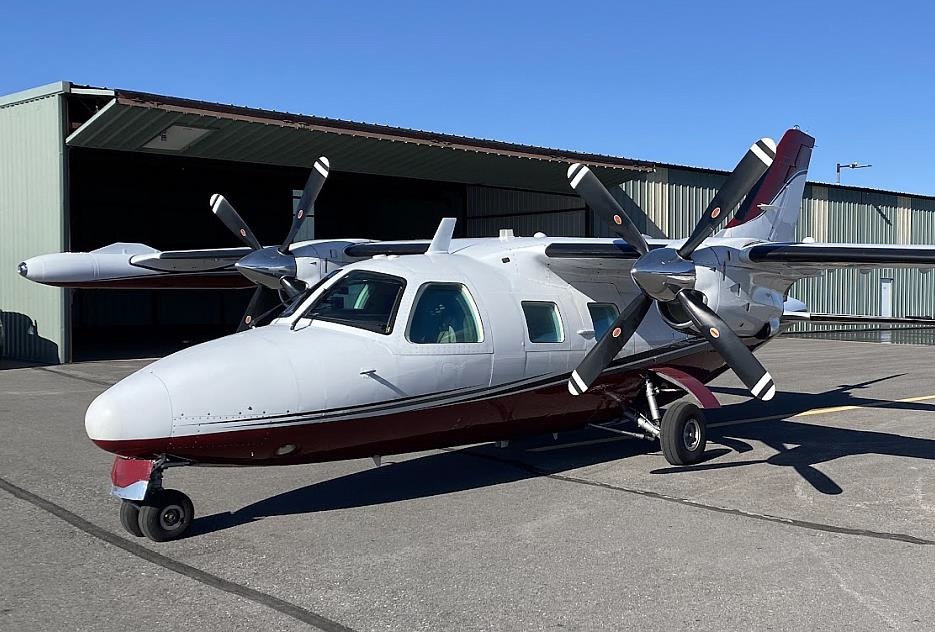
Specifications
Aircraft Details
- Lowest total time Solitaire on the market with great history
- New full Garmin panel including Garmin engine instruments and CDCLC in process
- Avionics: Garmin G600 TXi (10" and 7"), dual GNS 750 TXi, Garmin GMX 750 radar, Garmin GTS800 traffic, WX500 Stormscope, Garmin GDL69A XM weather & music, Garmin 345 audio panel, Bose jacks, cockpit & rear music inputs, Garmin GTX 345 (ADSB), #2 GTX330, Shadin ADC200 air data + fuel flow, Bendix M4D autopilot (panel mounted), voice alert system, Garmin 825, Garmin 45, SAM standby display
- Airframe: New Concorde RG380E/44 batteries (Jan 2023), second battery in right wheel well (for better CG), pilot seat track extension, new heated windshields (pilot & copilot), Cleveland wheels & brakes (2005), tail logo lights, torque knee spring gear up landing (2011, repaired), new cockpit side windows (2017)
- Engines: TPE 331-10-511M, 1491 hours since overhaul by National Flight, 5000 TBO
- Props: 590.6 hours since overhaul (both L&R, Feb 2019), eligible for 7-year AMOC
- Service center maintained, new Garmin engine instruments being installed with CDCLC in custom panel
About this Model
Overview
The Mitsubishi Solitaire name is not associated with widely published, in-service production specifications in mainstream aircraft references. For a buyer, that means the evaluation hinges less on headline performance claims and more on verifying what the aircraft actually is (concept, prototype, one-off, or low-volume production), its certification basis, and the availability of spares, maintenance documentation, and approved service providers. If your interest is tied to a specific serial number or registry entry, the practical purchasing workflow starts with confirming identity and configuration, then building an operating and maintenance plan around documented capabilities rather than assumptions.
Mission Fit
Because publicly verifiable performance and support details are limited, mission fit should be defined from the aircraft’s actual documentation: approved flight manual data, weight-and-balance, and installed equipment. If the airframe is properly certified and supported, it may suit point-to-point business travel within its confirmed range and payload envelope. If documentation or supportability is uncertain, it is better viewed as a niche or special-purpose asset rather than a day-to-day corporate shuttle.
Cabin
Cabin expectations should be set from the specific aircraft’s interior completion rather than model-wide norms. Where information is limited, buyers should validate seating count, berth capability, baggage volume/access in all seating configurations, lavatory type (fully enclosed vs. belted), galley equipment, and noise/pressurization comfort through inspection and logbook/installation records.