

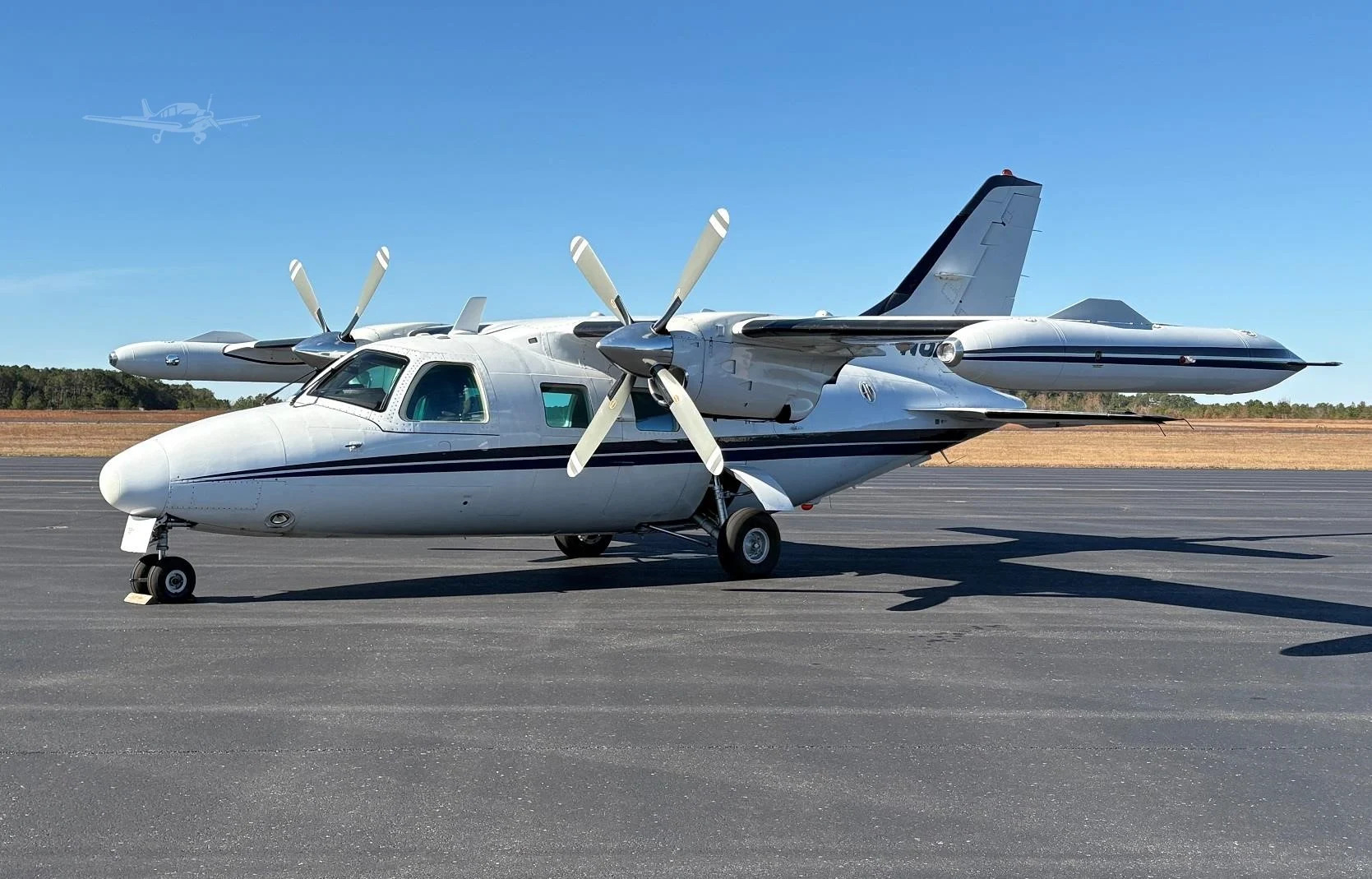
Specifications
Broker
Aircraft Details
- Model: MITSUBISHI SOLITAIRE
- Condition: Used
- Engine: 2 x HONEYWELL TPE331-10-511M
- Engine Time: 1,360 hours SOH
- TBO: 5,400 hours
- Propellers: 4-blade HARTZELL, freshly overhauled, due April 2030
- Avionics:
- Garmin GNS 530W/430
- GMA-340 audio panel
- GTX-345 ADS-B In/Out transponder
- Bendix RDR-1200 weather radar
- Collins autopilot
- Interior:
- Executive configuration for 7 passengers
- Dark gray leather seating, sheepskin crew seats
- Leather headliner, wool carpeting
- Refreshment center, executive table
- Exterior:
- Matterhorn white with blue and gray trim
- Good condition as of November 2025
- Maintenance:
- Fresh comprehensive inspections completed (100/200/500/600/1200/8500 hour and 1/3/10 year)
- Eligible for AMOC extension
- Additional Equipment: Cleveland wheels and brakes, automatic cabin temperature control, new windshields (2025)
About this Model
Overview
The Mitsubishi Solitaire name is not associated with widely published, in-service production specifications in mainstream aircraft references. For a buyer, that means the evaluation hinges less on headline performance claims and more on verifying what the aircraft actually is (concept, prototype, one-off, or low-volume production), its certification basis, and the availability of spares, maintenance documentation, and approved service providers. If your interest is tied to a specific serial number or registry entry, the practical purchasing workflow starts with confirming identity and configuration, then building an operating and maintenance plan around documented capabilities rather than assumptions.
Mission Fit
Because publicly verifiable performance and support details are limited, mission fit should be defined from the aircraft’s actual documentation: approved flight manual data, weight-and-balance, and installed equipment. If the airframe is properly certified and supported, it may suit point-to-point business travel within its confirmed range and payload envelope. If documentation or supportability is uncertain, it is better viewed as a niche or special-purpose asset rather than a day-to-day corporate shuttle.
Cabin
Cabin expectations should be set from the specific aircraft’s interior completion rather than model-wide norms. Where information is limited, buyers should validate seating count, berth capability, baggage volume/access in all seating configurations, lavatory type (fully enclosed vs. belted), galley equipment, and noise/pressurization comfort through inspection and logbook/installation records.