

Specifications
AI Description
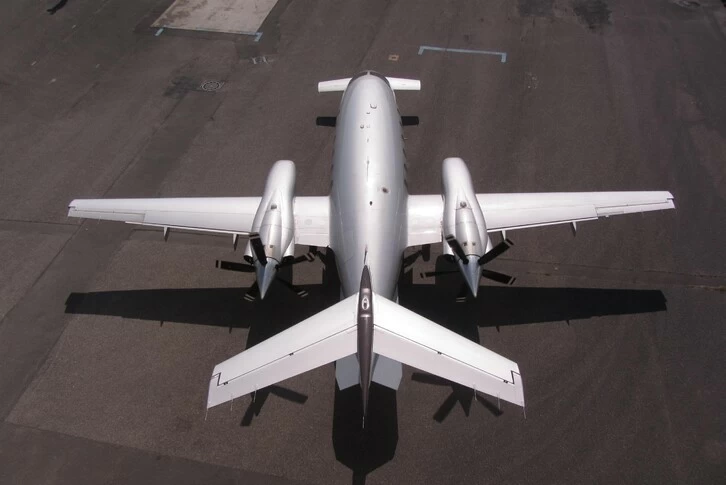
- Aircraft model: Piaggio P-180 Avanti II
- Available for sale in Germany
- Enroll in Airgo Fleet for maintenance cost advantages
- Engine TBO: 4,100 hours
- Operated under German AOC DE-102 EASA-OPS
- Corporate management with high safety standards
- Offers only Avanti commercial pilot training in Europe
- Maintenance management by Airgo's own CAMO
- Airgo provides aircraft management services, including certification and operational enrollment
- Professional pilot training available through Airgo Training Organization
- Option to rent pilots or find dedicated crew through Airgo management contract
About this Model
Overview
The Piaggio Avanti II is a pressurized twin-turboprop designed to deliver cruise speeds closer to light jets while retaining turboprop fuel efficiency and short-field flexibility. Its canard/forward-wing configuration and pusher propellers reduce cabin noise and shift propeller slipstream behind the cabin, shaping a travel experience that differs from conventional turboprops. Buyers typically consider it when they want fast regional or near-transcontinental legs with access to shorter runways and the operating characteristics of a turboprop rather than a jet.
Mission Fit
The Avanti II fits owners and operators who want to reduce door-to-door time versus typical turboprops and can use shorter or more constrained airports. It is less aligned with missions that demand consistent maximum payload in adverse runway/temperature conditions or that require the simplest, most standardized turboprop operating footprint across diverse crews.
Cabin
The cabin is notably tall and wide for the category, with a flat floor and an executive layout that supports comfortable seated work and conversation on typical 1–3 hour sectors. Pusher props help keep the cabin environment comparatively quiet for a turboprop, and large windows support a bright interior. Baggage capacity is generally suitable for business travel loads, but buyers should confirm how much is accessible in-flight and how loading limits interact with fuel for longer legs.