

Specifications
Broker
Aircraft Details
- Maintenance: Maintained under EASA Part 145; CAT II, EASA, RVSM certified; D-Check, Engine Overhaul by Pratt & Whitney, Prop Overhaul, Main Landing Gear Overhaul.
- Engines: PT6A-66B model; TBO of 3600 hours; both engines have 400 hours since overhaul.
- Additional Equipment: Single-point refueling; FIKI ice protection; Hartzell 5-blade props; first aid kit; oxygen; Mach 0.7; Category II landings; steep approach capabilities; engine fire extinguisher; enlarged cabin door; air ambulance kit available upon request.
- Avionics: Collins Pro Line 21 package; includes dual Collins VHF-4000 radios, GPS-4000A, TAWS-8000, and weather radar.
- Interior: Executive configuration for 7 passengers; gray leather seating; fully-enclosed flushing aft lavatory; cabinet with ice chest; wood veneer cabinetry; aft coat closet.
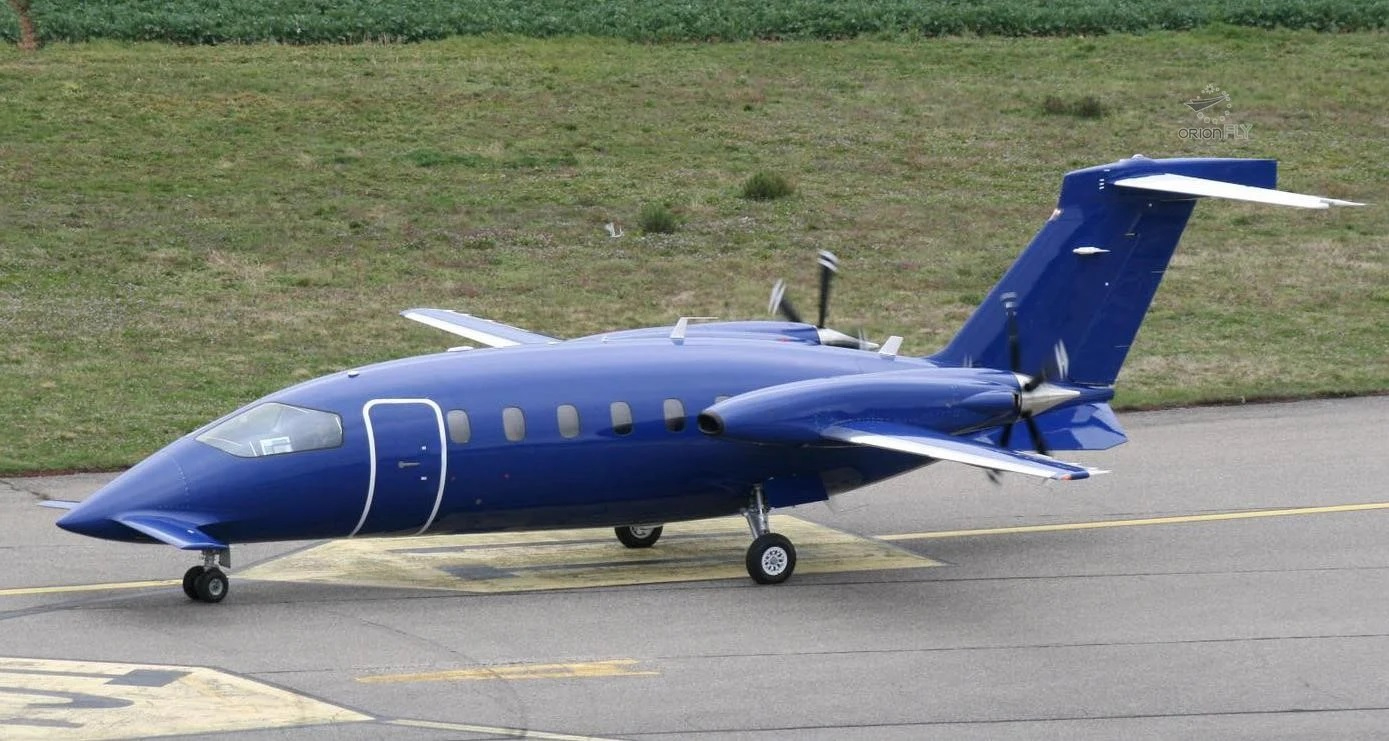
- Exterior: New exterior paint completed in 2023.
- Features: Equipped with ADS-B, CVR, SATCOM, and weather radar; standard RVSM, TAWS, TCA, and 8.33 channel spacing.
About this Model
Overview
The Piaggio Avanti II is a pressurized twin-turboprop designed to deliver cruise speeds closer to light jets while retaining turboprop fuel efficiency and short-field flexibility. Its canard/forward-wing configuration and pusher propellers reduce cabin noise and shift propeller slipstream behind the cabin, shaping a travel experience that differs from conventional turboprops. Buyers typically consider it when they want fast regional or near-transcontinental legs with access to shorter runways and the operating characteristics of a turboprop rather than a jet.
Mission Fit
The Avanti II fits owners and operators who want to reduce door-to-door time versus typical turboprops and can use shorter or more constrained airports. It is less aligned with missions that demand consistent maximum payload in adverse runway/temperature conditions or that require the simplest, most standardized turboprop operating footprint across diverse crews.
Cabin
The cabin is notably tall and wide for the category, with a flat floor and an executive layout that supports comfortable seated work and conversation on typical 1–3 hour sectors. Pusher props help keep the cabin environment comparatively quiet for a turboprop, and large windows support a bright interior. Baggage capacity is generally suitable for business travel loads, but buyers should confirm how much is accessible in-flight and how loading limits interact with fuel for longer legs.