

Specifications
Broker
Aircraft Details
- Maintenance: Maintained under FAR Part 91; damage status noted due to left main landing gear collapse on 03/20/07.
- Engines: Equipped with PT6A-66 engines; Engine 1 TBO: 3600 hours, TCSN: 6550 hours; Engine 2 TBO: 3600 hours, TCSN: 6466 hours.
- Additional Equipment: Hartzell 5-blade props with prop sync, single-point refueling, lead acid battery, gross weight increase modification, composite tail.
- Avionics: Features include Collins ADF-462, Collins APS-65 IFCS autopilot, dual Garmin GTN-750TXi communication and navigation radios, Garmin G600 TXi EFIS, Collins EHSI-74 HSI, and Garmin GWX-70 weather radar.
- Interior: Refurbished in 2013; executive configuration for 7 passengers; features gray seating, forward divan, and private enclosed aft lavatory.
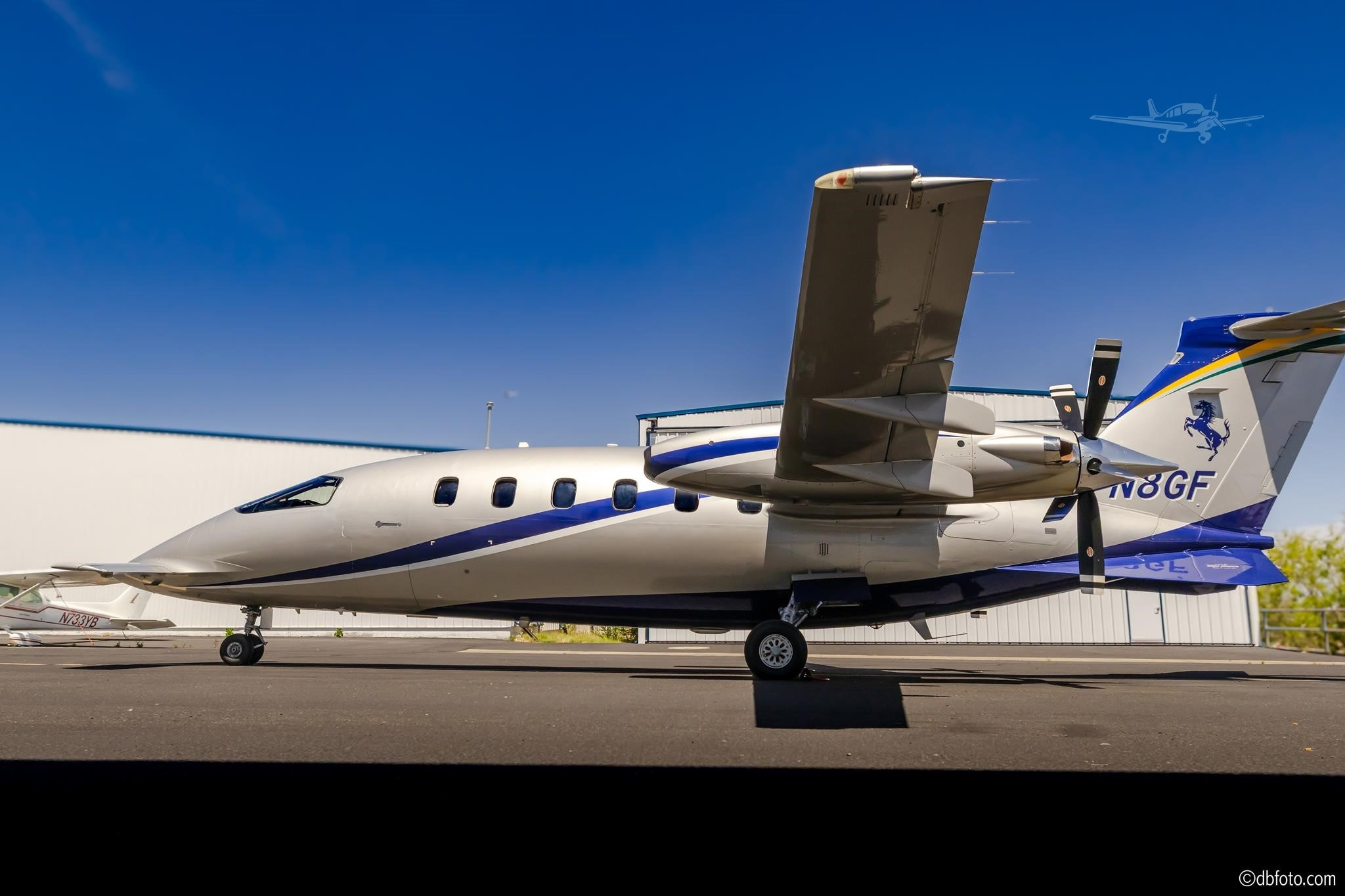
- Exterior: Finished in silver pearl with Concorde blue and Matterhorn white; also refurbished in 2013.
- Features: Equipped with belted lav, freon air conditioning, ADS-B capability, RVSM, terrain awareness and warning system, and traffic collision avoidance system.
About this Model
Overview
The Piaggio Avanti P180 is a twin-engine turboprop known for combining turboprop operating economics with cruise speeds that can approach light-jet territory on many missions. Its distinctive three-surface aerodynamic layout and pusher-prop configuration are paired with a pressurized cabin shaped more like a small jet’s—wider and taller than most turboprops—making it a frequent cross-shop against entry light jets when runway flexibility and fuel efficiency matter.
Mission Fit
In typical regional and short transcontinental segments, the Avanti can deliver strong block times while retaining turboprop advantages on shorter runways and at smaller airports. It tends to fit owner-operators and flight departments looking for jet-like productivity without committing to jet fuel burn and runway needs, but the aircraft’s specialized design can make support considerations more important in dispatch planning.
Cabin
The cabin is a defining feature: it is comparatively wide and tall for a turboprop, with a flat floor and a “small-jet” feel, helped by the absence of propellers near the cabin sides due to the aft-mounted pusher props. Seating is typically arranged for executive travel with a forward club, allowing face-to-face conversation and workable personal space. External and internal noise perception is often reported as favorable for a turboprop, though exact experience depends on interior spec and acoustic treatments.