

Specifications
Aircraft Details
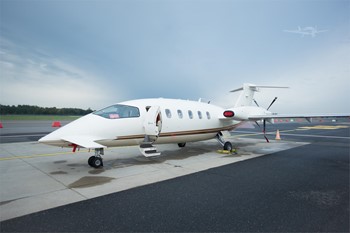
- Model: Piaggio P-180 Avanti
- Condition: Used
- Flight Rules: IFR
- Location: Tallinn, Harju, Estonia
- Owners: Three since new, never chartered
- Interior refurbished in 2016
- ADS-B out equipped
- Currently undergoing horizontal stabilizer central box repair
- Vertical stabilizer inspection completed on 18.11.2025, no defects found
- Max Takeoff Weight: 12,099 lb
- Complete logs available
- Landing gear overhaul completed
- Engine 1 & 2: Pratt & Whitney PT6A-66, 3,373 hours since new, TBO 3,600 hours
- Propellers: Hartzell 5-blade, 3,404 hours since new
- Number of seats: 10
- Lavatory: Fully enclosed, aft, flushing belted
- Exterior painted in 2005, colors: White with light beige, bronze & gold stripes
- Avionics: Collins Pro Line II, ADS-B equipped, multiple advanced systems including FMS and weather radar
- Features: Single-point refueling, RVSM, TAWS, TCAS, Emergency Locator Transmitter, and more.
About this Model
Overview
The Piaggio Avanti P180 is a twin-engine turboprop known for combining turboprop operating economics with cruise speeds that can approach light-jet territory on many missions. Its distinctive three-surface aerodynamic layout and pusher-prop configuration are paired with a pressurized cabin shaped more like a small jet’s—wider and taller than most turboprops—making it a frequent cross-shop against entry light jets when runway flexibility and fuel efficiency matter.
Mission Fit
In typical regional and short transcontinental segments, the Avanti can deliver strong block times while retaining turboprop advantages on shorter runways and at smaller airports. It tends to fit owner-operators and flight departments looking for jet-like productivity without committing to jet fuel burn and runway needs, but the aircraft’s specialized design can make support considerations more important in dispatch planning.
Cabin
The cabin is a defining feature: it is comparatively wide and tall for a turboprop, with a flat floor and a “small-jet” feel, helped by the absence of propellers near the cabin sides due to the aft-mounted pusher props. Seating is typically arranged for executive travel with a forward club, allowing face-to-face conversation and workable personal space. External and internal noise perception is often reported as favorable for a turboprop, though exact experience depends on interior spec and acoustic treatments.