

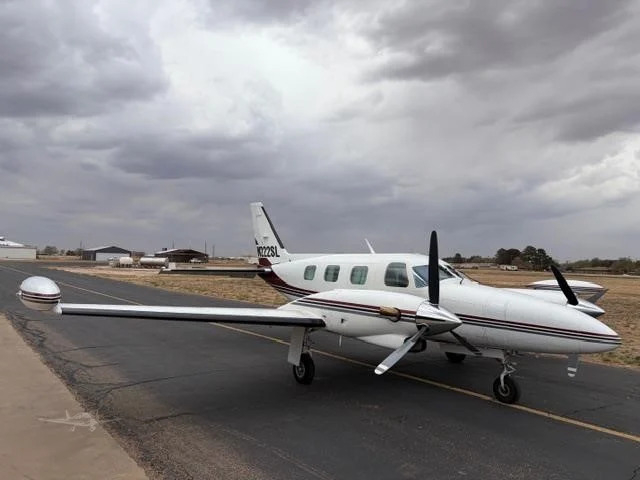
Specifications
Broker
Aircraft Details
- Aircraft Model: Piper Cheyenne I
- Engine Type: PT6A-20 Turboprop
- Maximum Cruise Speed: 250 knots
- Range: 1,200 nautical miles
- Seating Capacity: Up to 6 passengers
- Avionics: Equipped with advanced navigation systems
- Cabin Features: Spacious cabin with comfortable seating
- Performance: Excellent climb rate and short takeoff distance
- Maintenance: Well-maintained with detailed service records available.
About this Model
Overview
The Piper Cheyenne I is an early-generation, pressurized twin-turboprop aimed at operators who want turbine reliability and climb performance without moving into larger cabin-class turboprops. It is commonly used for regional business trips, owner-flown missions with training and discipline, and utility roles that benefit from good runway flexibility and strong short-field acceleration relative to many light jets. Cabin size and payload-range trade are central: it can move a small group efficiently, but loading for passengers, bags, and fuel requires planning.
Mission Fit
A good match for 200–500 nm trips, day-return travel, and multi-stop routing where quick climbs and pressurization reduce workload and fatigue versus piston twins. It is less suited to buyers who prioritize cabin space, high cruise speed, or long nonstop legs; these missions typically favor larger turboprops or light jets.
Cabin
The Cheyenne I’s cabin is compact and pressurized, typically arranged for a small number of passengers with club-style seating common. Expect a functional, businesslike interior rather than a large-cabin environment. Noise and vibration levels are typical of older turboprops and vary significantly with insulation, prop condition, and interior refurbishment. Baggage capacity is adequate for light-to-moderate loads, but bulky items can be limiting depending on configuration.