

Specifications
Broker
Aircraft Details
- Engine: Pratt & Whitney PT6A-52, 700 shaft horsepower, 97 hours since new, TBO of 3600 hours.
- Propeller: Hartzell 5-bladed propeller.
- Avionics: Garmin G3000 avionics suite, ADS-B equipped, WAAS, synthetic vision, GFC 700 autopilot with GMC 711 controller, dual 12" PFDs, and multifunction display.
- Safety Systems: Piper HALO safety system, Garmin Autoland (fully autonomous), SurfaceWatch, auto throttle, SafeTaxi, emergency descent mode, automatic level mode, underspeed protection, coupled go-around, electronic stability & protection.
- Interior: Custom EXP interior with Saddleback Ridge color scheme, deluxe six-seat club configuration, 110-volt AC power outlet.
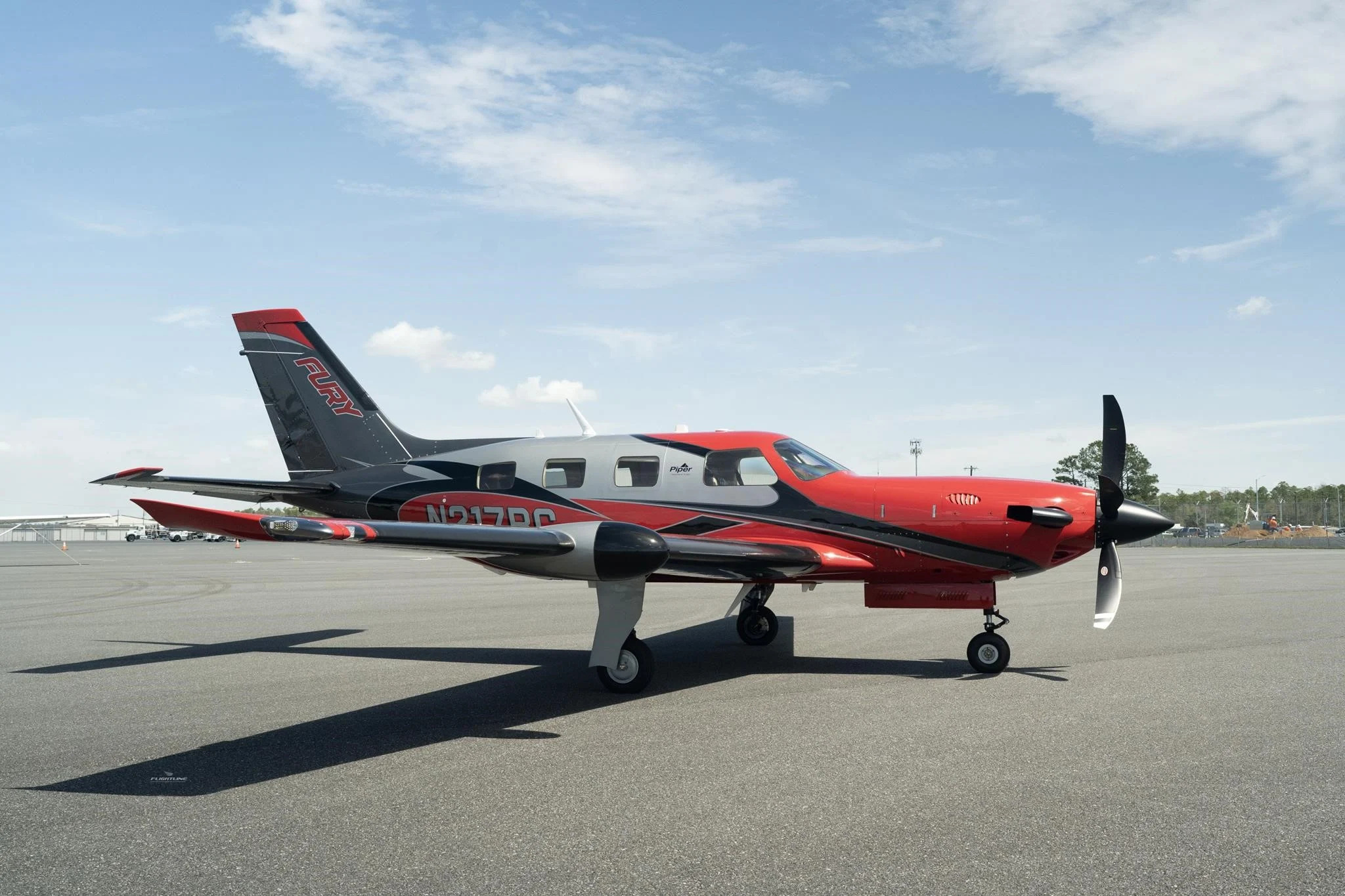
- Exterior: Custom M700 paint scheme in Ferrara red & titanium with black and gray trim, black spinner, exhaust, and landing gear.
- Additional Features: Flight Into Known Icing (FIKI), integrated digital cabin pressurization, awareness package including TAWS-B and traffic advisory system, all-weather package with satellite radio/weather and stormscope.
About this Model
Overview
The Piper M700 Fury is a pressurized, single-engine turboprop designed around fast point-to-point travel with the simplicity of single-pilot operations. It targets owners and small flight departments that want turbine reliability, a contemporary avionics suite, and the ability to operate from many regional airports while carrying a useful load in a streamlined airframe.
Mission Fit
In typical use the M700 Fury fits longer regional legs flown at higher altitudes for ride quality and weather avoidance, with efficient single-engine turbine operations. It is most compelling when the mission prioritizes dispatch reliability, speed, and access to smaller airports over cabin space and multi-engine redundancy.
Cabin
The cabin is arranged for a small group with club-style seating depending on configuration, emphasizing a quiet, pressurized environment compared with piston singles. Expect a focused, functional interior sized for typical owner-travel loads rather than a stand-up cabin experience; comfort is best when passenger count and baggage are planned within weight-and-balance limits.