

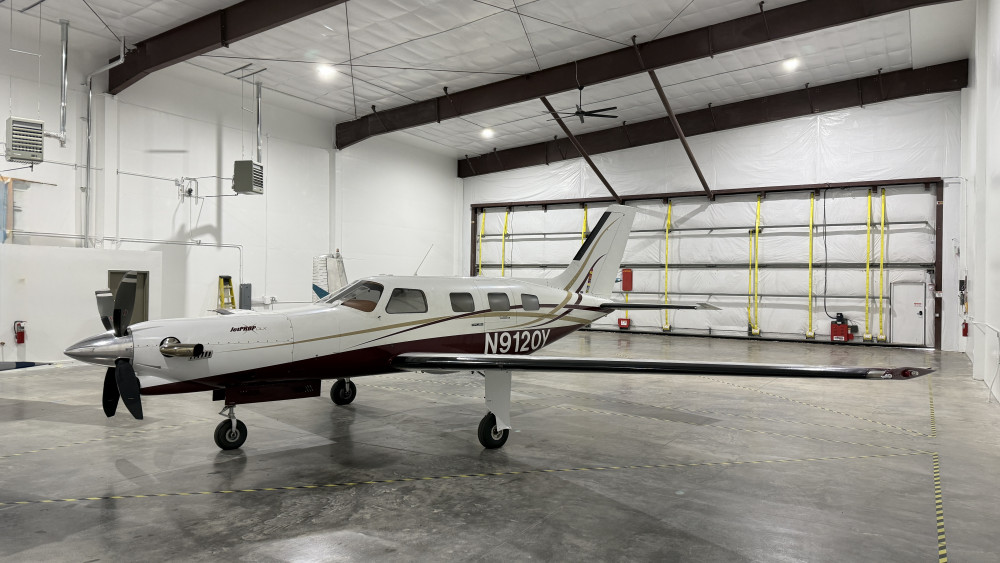
Specifications
Broker
Aircraft Details
- 4,463 airframe hours, maintained under FAR Part 91, always hangared and heated
- No damage history, complete digital logbooks, pressurized, FIKI (Flight Into Known Icing) equipped
- PT6A-21 engine with 2,016 hours since new, monitored by Jet-Care, 3,600-hour TBO, no HSI required under current monitoring
- Rocket Engineering Turboprop conversion completed in 2003
- 4-blade Hartzell propeller, 2,016 hours since new
- Useful load: 1,359 lbs, max takeoff weight: 4,300 lbs
- Fresh annual inspection completed January 2026
- Avionics: Aspen Evolution 1000 PFD, Garmin GNS530W GPS, Garmin GTX327 transponder, King KFC150 autopilot, King KY196 and KN53 radios, IFR equipped, ADS-B, WAAS, LPV
- Additional equipment: extended-range fuel tank, factory oxygen, ground clearance energy saver system, Concorde batteries, freon air conditioning
- Interior: executive configuration, brown leather seating for 6, tan carpet and headliner, gold trim, forward baggage and refreshment center
- Exterior updated April 2010
About this Model
Overview
The Piper Malibu Jetprop is a turboprop conversion of the pressurized Malibu/Mirage platform, typically replacing the original piston engine with a Pratt & Whitney PT6A variant under a supplemental type certificate (STC). The result is a high-altitude, known-ice-capable (when equipped) traveling airplane with turboprop start reliability and strong climb performance in a cabin-class, single-engine format. It sits between high-performance pistons and purpose-built cabin turboprops, trading cabin volume and systems redundancy for lower fuel burn and simpler single-pilot operations.
Mission Fit
Mission fit is strongest for one to four adults with bags, moving quickly in the flight levels and leveraging the Malibu’s pressurized cabin. The Jetprop’s value proposition is most evident when you routinely need turbine reliability, ice protection capability, and short-to-mid stage lengths rather than maximum cabin space. Compared with larger turboprops, payload and baggage flexibility can be the limiting factor before range.
Cabin
The cabin is based on the Malibu/Mirage: a pressurized six-seat layout in a relatively narrow cross-section, typically with two front seats and club-style seating aft. Expect a car-like, cockpit-forward environment rather than a stand-up cabin; comfort is good for small groups, while boarding and in-cabin movement are constrained by the airframe size. Pressurization supports high-altitude cruise with improved passenger comfort versus unpressurized singles, and noise/thermal comfort depend heavily on insulation, prop condition, and the specific conversion details.