

Specifications
Broker
Aircraft Details
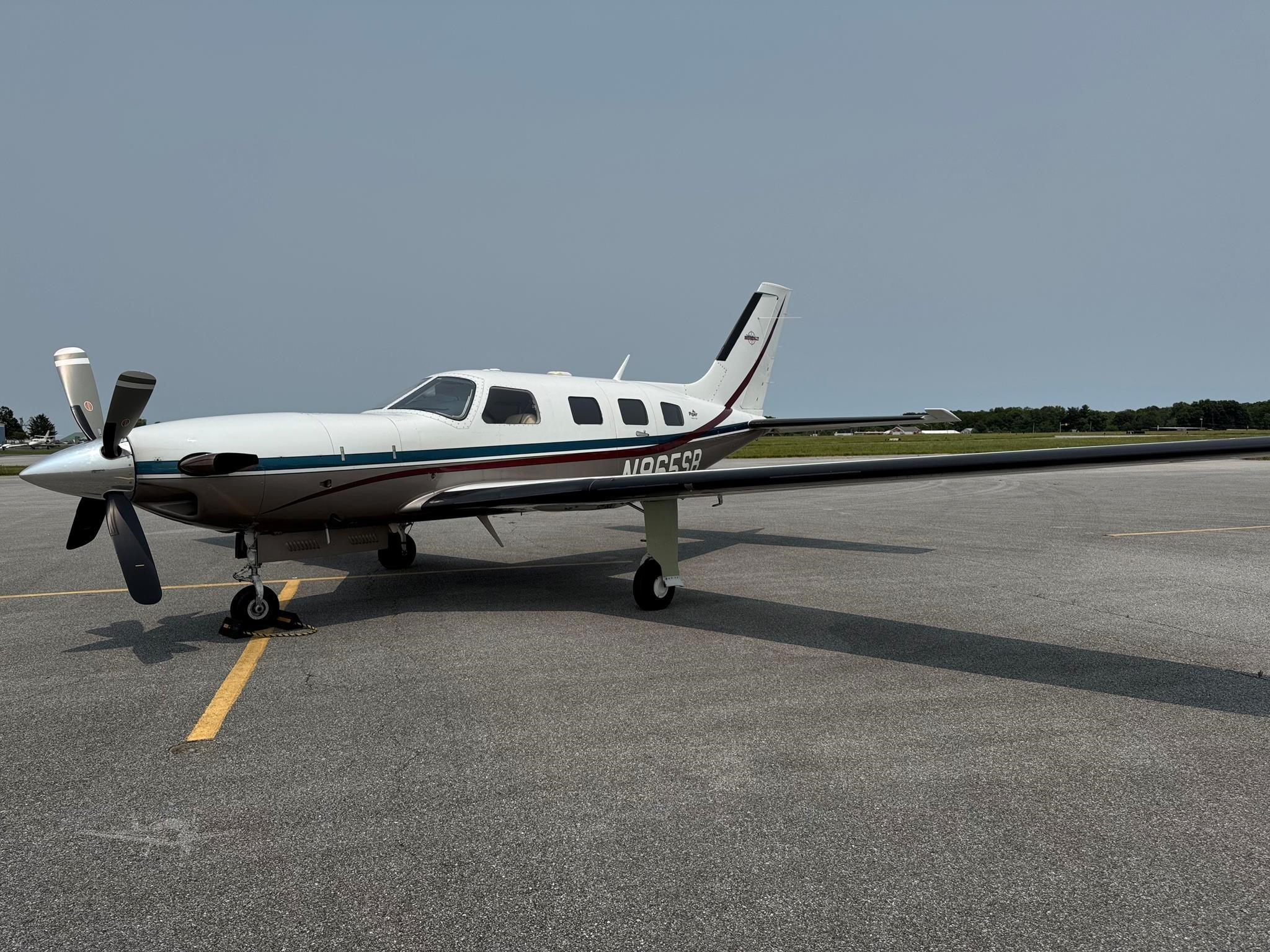
- Model: Piper Meridian 2000
- Engine: PT6A-42A
- Engine TBO: 8,000 hours (MORE Engine Program)
- Recent engine maintenance includes a tear down inspection, CT disc and blades replaced, and most accessories overhauled (40 hours ago)
- Propeller: Hartzell 4-blade constant-speed, 222 hours since major overhaul
- Avionics: Dual Garmin GTN-750Xi and GTN-750, ADS-B equipped, Genesys 3100 autopilot
- Additional equipment: EROS pilot mask, built-in oxygen system, factory de-ice package, fire detection system, LED wing tip lights
- Interior: Executive configuration, seating for 6, premium mineral gray interior, entertainment system, wall-to-wall carpeting
- Exterior: White and sandstone with aqua and dark red stripes, good condition as of June 2025
- Inspection Status: Annual due February 2026, IFR certification due February 2027
- No known damage history, complete logs available, all ADs and SBs complete and current
About this Model
Overview
The Piper Meridian (PA-46-500TP) is a pressurized, single-engine turboprop built around the PA-46 airframe, bridging high-performance pistons and entry turboprops. It is typically used for personal and business point-to-point travel where short-to-medium stage lengths, all-weather capability, and manageable single-pilot operations are priorities. Compared with larger cabin turboprops, the Meridian trades cabin volume and payload flexibility for lower operating complexity and access to smaller airports.
Mission Fit
The Meridian tends to fit missions in the few-hundred-nautical-mile range with the flexibility to climb above much of the weather and operate into many general-aviation airports. Buyers generally view it as a practical turbine step-up aircraft for two to four people plus baggage, with performance that improves options in terrain and icing seasons when properly equipped and operated within limitations.
Cabin
The Meridian cabin is a compact, pressurized environment derived from the PA-46 family. Seating is commonly arranged for a pilot and up to five passengers, but real-world comfort depends on occupant size, trip length, and baggage. The cabin is quieter and more stable than many pistons at altitude, though it remains a narrow, low-profile fuselage compared with larger turboprops. Baggage is typically split between a rear area and additional compartments, so packing strategy matters when traveling with multiple passengers.