

Specifications
Broker
DIAG AVIATION
AI Description
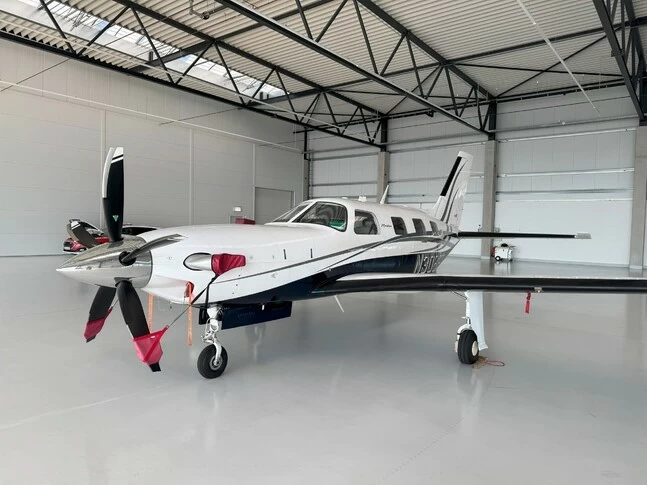
- Aircraft: Piper Meridian 2007
- Status: Available
- Ownership: Privately owned and operated
- Upgrades: Highly upgraded Garmin panel
- Engine: Pratt & Whitney PT6A-42A
- Propeller: MT Propeller MTV-27-E-C-F-R(P)
- Avionics:
- Garmin G600TXI PFD and MFD
- Dual Garmin GTN-650XI
- Garmin GFC-600 autopilot with yaw damper
- Garmin GWX-75 weather radar
- L3 WX-500 Stormscope
- Bendix/King KMH-880 TAWS and TCAS
- Interior:
- Executive configuration with 6 gray leather seats
- Dark gray carpet
- Wi-Fi business equipment
- Exterior:
- Colors: Snow white, navy blue metallic, antique silver metallic, silver blue metallic
- Features:
- High-speed data/Wi-Fi equipped
- SATCOM equipped
- Standard terrain awareness and warning system
- Standard traffic collision avoidance system
- Freon air conditioning
- Heated windshield
- Synthetic vision system/technology
- Standard weather radar
- Maintenance: Maintained under FAR Part 91, no damage history.
About this Model
Overview
The Piper Meridian (PA-46-500TP) is a pressurized, single-engine turboprop built around the PA-46 airframe, bridging high-performance pistons and entry turboprops. It is typically used for personal and business point-to-point travel where short-to-medium stage lengths, all-weather capability, and manageable single-pilot operations are priorities. Compared with larger cabin turboprops, the Meridian trades cabin volume and payload flexibility for lower operating complexity and access to smaller airports.
Mission Fit
The Meridian tends to fit missions in the few-hundred-nautical-mile range with the flexibility to climb above much of the weather and operate into many general-aviation airports. Buyers generally view it as a practical turbine step-up aircraft for two to four people plus baggage, with performance that improves options in terrain and icing seasons when properly equipped and operated within limitations.
Cabin
The Meridian cabin is a compact, pressurized environment derived from the PA-46 family. Seating is commonly arranged for a pilot and up to five passengers, but real-world comfort depends on occupant size, trip length, and baggage. The cabin is quieter and more stable than many pistons at altitude, though it remains a narrow, low-profile fuselage compared with larger turboprops. Baggage is typically split between a rear area and additional compartments, so packing strategy matters when traveling with multiple passengers.