

Specifications
Broker
Aircraft Details
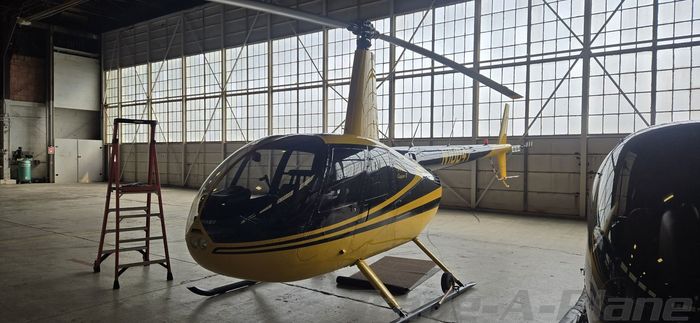
- Model: ROBINSON R44 CLIPPER II
- Year: 2010
- Avionics/Equipment:
- VFR equipped
- Vertical card compass
- Artificial horizon with slip/skid indicator
- Turn coordinator
- IVSI digital clock
- King KY196A COM
- Garmin GTX 330ES Mode S transponder with ADS-B out
- Garmin GNS 420W GPS/COM
- NAT AA12S audio controller
- Kannad 406 ELT
- Airframe Exterior:
- Base color: Yellow (Astro paint scheme)
- Trim color: Black
- Heated pitot tube
- HID landing lights
- Fuel bladders installed
- Air conditioning
- New main and tail blades (June 2025, 15-year life)
- New standard skid tubes installed
- Engines/Mods/Prop:
- 500-hour mag inspection due June 2025
- Interior/Exterior:
- New headliners (July 2025)
About this Model
Overview
The Robinson R44 Clipper II is a light, single-engine piston helicopter in the R44 family, aimed at owner-operators, flight schools, and commercial operators needing a straightforward four-seat platform. It emphasizes practical payload-and-range capability for regional trips, aerial work support, and frequent-cycle utilization, with operating economics typically associated with piston rotorcraft rather than turbine models.
Mission Fit
The Clipper II tends to fit missions where simplicity, predictable handling, and moderate trip lengths matter more than all-weather capability or turbine-class performance. Typical use cases include day VFR travel, repeated training sorties, and visual aerial work where the aircraft’s size and operating costs are central to the mission.
Cabin
The R44 cabin is a compact four-seat layout with two front seats and a rear bench. Entry is via side doors, and the cabin is oriented toward visibility and accessibility rather than executive comfort. Cabin loading is sensitive to fuel quantity and occupant weights, so real-world comfort and baggage capacity depend heavily on the planned fuel load and density altitude conditions.