

Specifications
Aircraft Details
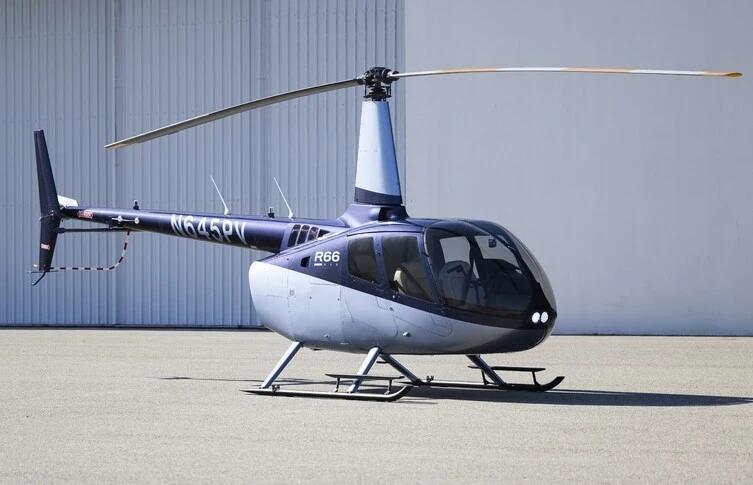
- Model: ROBINSON R66 NXG
- Configuration: Brand new, available in 2027, still configurable
- Autopilot: 3-axis autopilot (Garmin GFC 600H with yaw autopilot)
- Avionics:
- Garmin G500 1060P/700P TXI
- Garmin GTN 750XI GPS/COM/NAV
- Garmin GRA55 radar altimeter (on PFD)
- Garmin GTR 205 (COM2)
- Garmin GMA 350HC audio panel
- Garmin GTX 345R transponder with ADS-B out/in
- Synthetic vision technology
- Kannad 406 Integra AF-406 MHz ELT
- Garmin GDL 60 datalink
- Interior: Stone base leather
- Exterior: Sky blue metallic with Pacific blue metallic trim (ceramic coating)
- Features:
- Tinted impact-resistant windshield and windows
- 5-point seat harness (front seats)
- Air conditioning
- Cockpit video camera (4K Ultra HD)
- Lithium-ion battery provisions
- Heated pitot tube
- Pulsing LED taxi/landing lights
- USB power solutions (front & aft)
- Wire strike protection system
- Bose interface (all seats)
- Large auxiliary fuel system (43 USG)
About this Model
Overview
The Robinson R66 is a single-engine turbine helicopter positioned between piston trainers and larger light turbines. It is commonly used for personal transport, flight training, and commercial utility missions that benefit from turbine reliability and hot/high capability while keeping operating complexity relatively simple. Buyers typically evaluate it as a practical step-up platform for owner-operators and small fleets that need a compact footprint and a conventional, hands-on flying experience.
Mission Fit
The R66 fits missions where dispatch flexibility, turbine power, and manageable operating procedures matter more than cabin volume or heavy-lift capability. It is well-suited to frequent short legs with quick turnarounds, including training and point-to-point travel to sites without runway access. Missions that regularly push payload, require significant baggage volume, or demand multi-crew/IFR airline-style operations are typically better served by larger twins or higher-capability singles.
Cabin
Cabin layout is typically two seats up front with a three-place rear bench, prioritizing visibility and straightforward access over luxury fit-out. Noise and vibration levels are typical for a light helicopter class; headset use is standard. Baggage capacity is oriented to light travel and mission equipment rather than large suitcases, so realistic loading plans matter when carrying multiple adults.