

Specifications
Broker
Aircraft Details
- Weight Capacity: Empty weight 6,775 lbs (3,073 kg).
- Maintenance: Certificate of Airworthiness complied with on January 1, 1973.
- Engine Model: TPE331-5-252K.
- Engine Details:
- Engine 1: TBO 3,600 hours, 4,214 cycles.
- Engine 2: TBO 3,600 hours, 5,201 cycles.
- Avionics:
- ADF: King KDF-800.
- Autopilot: Collins AP-106.
- Communication Radios: Dual Collins VHF-20A.
- DME: RCA AVQ-85.
- Flight Director: Sperry Stars IV.
- GPS: King KLN-90B (IFR approach).
- HSI: Sperry.
- Navigation Radios: Collins VIR-30AGM.
- Radar Altimeter: Collins ALT-50.
- RMI: Dual Collins RMI-30.
- Stormscope: BFGoodrich WX-1000+.
- Transponder: Dual King KXP-750A.
- Weather Radar: Bendix/King RDS-81 (color).
- Additional Equipment: Aerodyne winglets, 31,000-foot ceiling, extended aft baggage, Ultra Quiet active noise-cancelling system, Eagle Creek EAR soundproofing.
- Interior Configuration: Executive with gray glove leather, platinum ultrasuede headliner, blue wool carpeting.
- Exterior Colors: White & medium gray with light gray & blue trim.
About this Model
Overview
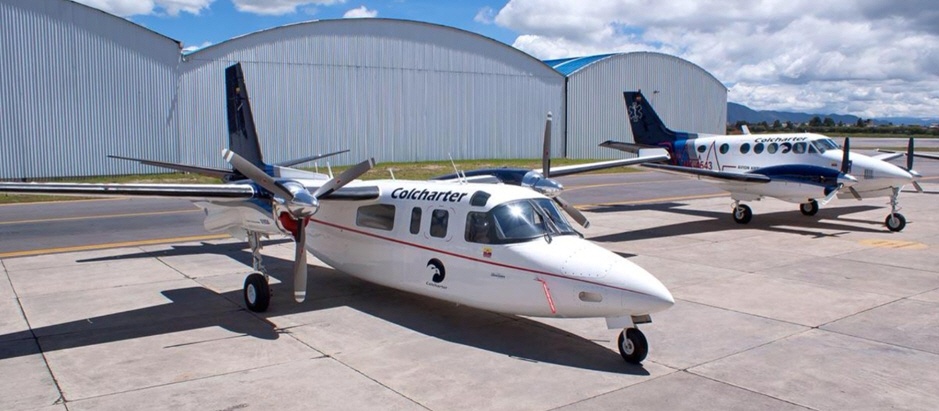
The Turbo Commander 690A is a pressurized, twin-engine turboprop in the Commander 690 series, positioned between cabin-class piston twins and larger commuter-style turboprops. It emphasizes practical speed and climb performance for regional point-to-point flying while maintaining the ability to use shorter runways than many jets. Typical operations include multi-stop business travel, utility flying, and owner-operator use where turboprop reliability and pressurization are priorities.
Mission Fit
In practice, the 690A fits 300–800 nm stage lengths well, where turboprop block times remain competitive and the ability to use a wider selection of airports can simplify scheduling. It can support IFR, all-weather regional flying with a focus on reliable dispatch and flexible airport access. Missions that regularly push toward maximum range or demand jet-like cruise speeds are generally better served by light jets or larger turboprops.
Cabin
The 690A’s pressurized cabin is arranged for a small group with club-style seating common in many aircraft, emphasizing functional comfort rather than stand-up space. Expect a cabin environment oriented toward regional legs: adequate room for seated work and conversation, with noise and vibration levels typical of legacy turboprops unless upgraded with interior and acoustic improvements. Boarding and baggage access vary by aircraft configuration and interior refurbishment history.